
Contents
- 🌊 The Grand Stage: What is the Indian Ocean?
- 📍 Geography & Boundaries: Where the Waters Meet
- 🗺️ Strategic Significance: More Than Just Water
- 🚢 Trade Routes: The Arteries of Global Commerce
- ⚡ Geopolitical Flashpoints: Where Tensions Rise
- 🐠 Biodiversity Hotspots: A Living Ocean
- 🌡️ Climate Change Impacts: A Warming Future
- 🧭 Navigating the Currents: Your Guide to Understanding
- Frequently Asked Questions
- Related Topics
Overview
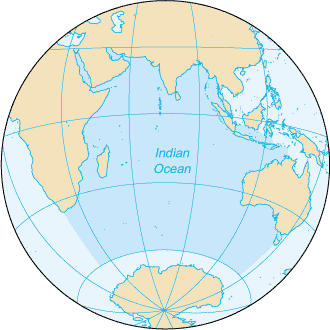
The Indian Ocean isn't just a vast expanse of blue; it's the planet's third-largest oceanic division, a critical nexus of trade, culture, and geopolitical maneuvering. Covering approximately 20% of Earth's total water surface—a staggering 70.56 million km²—it acts as a colossal stage where continents converge and global destinies intertwine. Understanding this ocean is key to grasping the dynamics of the modern world, from ancient spice routes to contemporary energy flows. Its sheer scale and position make it a subject of constant fascination and strategic importance for nations bordering its shores and those who traverse its waters.
📍 Geography & Boundaries: Where the Waters Meet
Bounded by Asia to the north, Africa to the west, and Australia to the east, the Indian Ocean's geography is defined by its continental embrace. To the south, its reach extends towards the Southern Ocean or even Antarctica, depending on the prevailing definition. This immense body of water is not monolithic; it features significant marginal seas like the Arabian Sea, the Bay of Bengal, the Andaman Sea, and the Laccadive Sea, each with its own unique characteristics and strategic value. These regional seas are crucial for understanding the ocean's complex hydrodynamics and its role in regional climate patterns.
🗺️ Strategic Significance: More Than Just Water
The Indian Ocean is a geopolitical chessboard of unparalleled importance. Its strategic significance stems from its position as a vital conduit for global trade, particularly energy resources. Nations like India, China, and the United States vie for influence, recognizing that control or access to these waters translates directly into economic and military power. The presence of major naval bases and the constant flow of commercial shipping underscore its role as a linchpin in international relations, making it a focal point for both cooperation and competition.
🚢 Trade Routes: The Arteries of Global Commerce
For centuries, the Indian Ocean has been a highway for commerce, and this remains true today. It facilitates the movement of a significant portion of the world's oil and liquefied natural gas, making it indispensable for the global economy. Major shipping lanes, such as the one passing through the Strait of Hormuz and the Suez Canal, connect producers in the Middle East to consumers in Asia and Europe. The sheer volume of goods transiting these waters—estimated to be trillions of dollars annually—highlights the ocean's role as the lifeblood of international trade and economic stability.
⚡ Geopolitical Flashpoints: Where Tensions Rise
The strategic importance of the Indian Ocean inevitably breeds geopolitical tension. Areas like the Horn of Africa, the South China Sea (though technically part of the Pacific, its maritime influence extends into Indian Ocean trade flows), and the waters around the Strait of Malacca are frequent sites of naval exercises, territorial disputes, and concerns over piracy. The competition for resources and influence among major powers, including the burgeoning presence of China's naval capabilities, creates a dynamic and often volatile environment that demands careful observation.
🐠 Biodiversity Hotspots: A Living Ocean
Beyond its strategic and economic importance, the Indian Ocean is a treasure trove of biodiversity. Its waters host a remarkable array of marine life, from the vibrant coral reefs of the Maldives to the deep-sea trenches teeming with unique species. The ocean supports vital ecosystems that are crucial for global fisheries and the health of the planet. However, these rich marine environments are increasingly threatened by pollution, overfishing, and the impacts of climate change, posing a significant challenge to conservation efforts.
🌡️ Climate Change Impacts: A Warming Future
The Indian Ocean is acutely vulnerable to the effects of climate change. Rising sea levels threaten low-lying island nations like Maldives and Seychelles, while warming waters contribute to coral bleaching events and alter marine ecosystems. Changes in monsoon patterns, driven by global warming, can impact rainfall and agricultural productivity across the region. Addressing these challenges requires coordinated international action and a commitment to sustainable practices to protect this vital oceanic system.
Key Facts
- Year
- Prehistory
- Origin
- Geological formation and human migration
- Category
- Geopolitics & Geography
- Type
- Geographic Region
Frequently Asked Questions
What are the main marginal seas of the Indian Ocean?
The Indian Ocean features several significant marginal seas, including the Arabian Sea to the northwest, the Bay of Bengal to the northeast, the Andaman Sea to the east, and the Laccadive Sea to the southwest. These regional seas are crucial for understanding local climate patterns, maritime trade, and geopolitical dynamics within the broader Indian Ocean basin.
Why is the Indian Ocean so strategically important?
Its strategic importance lies in its role as a critical chokepoint for global energy supplies and trade. A significant portion of the world's oil and LNG passes through its waters, connecting major producers in the Middle East with consumers in Asia and Europe. This makes it a focal point for naval presence and geopolitical competition among major powers.
What are the major threats facing the Indian Ocean?
The Indian Ocean faces numerous threats, including piracy, particularly off the Horn of Africa and in the Arabian Sea. Climate change poses significant risks through rising sea levels, coral bleaching, and altered weather patterns. Overfishing and marine pollution also degrade its vital ecosystems and threaten biodiversity.
Which countries have the most significant influence in the Indian Ocean?
While many nations have interests, countries like India, China, the United States, and various littoral states such as Australia, Indonesia, and those in the Middle East and East Africa exert considerable influence. Naval presence, economic investment, and diplomatic engagement are key indicators of this influence.
How does the Indian Ocean connect to other major oceans?
The Indian Ocean connects to the Pacific Ocean via the Strait of Malacca and other passages between Southeast Asia and Australia. It connects to the Atlantic Ocean via the Southern Ocean or around the southern tip of Africa. Its connection to the Arctic Ocean is indirect, primarily through global oceanic circulation patterns.
What is the historical significance of the Indian Ocean?
Historically, the Indian Ocean was a cradle of early maritime trade, facilitating the exchange of goods, ideas, and cultures between Africa, the Middle East, India, and Southeast Asia for millennia. It was central to the ancient Spice Trade and played a pivotal role in the Age of Exploration and the rise of colonial empires.