
Contents
- 📍 Field Site: The Lunar Regolith
- ⚒️ Essential Tools & Instrumentation
- 🌋 Volcanic History & Maria Basalts
- ☄️ Impact Cratering & Chronology
- 💎 Rare Earth Elements & KREEP
- 🧊 Polar Volatiles & Water Ice
- ⚖️ The Giant Impact Hypothesis
- 🚀 Commercial Prospecting & Mining
- 🔭 Future Lunar Observatories
- 🛡️ Planetary Protection Protocols
- Frequently Asked Questions
- Related Topics
Overview
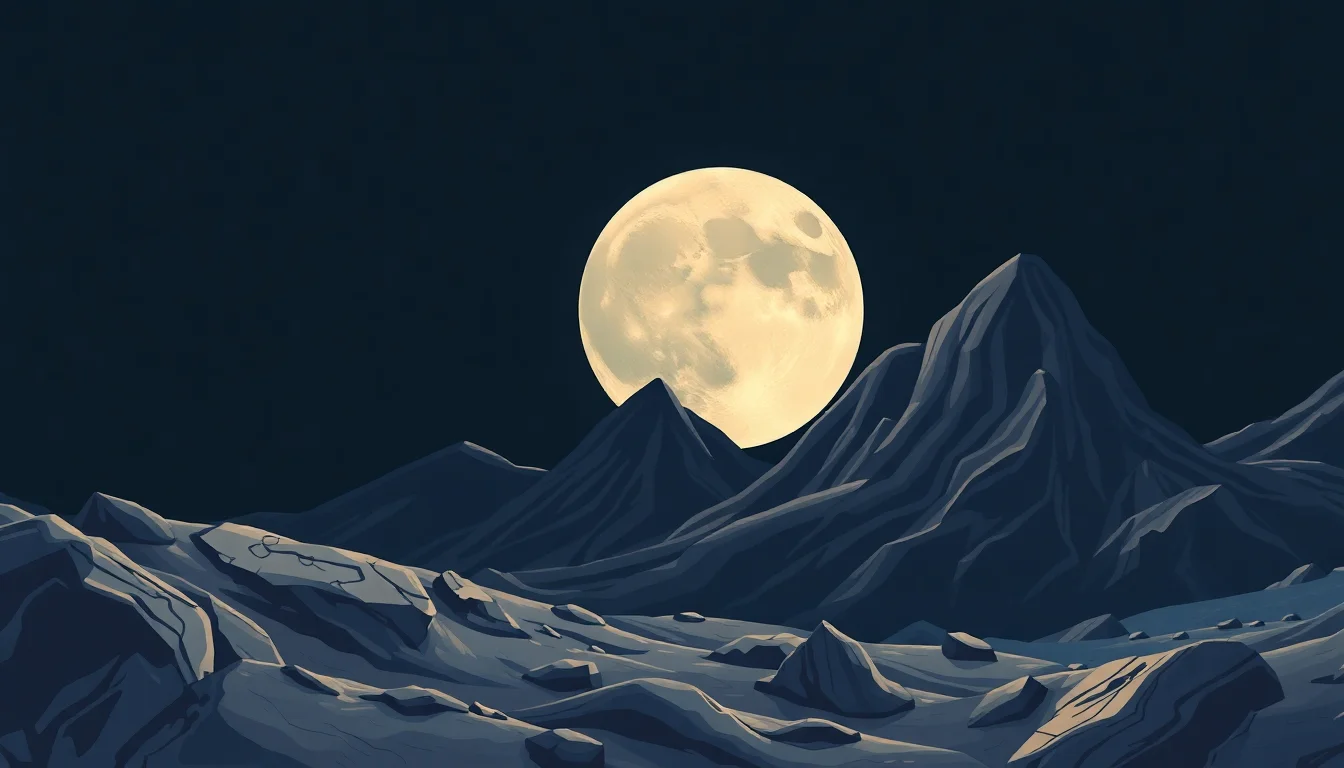
Lunar geology is the practical study of the Moon’s crust, mantle, and history, serving as a Rosetta Stone for understanding the early solar system. Unlike Earth, the Moon lacks a thick atmosphere or plate tectonics, meaning its surface preserves a 4.5-billion-year record of cosmic violence. Researchers utilize Apollo Lunar Samples and data from the Lunar Reconnaissance Orbiter to map the chemical composition of the regolith. This fine, abrasive dust is the result of eons of micrometeoroid bombardment, creating a unique challenge for both machinery and human lungs. For those entering the field, the primary focus is identifying high-value landing sites for the upcoming Artemis Missions. Understanding the mechanical properties of this soil is non-negotiable for long-term habitat construction.
⚒️ Essential Tools & Instrumentation
Accessing the Moon’s geological secrets requires specialized hardware capable of surviving the 300-degree Fahrenheit temperature swings of the lunar day and night. The gold standard for remote sensing is Gamma-Ray Spectroscopy, which allows scientists to map elemental abundances from orbit without touching the surface. On the ground, instruments like the APXS provide real-time chemical assays of boulders and soil. Private firms like Intuitive Machines are now providing commercial delivery of these sensors to the lunar south pole. Pricing for payload delivery currently hovers around $1.2 million per kilogram, making every gram of instrumentation a high-stakes engineering decision. Precision is the difference between discovering a new mineral and a multi-million dollar pile of scrap metal.
🌋 Volcanic History & Maria Basalts
The dark patches visible from Earth, known as Maria, are vast plains of solidified basaltic lava that erupted billions of years ago. These regions, such as Sea of Tranquility, offer a glimpse into the Moon's once-molten interior and the cooling history of its mantle. Geologists distinguish these from the lighter, rugged Lunar Highlands, which are composed primarily of anorthosite. The transition between these zones reveals the timing of the Late Heavy Bombardment, a period of intense asteroid strikes. Analyzing the titanium content in these basalts is a primary objective for those looking to produce oxygen via ISRU technologies. These volcanic fields are not just historical sites; they are the industrial parks of the 21st century.
☄️ Impact Cratering & Chronology
Impact craters are the primary geological clock used to date surfaces across the inner solar system. By counting the density of craters in a given area, scientists can estimate the age of the terrain, a technique known as CSFD. The South Pole-Aitken Basin is the largest, deepest, and oldest known impact structure on the Moon, potentially exposing deep mantle material. This site is the 'Holy Grail' for geologists because it holds clues to the Moon's internal structure that are otherwise inaccessible. Modern mapping efforts by the JAXA Kaguya mission have refined our understanding of these impact dynamics. Every crater tells a story of a specific kinetic event that shaped the orbital neighborhood we inhabit today.
💎 Rare Earth Elements & KREEP
A specific geochemical signature known as KREEP—rich in Potassium (K), Rare Earth Elements (REE), and Phosphorus (P)—is concentrated in the Ocean of Storms. This material represents the final dregs of the Lunar Magma Ocean as it crystallized billions of years ago. For geopolitical strategists, KREEP is more than a curiosity; it is a potential source of thorium and uranium for nuclear power. The distribution of these elements is highly asymmetrical, leading to intense debate over the Moon's thermal evolution. Companies like ispace are targeting these regions for initial prospecting missions to secure early-mover advantages. The concentration of these elements will likely dictate the borders of future lunar economic zones.
🧊 Polar Volatiles & Water Ice
The discovery of water ice in Permanently Shadowed Regions (PSRs) has fundamentally shifted the value of lunar real estate. These 'cold traps' at the poles, such as Shackleton Crater, contain volatiles that have been frozen for billions of years. This ice is the most valuable commodity in space, as it can be processed into liquid hydrogen and oxygen for rocket fuel. The VIPER Rover mission is designed to map the distribution and concentration of this ice in unprecedented detail. Extracting this resource requires overcoming the extreme cold and the abrasive nature of cryogenic regolith. Without this 'oil of the solar system,' deep space exploration remains an expensive pipe dream.
⚖️ The Giant Impact Hypothesis
The prevailing theory of the Moon's origin is the Giant Impact Hypothesis, which suggests a Mars-sized body named Theia collided with the early Earth. This catastrophic event explains why the Moon has a small iron core and a composition nearly identical to Earth's mantle. However, isotopic contradictions continue to plague this model, leading some to propose the Synestia Theory of a vaporized donut-shaped Earth-Moon system. Geologists look for 'fingerprints' in oxygen isotopes to settle this debate once and for all. The resolution of this conflict will redefine our understanding of how planetary systems form and stabilize. It is the ultimate cold case in the history of our planet.
🚀 Commercial Prospecting & Mining
Commercial interest in lunar geology is exploding as the Outer Space Treaty faces new interpretations regarding resource extraction. The Artemis Accords represent an attempt by the United States and its allies to establish 'safety zones' for mining activities. Opponents argue this leads to a 'first-come, first-served' colonization of the lunar surface. Entities like the CNSA are moving forward with their own International Lunar Research Station (ILRS) in direct competition. The geological survey is no longer a purely academic exercise; it is the first step in a trillion-dollar land grab. The rocks are the same, but the flags planted next to them carry immense weight.
🔭 Future Lunar Observatories
The Moon's far side is the most radio-quiet environment in the inner solar system, making it the premier location for Low-Frequency Radio Astronomy. Geologically stable craters provide the perfect foundation for massive telescope arrays that can peer into the 'Dark Ages' of the universe. Building these structures requires a deep understanding of Lunar Seismology to ensure long-term stability against moonquakes. Unlike Earth, moonquakes are triggered by tidal forces from Earth and can last for over an hour. Engineers must account for this persistent ringing when designing sensitive optical or radio equipment. The geology of the Moon is the literal bedrock upon which our next great leap in physics will be built.
🛡️ Planetary Protection Protocols
Protecting the lunar environment from human contamination is a growing concern for the COSPAR. As more landers arrive, the risk of introducing terrestrial microbes or exhaust gases into pristine sites increases. Geologists argue that certain Lunar Heritage Sites, like the Apollo 11 landing zone, should be preserved for their scientific and historical value. However, the need for infrastructure often clashes with the desire for preservation. Balancing the 'Leave No Trace' ethos with the 'Drill, Baby, Drill' reality of resource extraction is the defining tension of modern lunar policy. The Moon's rocky truths are fragile, and once disturbed, the record of 4 billion years is lost forever.
Key Facts
- Year
- -4500000000
- Origin
- Ancient observations of the Moon's surface, formalized with the advent of telescopic astronomy and solidified by the Apollo missions.
- Category
- Science & Technology
- Type
- Topic
Frequently Asked Questions
Can I buy a piece of the Moon?
Legally, no individual or corporation can own lunar land under the Outer Space Treaty. However, you can purchase verified Lunar Meteorites that have fallen to Earth naturally. These are rocks ejected from the Moon by impacts that eventually crossed Earth's orbit. Prices for these meteorites can range from $500 to over $10,000 per gram depending on their rarity and composition. Be wary of 'Lunar Deeds' sold online, as they hold no legal standing in international law.
What is the most valuable resource on the Moon?
While Helium-3 is often cited for its potential in future fusion reactors, the most immediately valuable resource is water ice. Found in Permanently Shadowed Regions, this ice can be split into hydrogen and oxygen. This provides life support for astronauts and, more importantly, fuel for spacecraft. By creating a 'gas station' in orbit, the cost of exploring the rest of the solar system drops significantly. Water is the currency of the new space economy.
Are there active volcanoes on the Moon today?
The Moon is considered geologically 'dead' or 'dying,' with no major volcanic activity for at least a billion years. However, recent data from the LRO suggests that small-scale volcanic eruptions, known as Irregular Mare Patches, may have occurred as recently as 50 million years ago. This implies the Moon's interior stayed hot much longer than previously thought. While you won't see flowing lava today, the Moon's thermal history is still being rewritten. It is more of a 'slow-cooling' ember than a cold rock.
How do moonquakes differ from earthquakes?
Moonquakes are generally much weaker than earthquakes but last significantly longer. Because the Moon is dry and rigid, it vibrates like a tuning fork when struck or stressed by Earth's gravity. A typical Moonquake can last for ten minutes to an hour, whereas earthquakes usually dissipate in seconds. There are four types: deep moonquakes, thermal quakes, vibrations from impacts, and shallow moonquakes. Shallow quakes are the most dangerous for future bases, reaching up to 5.5 on the Richter scale.
Why is lunar dust so dangerous?
Lunar regolith is not like beach sand; it is composed of tiny, glass-like shards created by constant impacts. Without wind or water to erode them, these particles remain incredibly sharp and abrasive. During the Apollo Missions, dust clogged seals, wore through spacesuit layers, and caused 'lunar hay fever' in astronauts. It is also electrostatically charged, meaning it sticks to everything. Managing this dust is the single greatest engineering hurdle for long-term lunar habitation.