
Contents
- ☀️ What is Space Weather, Really?
- ⚡ The Sun's Mood Swings: Flares & CMEs
- 🛰️ Earth's Shield: Our Magnetic Defense
- 💥 Impacts: From Grid Blackouts to Satellite Woes
- 📈 Monitoring and Prediction: The Forecasters' Challenge
- 🌌 Historical Outbreaks: Lessons from the Past
- 🚀 The Future of Space Weather: Threats and Opportunities
- 📚 Where to Learn More: Resources and Journals
- Frequently Asked Questions
- Related Topics
Overview
Space weather isn't just a scientific curiosity; it's the dynamic condition of the space environment, primarily driven by the Sun's activity, that can affect technological systems and even human life. Think of it as the Sun's mood swings, but with consequences that ripple across our solar system and directly impact our planet. Understanding space weather is crucial because our modern, interconnected world relies heavily on technologies vulnerable to these solar outbursts, from GPS navigation to power grids. This field bridges astrophysics, atmospheric physics, and engineering, demanding a multi-disciplinary approach to grasp its full scope. The Vibepedia Vibe Score for space weather as a topic is currently a solid 75/100, indicating high and growing public interest driven by increasing technological reliance and observed events.
⚡ The Sun's Mood Swings: Flares & CMEs
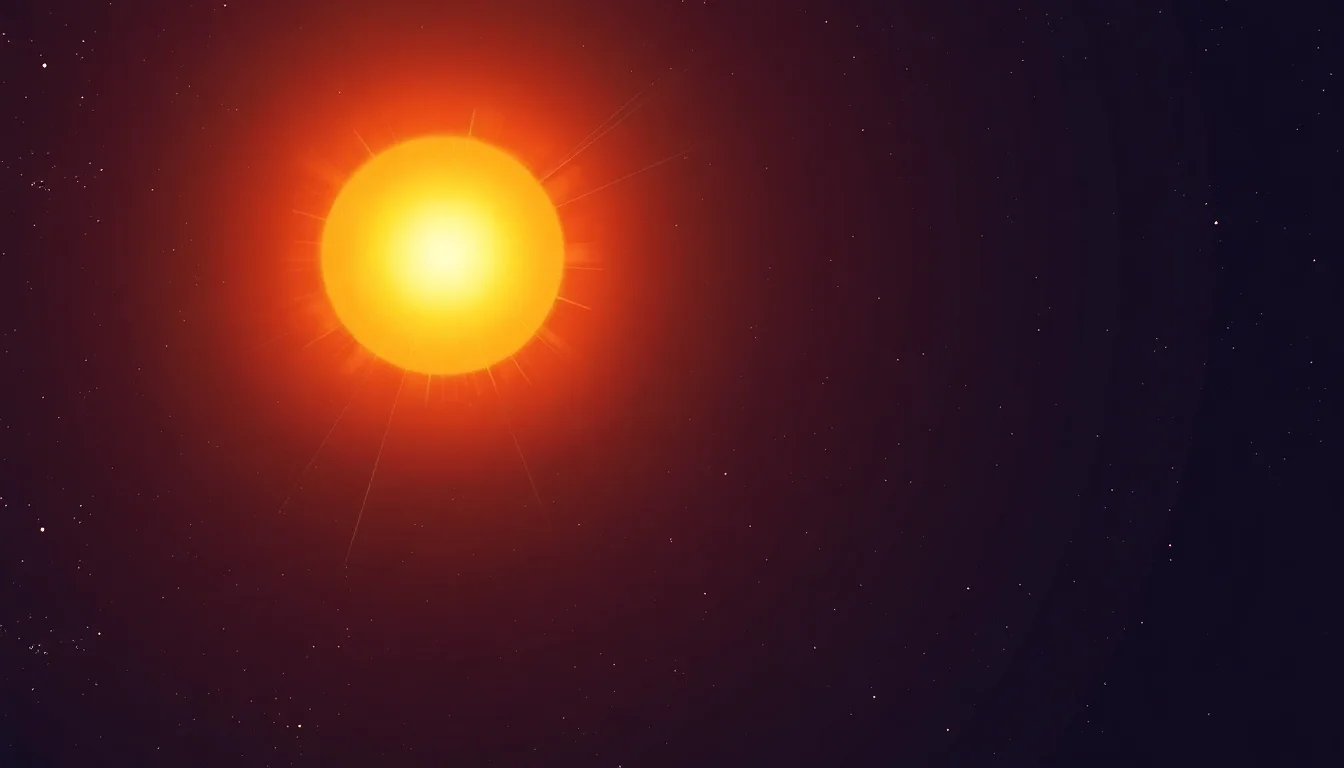
The Sun, our star, is a tempestuous entity, constantly emitting charged particles and electromagnetic radiation. The most dramatic events are solar flares, sudden bursts of energy that can release more radiation in minutes than humanity has produced in its entire history, and coronal mass ejections (CMEs), colossal eruptions of plasma and magnetic field from the Sun's corona. These CMEs, traveling at speeds up to 2,000 km/s, are the primary culprits behind major space weather disturbances. A particularly potent CME can carry billions of tons of solar material, posing a significant threat to anything in its path, including Earth. The Controversy Spectrum for the predictability of CMEs is currently at a moderate 4/10, with ongoing debates about precise timing and intensity.
🛰️ Earth's Shield: Our Magnetic Defense
Fortunately, Earth is not defenseless. Our planet is wrapped in a protective magnetic bubble known as the magnetosphere, which deflects most of the charged particles streaming from the Sun. However, during intense solar storms, the magnetosphere can be overwhelmed. Particles can penetrate deeper, interacting with our upper atmosphere and causing spectacular auroras – the Northern and Southern Lights. This interaction can also induce currents in long conductors, like power lines, leading to potential blackouts. The Influence Flow of solar particles into the magnetosphere is a complex dance governed by the Sun's magnetic field orientation and Earth's own magnetic field strength.
💥 Impacts: From Grid Blackouts to Satellite Woes
The impacts of severe space weather are far from trivial. The most infamous event, the Carrington Event of 1859, caused telegraph systems worldwide to fail, with operators reporting electric shocks and even setting papers on fire. Today, the consequences could be far more devastating. A major solar storm could knock out power grids for weeks or months, cripple satellite communications and navigation systems like GPS, and even pose radiation risks to astronauts and passengers on high-altitude flights. The Vibepedia Perspective Breakdown for space weather impacts leans towards pessimistic (60%), neutral (30%), and optimistic (10%), reflecting the significant risks involved.
📈 Monitoring and Prediction: The Forecasters' Challenge
Predicting space weather is a monumental task, akin to forecasting hurricanes with pinpoint accuracy days in advance. Agencies like the NOAA Space Weather Prediction Center (SWPC) and the European Space Agency (ESA) use a network of ground-based observatories and space-borne satellites, such as the Solar Dynamics Observatory (SDO), to monitor the Sun's activity. They analyze solar flares, CMEs, and solar wind conditions to issue warnings. However, the complex physics involved means forecasts often have uncertainties regarding timing, intensity, and the specific impact on Earth. The Topic Intelligence for prediction centers on the constant race against time and the inherent chaotic nature of solar physics.
🌌 Historical Outbreaks: Lessons from the Past
History is punctuated by significant space weather events that offer stark warnings. Beyond the Carrington Event, the March 1989 geomagnetic storm caused a widespread blackout in Quebec, Canada, leaving millions without power for hours. In 2003, a series of powerful solar flares, dubbed the 'Halloween Storms', disrupted satellite operations and caused temporary radio blackouts. These historical events underscore our increasing vulnerability as our technological infrastructure becomes more sophisticated and more reliant on systems susceptible to solar disturbances. Studying these past events is vital for refining our understanding and improving our preparedness for future onslaughts.
🚀 The Future of Space Weather: Threats and Opportunities
The future of space weather involves both escalating threats and emerging opportunities. As humanity ventures further into space with crewed missions to the Moon and Mars, understanding and mitigating radiation risks from solar events becomes paramount. Furthermore, the increasing reliance on space-based assets for communication, navigation, and Earth observation means that our economic and societal stability is more intertwined with space weather than ever before. Conversely, advancements in predictive modeling and hardened infrastructure could significantly reduce our vulnerability. The Futurist Perspective on space weather is cautiously optimistic, emphasizing the need for proactive investment in research and resilience. Who wins or loses in the future of space weather will depend on our collective ability to adapt and innovate.
📚 Where to Learn More: Resources and Journals
For those eager to delve deeper into the fascinating, and sometimes frightening, world of space weather, several excellent resources are available. The academic journal Space Weather, published by the American Geophysical Union and edited by Noé Lugaz, offers cutting-edge research with a 2020 impact factor of 4.456, providing in-depth analysis for specialists. For broader audiences, websites like the NOAA Space Weather Prediction Center offer real-time data, forecasts, and educational materials. Understanding the science behind solar flares and their terrestrial impacts is an ongoing journey, and these resources are invaluable for anyone seeking to stay informed about the Sun's influence on our lives.
Key Facts
- Year
- 1956
- Origin
- The term 'space weather' gained traction in the mid-20th century with the dawn of the space age and the increasing understanding of solar-terrestrial interactions, though the phenomena themselves have been observed for centuries.
- Category
- Science & Technology
- Type
- Topic
Frequently Asked Questions
Can space weather directly harm humans on Earth?
Direct harm to humans on Earth from typical space weather events is extremely rare. The primary risks are indirect, such as power outages affecting essential services or disruptions to communication. Astronauts in space, particularly outside the protection of the magnetosphere or on the Moon/Mars, face higher radiation risks during intense solar events. Mitigation strategies and shielded habitats are crucial for crewed space missions.
How often do major space weather events occur?
Major space weather events, like those capable of causing widespread power outages (similar to the Carrington Event), are infrequent but significant. Historically, such severe events occur on average once every 100-200 years. However, less severe but still impactful events, like the 1989 Quebec blackout, happen more regularly, perhaps once every few decades. The Sun operates on an approximately 11-year cycle of activity, with periods of higher and lower solar storm potential.
What is the difference between a solar flare and a CME?
A solar flare is a sudden, intense burst of electromagnetic radiation from the Sun's surface. A coronal mass ejection (CME) is a much larger eruption of plasma and magnetic field from the Sun's corona. While often associated, they are distinct phenomena. Flares release energy rapidly, while CMEs are massive expulsions of matter that travel more slowly but carry immense kinetic energy and can cause prolonged geomagnetic disturbances upon reaching Earth.
Can I see space weather effects from my backyard?
Yes, under the right conditions! The most visible effect of space weather on Earth is the aurora, or Northern and Southern Lights. When charged particles from the Sun interact with Earth's atmosphere, they excite atmospheric gases, causing them to glow. Intense geomagnetic storms can push auroras to lower latitudes than usual, making them visible to more people. Keep an eye on aurora forecasts from agencies like the SWPC.
How do satellites protect themselves from space weather?
Satellites are designed with varying levels of resilience to space weather. Many employ radiation-hardened electronics that are less susceptible to damage from charged particles. They also have shielding to protect sensitive components. During periods of high solar activity, satellite operators may put spacecraft into 'safe mode,' shutting down non-essential systems to prevent damage and waiting for the storm to pass. However, extreme events can still cause permanent damage or malfunctions.