
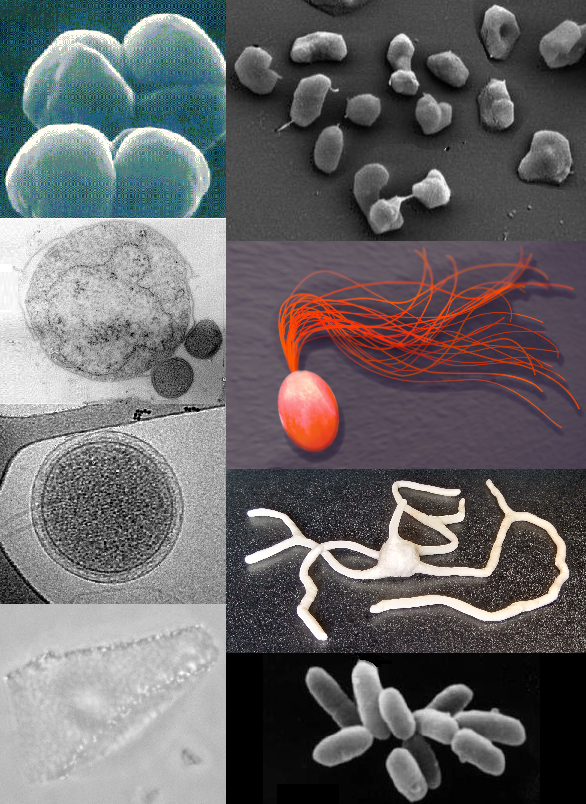
Contents
Overview
The story of Archaea begins not with their discovery, but with their reclassification. Initially, these organisms were lumped in with bacteria under the umbrella term 'archaebacteria'. The scientific landscape of archaea is shaped by a few key figures and institutions. More recently, researchers like Jill Banfield at the University of California, Berkeley have utilized advanced genomic techniques to uncover novel archaeal lineages from environmental samples, expanding our knowledge of their diversity. Institutions such as the Max Planck Institute for Terrestrial Microbiology in Germany and various university departments globally are at the forefront of archaeal research, focusing on their unique biochemistry, ecology, and evolutionary significance. The American Society for Microbiology serves as a crucial platform for disseminating new findings in the field.
⚙️ How It Works
Archaea possess a suite of unique cellular and molecular characteristics that set them apart. Their cell membranes, unlike those of bacteria and eukaryotes, are constructed from lipids linked by ether bonds, which confer remarkable stability in extreme conditions like high temperatures and pressures. Many archaea also possess an archaellum, a unique rotating appendage for motility that is structurally distinct from bacterial flagella. Furthermore, their genetic machinery, including RNA polymerase and ribosomes, shares more similarities with eukaryotes than with bacteria, fueling theories about the evolutionary origins of eukaryotic cells. Key metabolic pathways, such as methanogenesis—the production of methane—are exclusive to certain archaeal groups, highlighting their specialized biochemical capabilities.
📊 Key Facts & Numbers
The sheer diversity and ubiquity of archaea are staggering. While often associated with extreme environments, archaea are found in virtually every habitat on Earth, from the deep ocean floor to the human gut. Their presence in the human gut also hints at their direct, albeit often unacknowledged, impact on human health and physiology.
👥 Key People & Organizations
The scientific landscape of archaea is shaped by a few key figures and institutions. More recently, researchers like Jill Banfield at the University of California, Berkeley have utilized advanced genomic techniques to uncover novel archaeal lineages from environmental samples, expanding our knowledge of their diversity. Institutions such as the Max Planck Institute for Terrestrial Microbiology in Germany and various university departments globally are at the forefront of archaeal research, focusing on their unique biochemistry, ecology, and evolutionary significance. The American Society for Microbiology serves as a crucial platform for disseminating new findings in the field.
🌍 Cultural Impact & Influence
While not a household name, Archaea exert a subtle yet profound influence on our planet and even our bodies. Their association with extreme environments has lent them an almost alien mystique, appearing in speculative fiction and discussions about astrobiology and the potential for life beyond Earth.
⚡ Current State & Latest Developments
The study of Archaea is a rapidly evolving field, with new discoveries constantly emerging. Recent research has focused on uncovering novel archaeal lineages through metagenomics, analyzing genetic material directly from environmental samples rather than culturing organisms in the lab. For instance, the discovery of new archaeal phyla like the Asgard archaea has provided crucial insights into the origins of eukaryotes, suggesting a close evolutionary relationship. Furthermore, scientists are increasingly exploring the potential of archaea in biotechnology, particularly their enzymes, which function under extreme conditions and can be valuable in industrial processes. The ongoing exploration of deep-sea hydrothermal vents and other extreme habitats continues to reveal archaeal species with unprecedented metabolic capabilities.
🤔 Controversies & Debates
The classification of Archaea, while now widely accepted, was not without its initial controversies. The very idea of a third domain of life challenged established biological paradigms, and the term 'archaebacteria' itself was a point of contention. Some scientists initially resisted the notion that these organisms were fundamentally different from bacteria. Another ongoing area of debate revolves around the precise evolutionary relationship between Archaea and Eukaryota. While the Asgard archaea provide strong evidence for an archaeal origin of eukaryotes, the exact nature of the ancestral archaeal host and the mechanisms of eukaryotic cell evolution remain subjects of intense research and discussion. The difficulty in culturing many archaeal species also presents a persistent challenge, leading to debates about the completeness of our understanding of their diversity and ecological roles.
🔮 Future Outlook & Predictions
The future of archaeal research is brimming with potential. Scientists anticipate the discovery of even more novel archaeal lineages, particularly from underexplored environments like the deep subsurface and polar regions, which could further illuminate the tree of life. The application of archaeal enzymes in industrial processes, such as bioremediation and the production of biofuels, is expected to grow significantly. Furthermore, as our understanding of the human gut microbiome deepens, the role of archaea in human health and disease is likely to become a major focus, potentially leading to new therapeutic strategies. The ongoing search for life beyond Earth will also continue to draw inspiration from archaea, serving as models for potential extraterrestrial life forms adapted to harsh conditions.
💡 Practical Applications
Archaea offer a treasure trove of practical applications, primarily due to their unique enzymes that function under extreme conditions. For example, thermostable enzymes like Taq polymerase, originally isolated from the archaeon Thermus aquaticus, are indispensable for polymerase chain reaction (PCR) in molecular biology and diagnostics. Other archaeal enzymes are being explored for use in industrial processes such as detergent manufacturing, food processing, and the breakdown of pollutants in bioremediation. Their ability to produce methane through methanogenesis also makes them relevant in the study and potential optimization of biogas production for renewable energy.
Key Facts
- Category
- science
- Type
- topic