
Contents
Overview
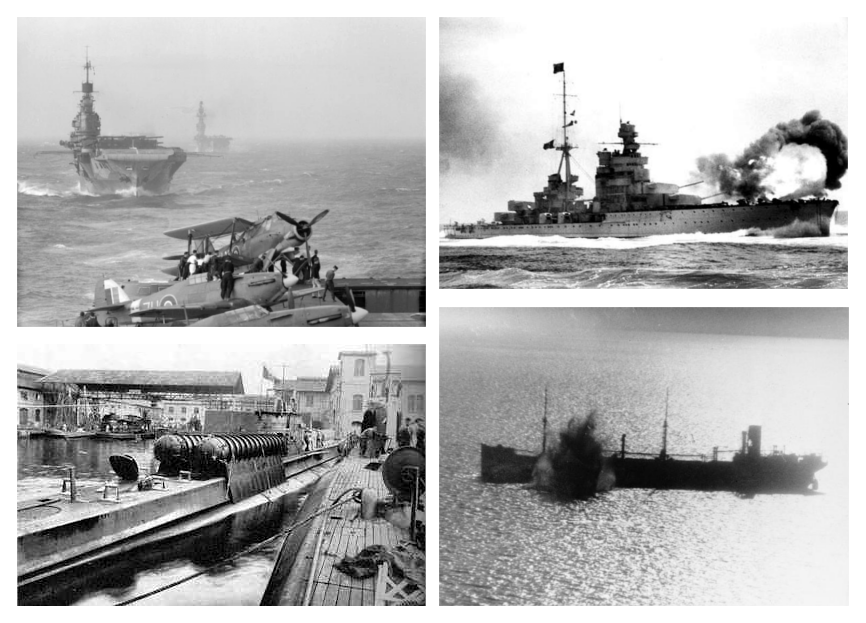
The Battle of the Mediterranean ignited following Italy's entry into World War II, driven by Benito Mussolini's ambition to establish Italian dominance in the region and challenge British naval power. Precedents for naval conflict in these waters stretched back centuries, but the scale and technological intensity of this WWII campaign were unprecedented. The initial phase saw the Regia Marina, supported by elements of the German Luftwaffe and Vichy French naval forces, confront the Royal Navy, bolstered by Commonwealth navies from Australia, Greece, the Netherlands, and Poland. The entry of American naval and air units significantly shifted the balance of power, while the scuttling of the Vichy French fleet at Toulon removed a potential Axis asset. The subsequent Armistice of Cassibile saw most of the Italian Navy transition to a co-belligerent status, fighting alongside the Allies, a dramatic shift that reshaped the naval balance in the final years of the war.
⚙️ How It Works
The Battle of the Mediterranean was a complex interplay of naval surface actions, submarine warfare, and air power. Major fleet engagements, such as the Battle of Cape Matapan, showcased the tactical prowess and technological advantages of the British, often exploiting Italian radar deficiencies and code-breaking successes. Submarine warfare was a constant threat, with both sides deploying U-boats and Italian submarines to interdict enemy shipping and naval units. Air power, initially dominated by land-based aircraft from North Africa and Sicily, evolved to include carrier-borne aircraft from the Royal Navy's fleet carriers like HMS Ark Royal and HMS Formidable. The strategic objective for both sides was to control sea lanes, essential for supplying their armies in North Africa, and to deny these same routes to the enemy, making naval aviation and anti-submarine warfare critical components of the campaign.
📊 Key Facts & Numbers
Over its nearly five-year duration, the Battle of the Mediterranean witnessed substantial losses on both sides. Allied shipping losses in the Mediterranean theater were substantial, highlighting the ferocity of the Axis submarine and air attacks. The strategic importance of the Mediterranean was underscored by the fact that over 80% of Axis supplies to North Africa were transported by sea, with Allied interdiction efforts sinking an estimated 3 million tons of Axis supply shipping.
👥 Key People & Organizations
Key figures in the Battle of the Mediterranean include Admiral Sir Andrew Cunningham, Commander-in-Chief of the Mediterranean Fleet for much of the war, whose leadership was instrumental in key Allied victories. On the Italian side, Admiral Angelo Iachino commanded the Regia Marina during critical periods, facing immense pressure to counter British naval superiority. Admiral Sir James Somerville, later commanding the Mediterranean Fleet, played a crucial role in operations supporting the North African landings. German Admiral Karl Dönitz, though primarily focused on the Atlantic, also directed U-boat operations that impacted Mediterranean supply lines. The strategic decisions made by leaders like Winston Churchill and Benito Mussolini profoundly shaped the naval deployments and objectives throughout the conflict.
🌍 Cultural Impact & Influence
The Battle of the Mediterranean had a profound cultural resonance, shaping perceptions of naval power and national pride. Italian naval doctrine, heavily influenced by Admiral Conte di Cavour's pre-war theories, struggled to adapt to the realities of combined naval and air warfare, a point of national introspection. British naval successes, particularly early victories against the Regia Marina, were celebrated as vital contributions to the Allied war effort, bolstering morale on the home front and within the Commonwealth. The daring actions of submarines and surface raiders on both sides became the stuff of legend, inspiring countless books, films, and documentaries that continue to shape public understanding of the war. The strategic importance of controlling sea lanes, vividly demonstrated in this campaign, remains a core tenet of modern naval strategy and geopolitical thought.
⚡ Current State & Latest Developments
As of 2024, the legacy of the Battle of the Mediterranean continues to be studied by naval historians and strategists. The lessons learned regarding carrier operations, anti-submarine warfare, and the critical role of air power in naval engagements remain highly relevant. Modern naval exercises in the Mediterranean often incorporate scenarios that echo the challenges faced by combatants during WWII, emphasizing the enduring strategic significance of the region. Ongoing archaeological efforts continue to locate and document the wrecks of warships and submarines lost during the campaign, providing invaluable insights into naval technology and the human cost of the conflict. The geopolitical landscape of the Mediterranean continues to be shaped by historical naval power dynamics, with contemporary naval presence from various global powers reflecting its enduring strategic importance.
🤔 Controversies & Debates
A significant controversy surrounding the Battle of the Mediterranean revolves around the perceived caution of the Regia Marina, often attributed to a lack of aircraft carriers and a doctrine that prioritized preserving the fleet over engaging in decisive battles. Critics argue that Italian admirals were overly hesitant, particularly in engagements like the Battle of Calabria, potentially missing opportunities to inflict greater damage on the Royal Navy. Conversely, Italian apologists point to the qualitative inferiority of their naval radar and fire-control systems compared to the British, as well as the constant threat of Allied air superiority. The decision by the Vichy French government to scuttle their fleet at Toulon, rather than risk it falling into German hands, remains a point of debate regarding national sovereignty and military preparedness. The effectiveness and ethical implications of Allied code-breaking efforts, such as those at Bletchley Park, also present a complex ethical dimension to the campaign's outcomes.
🔮 Future Outlook & Predictions
The future of naval strategy in the Mediterranean will likely continue to be influenced by the lessons of the Battle of the Mediterranean, particularly concerning the integration of advanced technologies. The rise of unmanned naval systems, hypersonic missiles, and sophisticated electronic warfare capabilities suggests a future where air and sea power are even more inextricably linked. Nations operating in the region will face increasing challenges in maintaining freedom of navigation amidst complex geopolitical tensions and the potential for asymmetric warfare. The strategic importance of controlling chokepoints like the Strait of Gibraltar and the Suez Canal will remain paramount, potentially leading to new forms of naval competition and cooperation. Expert forecasts suggest a continued emphasis on multi-domain operations, where naval forces must seamlessly integrate with land, air, and cyber assets to achieve strategic objectives.
💡 Practical Applications
While the Battle of the Mediterranean was a military campaign, its principles of controlling vital sea lanes and interdicting enemy supply lines have direct parallels in modern logistics and economic warfare. The strategic importance of maritime security in the Mediterranean continues to inform contemporary naval deployments and international relations. Lessons from the campaign regarding fleet coordination, intelligence gathering (including signals intelligence), and the impact of air power on naval operations are directly applicable to modern military planning. Furthermore, the historical study of naval engagements like those in the Mediterranean informs the development of new naval technologies and doctrines, ensuring that the strategic challenges of controlling maritime domains remain a central focus for global powers.
Key Facts
- Category
- history
- Type
- topic