
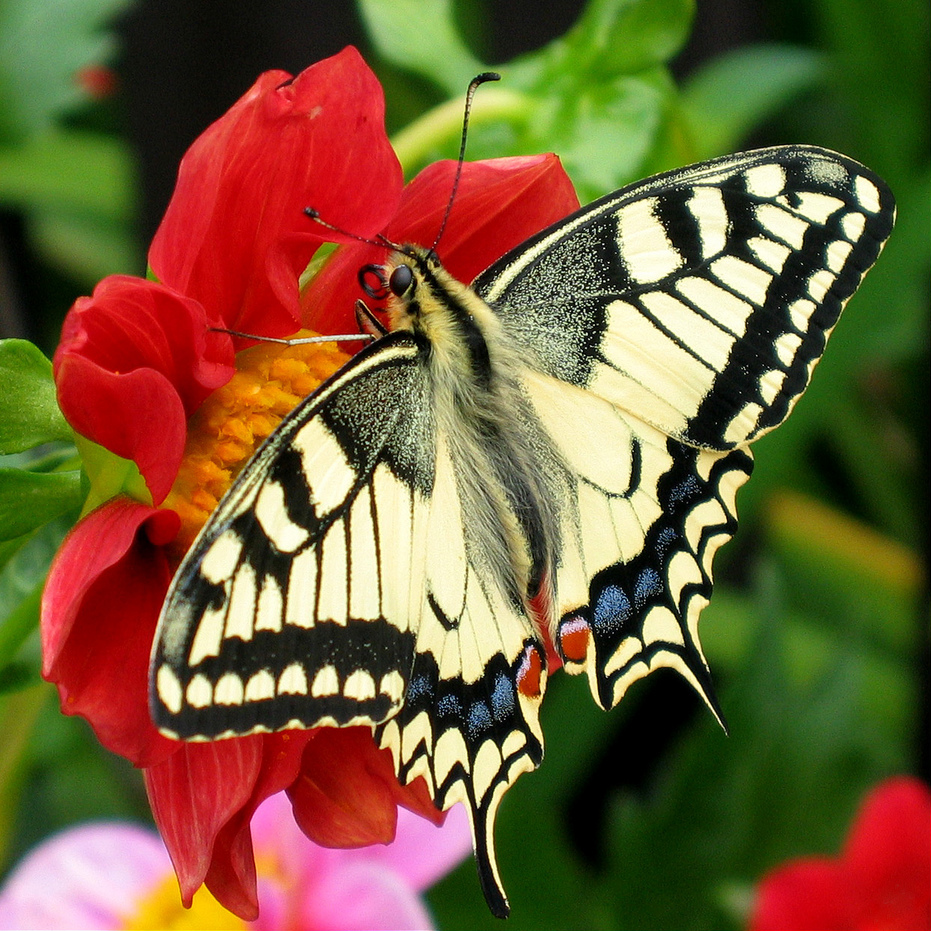
Contents
Overview
The evolutionary lineage of butterflies traces back to the Cretaceous era, with molecular evidence suggesting their origins predate the Paleocene, approximately 56 million years ago, when the oldest definitive butterfly fossils have been unearthed. Early lepidopterans likely evolved alongside flowering plants, a symbiotic relationship that fueled the diversification of both groups. While the precise geographical origin remains debated, it is widely accepted that butterflies radiated from ancient moth lineages. Early forms were likely less colorful and more cryptic than their modern descendants, gradually developing the intricate wing patterns and proboscis for nectar feeding that characterize today's species. The development of angiosperms provided a rich food source for both larvae and adults, driving the evolutionary arms race that led to the dazzling array of species we see today, from the ancient swallowtail families to more recent lineages.
⚙️ How It Works
Butterflies exhibit a remarkable four-stage life cycle, a process known as complete metamorphosis. It begins with the egg, typically laid on a specific host plant that will nourish the emerging larva. This larval stage, commonly called a caterpillar, is primarily focused on growth, consuming vast amounts of foliage and undergoing several molts as it increases in size. Upon reaching maturity, the caterpillar enters the pupal stage, forming a protective casing called a chrysalis. Within this seemingly dormant shell, a profound transformation occurs as the caterpillar's body is reorganized into the adult form. Finally, the adult butterfly emerges, its wings initially soft and folded, which it then pumps full of hemolymph to expand and harden before its maiden flight. This intricate biological engineering allows for distinct ecological niches for the larval and adult stages, minimizing competition.
📊 Key Facts & Numbers
Globally, there are an estimated 18,500 described species of butterflies, distributed across six to seven families, including Papilionidae (swallowtails), Lycaenidae (blues, coppers, hairstreaks), and Nymphalidae (brush-footed butterflies), which is the largest family with over 6,000 species. The Monarch butterfly (Danaus plexippus) is famous for its epic annual migration, covering up to 3,000 miles from Canada and the United States to overwintering sites in Mexico. In terms of size, the Queen Alexandra's Birdwing (Ornithoptera alexandrae) is the largest, with females boasting wingspans of up to 11 inches (28 cm), while the smallest, such as the Western Pygmy-Blue (Brephidium exilis), measure less than half an inch (1.3 cm) across. Butterflies are found on every continent except Antarctica, with the highest diversity concentrated in tropical regions like the Amazon rainforest.
👥 Key People & Organizations
While no single individual is universally credited with 'discovering' butterflies, pioneering entomologists like Alfred Russel Wallace and Henri Faure made significant contributions to understanding their diversity and evolution. Organizations such as the Butterfly Conservation in the UK, the Xerces Society for Invertebrate Conservation in the US, and the World Wildlife Fund (WWF) are actively involved in research, habitat preservation, and advocacy for butterfly populations. Scientific institutions like the Smithsonian Institution and the Natural History Museum in London house extensive collections and conduct ongoing research. The work of lepidopterists worldwide, often working in relative obscurity, forms the backbone of our knowledge about these insects, documenting new species and tracking population dynamics.
🌍 Cultural Impact & Influence
Butterflies have profoundly influenced human culture, appearing in art, literature, and mythology for millennia. In ancient Greek mythology, Psyche, often depicted with butterfly wings, symbolized the soul and its journey. The Monarch butterfly's migration is a powerful symbol of endurance and transformation in North America, while in Japan, butterflies represent Shinto spirits and marital fidelity. Artists like Ernst Haeckel incorporated them into scientific illustrations, and poets such as Mary Oliver have found deep philosophical meaning in their fleeting existence. Their aesthetic beauty has also inspired fashion, design, and even the naming of phenomena, like the butterfly effect in chaos theory, illustrating how a small change can have large, unpredictable consequences. The vibrant colors and delicate forms make them a constant source of wonder and artistic inspiration.
⚡ Current State & Latest Developments
In recent years, there's been a growing alarm regarding butterfly population declines worldwide. Studies have documented significant drops in species like the Monarch butterfly and various European species. This crisis is largely attributed to habitat destruction from agriculture and urbanization, widespread pesticide use (particularly neonicotinoids), and the impacts of climate change, which disrupt migration patterns and host plant availability. Conservation efforts are intensifying, with initiatives like creating pollinator gardens, restoring native habitats, and advocating for stricter pesticide regulations gaining traction. The development of citizen science projects, such as Journey North and the Great Sunflower Project, allows the public to contribute vital data on butterfly sightings and population health.
🤔 Controversies & Debates
One of the most significant debates surrounding butterflies centers on the impact of neonicotinoid pesticides. While manufacturers argue for their targeted efficacy, many scientists and conservationists point to mounting evidence linking these systemic insecticides to widespread pollinator decline, including butterflies. Another controversy involves the management of invasive species, such as the Monarch butterfly's host plant, milkweed, in certain ecosystems where it can outcompete native flora. Furthermore, the ethics of large-scale butterfly farming for commercial purposes, while providing some economic incentives for conservation in certain regions, raises questions about the welfare of the insects and the potential for introducing non-native species. The debate over the best strategies for conservation – whether focusing on habitat restoration, pesticide reduction, or captive breeding programs – remains active among researchers and policymakers.
🔮 Future Outlook & Predictions
The future outlook for butterflies is a mixed bag, heavily dependent on human intervention and global environmental policies. Projections suggest that without significant mitigation of climate change and habitat loss, many species could face extinction within the next century. However, there's a growing global awareness and a surge in conservation initiatives. The development of climate-resilient habitats and the widespread adoption of organic farming practices could offer some reprieve. Scientists are also exploring novel conservation techniques, such as assisted migration for species struggling to adapt to changing climates and the use of genetic engineering to enhance resilience, though these approaches are themselves subjects of debate. The success of efforts like the Monarch butterfly conservation programs in Mexico and the US will be a critical indicator of our collective ability to protect these vital insects.
💡 Practical Applications
While butterflies are not typically engineered for direct practical applications in the way biotechnology or materials science
Key Facts
- Category
- nature
- Type
- topic