
Contents
- 🎵 Origins & History
- ⚙️ How It Works
- 📊 Key Facts & Numbers
- 👥 Key People & Organizations
- 🌍 Cultural Impact & Influence
- ⚡ Current State & Latest Developments
- 🤔 Controversies & Debates
- 🔮 Future Outlook & Predictions
- 💡 Practical Applications
- 📚 Related Topics & Deeper Reading
- Frequently Asked Questions
- References
- Related Topics
Overview
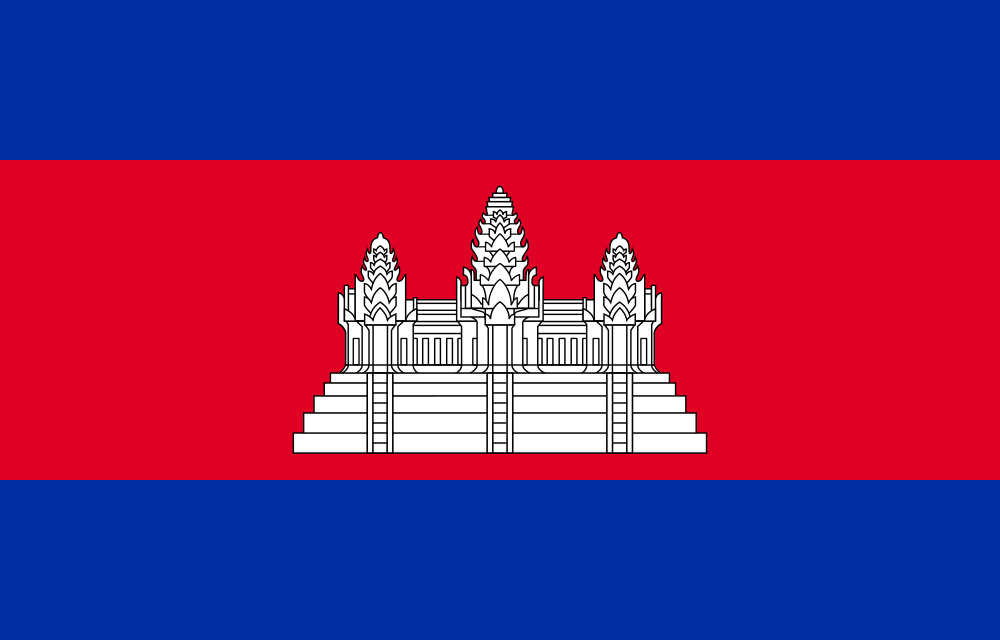
Cambodia, officially the Kingdom of Cambodia, is a country in Mainland Southeast Asia with a population of over 17 million people. The country has a rich history, with the Khmer Empire playing a significant role in the region's development. Cambodia is home to the famous Angkor Wat temple complex, a UNESCO World Heritage Site, and its capital city Phnom Penh is a hub of culture and commerce. With a diverse geography, including the Mekong river and Tonlé Sap lake, Cambodia is a popular destination for tourists and a significant player in regional trade. The country has a long history of Indian and Chinese influence, with Hinduism and Buddhism having a profound impact on its culture. Today, Cambodia is a constitutional monarchy, with King Norodom Sihamoni as its head of state and Hun Manet as its head of government. The country has a growing economy, with a GDP of over $24 billion, and is a member of the Association of Southeast Asian Nations (ASEAN).
🎵 Origins & History
Cambodia's history dates back to the 1st century AD, with the Funan Kingdom being one of the earliest known civilizations in the region. The Khmer Empire, which was established in 802 AD by Jayavarman II, played a significant role in the development of Southeast Asia. The empire was known for its impressive architectural achievements, including the construction of Angkor Wat, which is considered one of the greatest architectural achievements in history. The Khmer Empire also facilitated the spread of Hinduism and Buddhism to Southeast Asia, with the Indianised kingdom undertaking numerous religious infrastructural projects throughout the region.
⚙️ How It Works
The country's government is a constitutional monarchy, with the king serving as the head of state and the prime minister as the head of government. The current head of state is King Norodom Sihamoni, while the head of government is Hun Manet. The government is divided into three branches: the executive, legislative, and judicial. The executive branch is headed by the prime minister, who is responsible for appointing ministers and overseeing the implementation of policies. The legislative branch is composed of the National Assembly, which is responsible for making laws, while the judicial branch is composed of the Supreme Court, which is responsible for interpreting laws.
📊 Key Facts & Numbers
Cambodia has a diverse geography, with the Mekong river and Tonlé Sap lake being two of its most significant features. The country is also home to a number of mountains, including the Cardamom Mountains and the Elephant Mountains. The climate is tropical, with two main seasons: the dry season and the wet season. The dry season, which runs from November to April, is characterized by low humidity and cool temperatures, making it an ideal time to visit the country's many historical and cultural sites. The wet season, which runs from May to October, is characterized by high humidity and heavy rainfall, making it less ideal for travel.
👥 Key People & Organizations
The country has a population of over 17 million people, with the majority being ethnically Khmer. The official language is Khmer, although English is widely spoken, particularly among the younger population. The currency is the riel, although the US dollar is widely accepted. Cambodia is a popular destination for tourists, with the famous Angkor Wat temple complex being one of its main attractions. The country is also known for its vibrant culture, with numerous festivals and celebrations taking place throughout the year, including the Khmer New Year and the Pchum Ben festival.
🌍 Cultural Impact & Influence
Cambodia has a significant impact on the regional culture, with its history and traditions influencing the development of neighboring countries. The country is home to a number of UNESCO World Heritage Sites, including the Angkor Wat temple complex and the Tonlé Sap lake. The country's cuisine is also unique, with popular dishes including fish amok and nom banh chok. Cambodia is also known for its traditional clothing, including the sampot and the krama.
⚡ Current State & Latest Developments
Today, Cambodia is a significant player in regional trade, with its strategic location making it an important hub for trade between China, Vietnam, and Thailand. The country is also a member of the Association of Southeast Asian Nations (ASEAN), which aims to promote economic growth and cooperation among its member states. However, the country still faces a number of challenges, including corruption and poverty. The government has implemented a number of policies aimed at addressing these issues, including the establishment of a national anti-corruption agency and the implementation of poverty reduction programs.
🤔 Controversies & Debates
One of the main controversies surrounding Cambodia is the issue of human rights, with the country being criticized for its poor human rights record. The government has been accused of suppressing opposition and restricting freedom of speech, with a number of high-profile cases of human rights abuses having been reported in recent years. The country has also been criticized for its treatment of minorities, including the Vietnamese and Chinese communities. However, the government has taken steps to address these issues, including the establishment of a national human rights commission and the implementation of policies aimed at promoting diversity and inclusion.
🔮 Future Outlook & Predictions
Looking to the future, Cambodia is expected to continue to play a significant role in regional trade and development. The country is expected to benefit from its strategic location, with its proximity to China, Vietnam, and Thailand making it an important hub for trade and investment. The country is also expected to continue to develop its tourism industry, with the famous Angkor Wat temple complex being one of its main attractions. However, the country will need to address a number of challenges, including corruption and poverty, in order to achieve its full potential.
💡 Practical Applications
Cambodia has a number of practical applications, including its use as a hub for trade and investment. The country's strategic location makes it an important center for trade between China, Vietnam, and Thailand, with a number of major companies having established operations in the country. The country is also known for its vibrant culture, with numerous festivals and celebrations taking place throughout the year. The country's cuisine is also unique, with popular dishes including fish amok and nom banh chok.
Key Facts
- Year
- 1953
- Origin
- Southeast Asia
- Category
- history
- Type
- country
Frequently Asked Questions
What is the capital city of Cambodia?
The capital city of Cambodia is Phnom Penh, which is also the country's most populous city. Phnom Penh is a hub of culture and commerce, with a number of historical landmarks and cultural attractions. The city is home to the Royal Palace, the National Museum, and the Central Market, among other notable sites.
What is the official language of Cambodia?
The official language of Cambodia is Khmer, although English is widely spoken, particularly among the younger population. Khmer is a member of the Mon-Khmer language family and is spoken by the majority of the population. The language has a number of dialects, with the most widely spoken being the standard Khmer dialect.
What is the currency of Cambodia?
The currency of Cambodia is the riel, although the US dollar is widely accepted. The riel is the official currency of the country, but the US dollar is widely used in tourist areas and for large transactions. The exchange rate between the riel and the US dollar is relatively stable, with 1 US dollar being equivalent to approximately 4,000 riel.
What is the main attraction in Cambodia?
The main attraction in Cambodia is the famous Angkor Wat temple complex, which is a UNESCO World Heritage Site. Angkor Wat is one of the largest and most impressive temple complexes in the world, with a number of impressive structures and carvings. The complex is located near the town of Siem Reap and is a must-visit destination for anyone traveling to Cambodia.
What is the current state of Cambodia's economy?
The current state of Cambodia's economy is one of growth and development, with the country experiencing significant economic expansion in recent years. The country has a number of major industries, including textiles, agriculture, and tourism, and is a significant player in regional trade. However, the country still faces a number of challenges, including corruption and poverty, which need to be addressed in order to achieve sustainable economic growth.
What are the main challenges facing Cambodia?
The main challenges facing Cambodia include corruption and poverty, which are significant obstacles to the country's development. The country has a number of policies and programs in place aimed at addressing these issues, including the establishment of a national anti-corruption agency and the implementation of poverty reduction programs. However, more needs to be done to address these challenges and ensure that the country achieves its full potential.
What is the future outlook for Cambodia?
The future outlook for Cambodia is positive, with the country expected to continue to experience significant economic growth and development. The country is expected to benefit from its strategic location, with its proximity to China, Vietnam, and Thailand making it an important hub for trade and investment. The country is also expected to continue to develop its tourism industry, with the famous Angkor Wat temple complex being one of its main attractions.
How can I learn more about Cambodia?
There are a number of ways to learn more about Cambodia, including reading books and articles about the country, watching documentaries, and speaking with people who have visited or lived in the country. The country's history and culture are fascinating, with a number of unique traditions and customs. The country's cuisine is also unique, with popular dishes including fish amok and nom banh chok. Additionally, the country's tourism industry is well-developed, with a number of travel guides and tour operators available to help plan a trip to the country.
What are some popular destinations in Cambodia?
Some popular destinations in Cambodia include the famous Angkor Wat temple complex, the town of Siem Reap, and the capital city of Phnom Penh. The country is also home to a number of other significant historical and cultural sites, including the Royal Palace and the National Museum. The country's natural beauty is also a major draw, with a number of national parks and wildlife reserves, including the Tonlé Sap lake and the Cardamom Mountains.
What is the best time to visit Cambodia?
The best time to visit Cambodia is during the dry season, which runs from November to April. The dry season is characterized by low humidity and cool temperatures, making it an ideal time to visit the country's many historical and cultural sites. The wet season, which runs from May to October, is characterized by high humidity and heavy rainfall, making it less ideal for travel. However, the wet season is also a good time to see the country's natural beauty, with the lush green landscapes and full lakes and rivers making for a picturesque landscape.
What are some tips for traveling to Cambodia?
Some tips for traveling to Cambodia include learning a few basic phrases in Khmer, such as 'hello' and 'thank you', and being respectful of the country's customs and traditions. The country is generally a safe destination, but it is still important to take normal precautions to ensure your safety, such as avoiding traveling alone at night and keeping valuables secure. The country's cuisine is also unique, with a number of delicious dishes to try, including fish amok and nom banh chok. Additionally, the country's tourism industry is well-developed, with a number of travel guides and tour operators available to help plan a trip to the country.
What are some popular activities to do in Cambodia?
Some popular activities to do in Cambodia include visiting the famous Angkor Wat temple complex, exploring the town of Siem Reap, and taking a boat ride on the Tonlé Sap lake. The country is also home to a number of other significant historical and cultural sites, including the Royal Palace and the National Museum. The country's natural beauty is also a major draw, with a number of national parks and wildlife reserves, including the Cardamom Mountains and the Elephant Mountains. Additionally, the country's cuisine is unique, with a number of delicious dishes to try, including fish amok and nom banh chok.
What are some popular festivals and celebrations in Cambodia?
Some popular festivals and celebrations in Cambodia include the Khmer New Year, which is celebrated in April, and the Pchum Ben festival, which is celebrated in September. The country is also home to a number of other significant festivals and celebrations, including the Water Festival and the Festival of the Dead. The country's festivals and celebrations are an important part of its culture and traditions, and are a great way to experience the country's vibrant culture and hospitality.
What are some popular dishes to try in Cambodia?
Some popular dishes to try in Cambodia include fish amok, nom banh chok, and char kroeung. The country's cuisine is unique, with a number of delicious dishes to try, including a variety of soups, salads, and curries. The country is also home to a number of fresh fruits and vegetables, including mangoes, bananas, and coconuts. Additionally, the country's street food scene is vibrant, with a number of delicious and affordable dishes to try, including grilled meats and fresh seafood.
What are some tips for learning Khmer?
Some tips for learning Khmer include starting with the basics, such as learning the Khmer alphabet and basic phrases, and practicing regularly. The country's language is unique, with a number of distinct sounds and grammar rules. The country is also home to a number of language schools and tutors, who can provide instruction and guidance on learning the language. Additionally, the country's language is an important part of its culture and traditions, and learning the language is a great way to experience the country's vibrant culture and hospitality.