
Contents
- 💥 The Core Vibe: War as Politics, Not Just Battles
- 📚 Key Texts: Where to Start with Clausewitz
- 💡 Core Concepts: Beyond the Buzzwords
- 🤔 The Clausewitzian Debate: Is He Misunderstood?
- 🌍 Global Resonance: Clausewitz's Reach
- 🛠️ Practical Application: How His Ideas Live On
- ⭐ Vibepedia Rating: Influence & Controversy
- 🚀 The Future of Clausewitz: Still Relevant?
- Frequently Asked Questions
- Related Topics
Overview
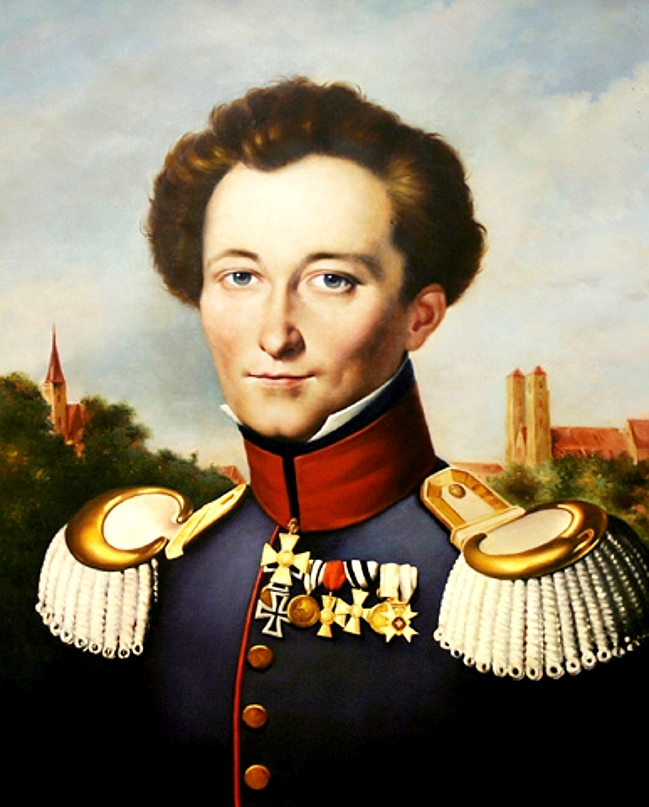
Carl von Clausewitz, the Prussian general and military theorist, isn't just about battlefield tactics; his enduring legacy lies in his profound understanding of warfare as a continuation of political intercourse, a concept he famously articulated in his magnum opus, On War. This isn't to say he ignored the mechanics of combat, but rather that he saw them as instruments serving a higher political purpose. For anyone trying to grasp the fundamental nature of conflict, from ancient Roman legions to modern digital conflicts, Clausewitz offers a foundational framework. His work is less a how-to manual for generals and more a philosophical inquiry into the very essence of organized violence.
📚 Key Texts: Where to Start with Clausewitz
The absolute cornerstone of Clausewitz's work is Vom Kriege (On War), published posthumously in 1832. It's a dense, multi-volume treatise that demands serious engagement. For those new to his thought, starting with Book 1, Chapter 1 ('On the Nature of War') and Chapter 2 ('On the Aim of the Use of Force') is crucial. Beyond On War, his writings on the Seven Years' War and his Principles of War offer further insights, though On War remains the definitive text. Reading him requires patience, but the intellectual rewards are immense for understanding the dynamics of international relations and strategic thought.
💡 Core Concepts: Beyond the Buzzwords
Clausewitz introduced several concepts that have become foundational in strategic studies, often simplified to the point of caricature. The 'trinity' of passion, chance, and reason—representing the people, the military, and the government—explains the inherent unpredictability and complexity of war. His notion of the 'fog of war' captures the uncertainty and confusion that pervades combat, making perfect knowledge impossible. Understanding these core ideas is vital to moving beyond simplistic interpretations of his work and appreciating its depth in analyzing conflict resolution and military history.
🤔 The Clausewitzian Debate: Is He Misunderstood?
A significant debate surrounds Clausewitz's actual meaning, particularly concerning his most famous aphorism: 'War is the continuation of politics by other means.' Critics argue that his ideas have been distorted by later interpreters, such as B. H. Liddell Hart, who emphasized maneuver and indirect approaches, or by Mao Zedong and his followers, who adapted his theories for guerrilla warfare. The controversy often centers on whether Clausewitz advocated for total war or a more constrained, politically directed application of force, a tension that continues to fuel discussions in defense policy circles.
🌍 Global Resonance: Clausewitz's Reach
Clausewitz's influence is global and remarkably persistent. His theories have shaped military thinking in virtually every major power, from Prussian reforms in the 19th century to Soviet military doctrine during the Cold War and contemporary American military strategy. His ideas have been studied and adapted by leaders and thinkers across continents, influencing everything from Sun Tzu's Art of War to modern geopolitical strategy. The widespread adoption and adaptation of his concepts underscore his profound impact on the global understanding of armed conflict.
🛠️ Practical Application: How His Ideas Live On
Despite being a 19th-century theorist, Clausewitz's insights remain remarkably practical. Military academies worldwide still teach his principles, emphasizing the subordination of military action to political objectives. His concept of the 'center of gravity'—the most critical element that, if struck, would lead to the enemy's collapse—is a recurring theme in military planning. Furthermore, his understanding of friction and the fog of war remains essential for training military leaders to operate effectively under extreme uncertainty, a skill vital in today's complex security environment.
⭐ Vibepedia Rating: Influence & Controversy
Vibepedia Rating: Influence: 95/100, Controversy: 80/100. Clausewitz's intellectual footprint is undeniable, making him one of the most influential military thinkers in history. His ideas are foundational to understanding modern warfare and strategy. However, the persistent debates over his interpretation and the application of his theories in contexts he might not have foreseen contribute to a high controversy score. This indicates a thinker whose work is both essential and perpetually contested, a hallmark of truly significant intellectual contributions to political science.
🚀 The Future of Clausewitz: Still Relevant?
The question of Clausewitz's relevance in the 21st century is a live one. With the rise of non-state actors, hybrid warfare, and the increasing role of information warfare, some question if his framework, rooted in state-on-state conflict, still holds. Yet, others argue that his core insights—war as a political tool, the importance of the trinity, and the nature of friction—are more relevant than ever. The ongoing adaptation of his ideas to new forms of conflict suggests that Clausewitz, far from being a relic, remains a vital, if challenging, interlocutor for understanding the future of global security.
Key Facts
- Year
- 1832
- Origin
- Prussia
- Category
- Military Theory & Philosophy
- Type
- Person
Frequently Asked Questions
What is Clausewitz's most famous quote?
His most famous and enduring quote is: 'War is the continuation of politics by other means.' This succinctly captures his view that warfare is not an isolated event but an instrument of state policy, driven by political objectives and continuing through violent action when diplomacy fails. This idea is central to understanding his entire body of work on military strategy.
Is Clausewitz relevant today?
Yes, Clausewitz remains highly relevant. While the nature of warfare has evolved with cyber warfare and terrorism, his fundamental insights into the relationship between war and politics, the inherent uncertainty of conflict (the 'fog of war'), and the importance of political will are still considered essential for military leaders and policymakers. His work provides a timeless framework for analyzing armed conflict.
What is the 'fog of war'?
The 'fog of war' is a term coined by Clausewitz to describe the uncertainty, confusion, and lack of clear information that combatants experience during military operations. It encompasses everything that makes simple actions difficult, including incomplete intelligence, the friction of movement, and the psychological stress of combat. Understanding this concept is crucial for effective command and control.
Who misinterpreted Clausewitz?
Many scholars and military figures have been accused of misinterpreting Clausewitz. Notable examples include B. H. Liddell Hart, who some argue overemphasized indirect approaches, and Mao Zedong, whose adaptation of Clausewitzian principles for guerrilla warfare differed significantly from the original context. The debate over interpretation continues to this day in strategic studies.
What is Clausewitz's 'trinity'?
Clausewitz's 'trinity' refers to the three inherent aspects of war: 1) the primordial violence, hatred, and enmity (the realm of passion, belonging to the people); 2) the play of chance and probability (the realm of the military commander and his forces); and 3) the element of subordination, as an instrument of policy, which makes it subject to reason alone (the realm of reason, belonging to the government). This trinity highlights the complex and often contradictory nature of warfare.
Where can I read Clausewitz's *On War*?
You can find On War in many libraries and bookstores. Several English translations exist, with the Howard and Paret translation (Princeton University Press) being widely regarded as authoritative. Online, you can often find free versions of older translations, though it's recommended to use a reputable edition for serious study of military theory.