
Contents
- 🎵 Origins & History
- ⚙️ How It Worked: Dynasties and Governance
- 📊 Key Facts & Numbers
- 👥 Key Figures & Dynasties
- 🌍 Cultural Impact & Influence
- ⚡ The Fall and Legacy
- 🤔 Controversies & Debates
- 🔮 Where It Led: The Mughal Precursor
- 💡 Architectural and Administrative Innovations
- 📚 Related Topics & Deeper Reading
- Frequently Asked Questions
- References
- Related Topics
Overview
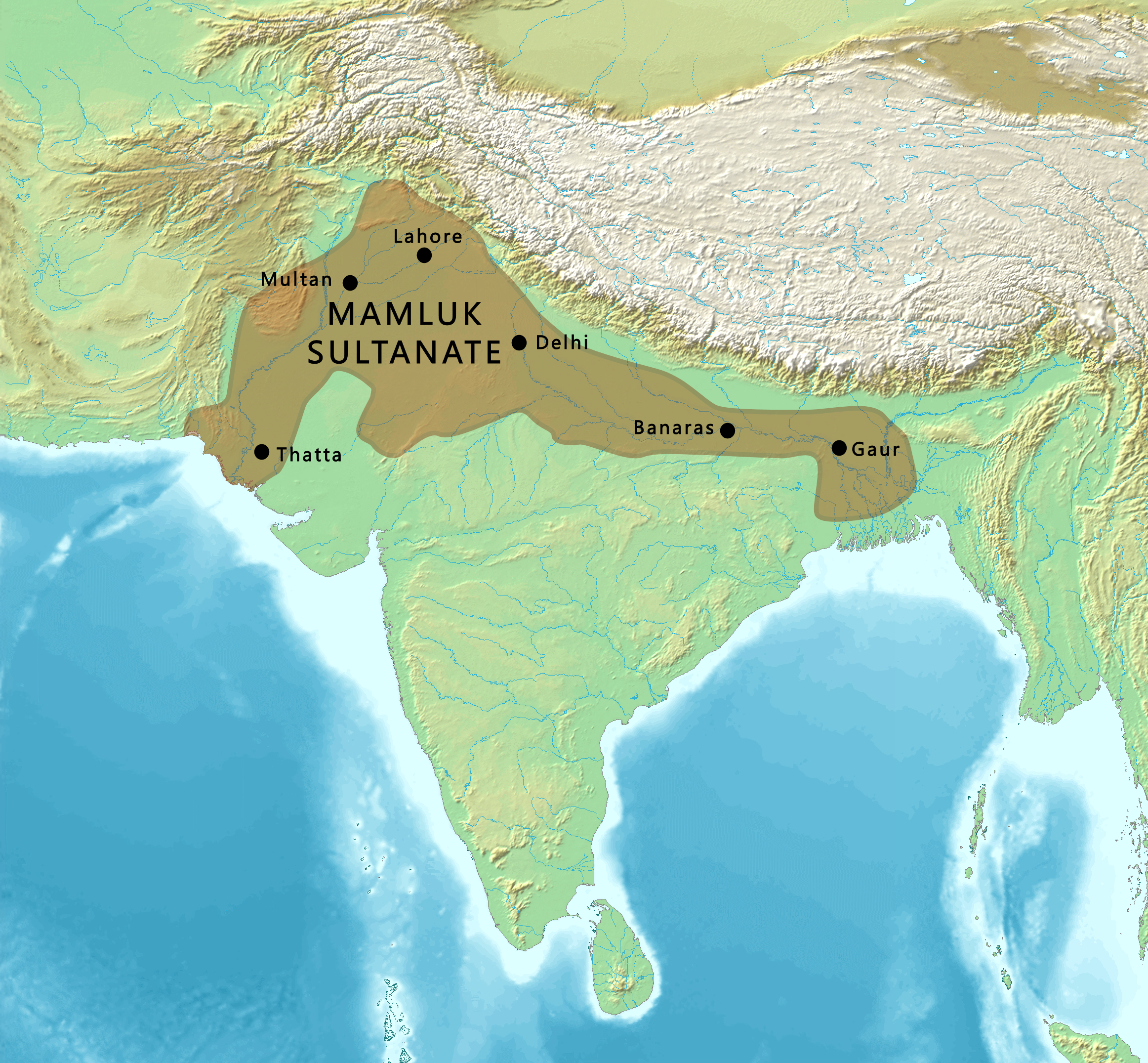
The Delhi Sultanate's genesis lies in the ashes of the Ghurid Empire, specifically following the decisive Second Battle of Tarain in 1192. Here, the Ghurid general Muhammad Ghori routed the Rajput Confederacy led by Prithviraj Chauhan, effectively breaking Rajput power in northern India. Upon Ghori's assassination in 1206, his former slave-general, Qutb-ud-din Aibak, declared himself Sultan, establishing the Mamluk dynasty and laying the foundation for a new era of Turkic rule centered in Delhi. This marked a significant shift from the preceding Hindu kingdoms and established a precedent for centralized Islamic governance in the region, a move that would profoundly alter the subcontinent's trajectory for centuries to come.
⚙️ How It Worked: Dynasties and Governance
The Sultanate's longevity was underpinned by a succession of five distinct dynasties, each with its own rise and fall. The Mamluk (1206–1290) era saw the consolidation of power, followed by the expansionist Khalji dynasty (1290–1320), most notably under Alauddin Khalji, who pushed the empire's boundaries south. The Tughlaq dynasty (1320–1414) witnessed both grand ambitions, like Muhammad bin Tughluq's controversial capital shift to Daulatabad, and eventual fragmentation. The Sayyid (1414–1451) and Lodi (1451–1526) dynasties, though less expansive, maintained a significant presence until their eventual overthrow. Governance typically involved a centralized bureaucracy headed by the Sultan, with provincial governors (Walis) overseeing administration and revenue collection, often utilizing Persian as the official court language and developing administrative structures that influenced later regimes.
📊 Key Facts & Numbers
Spanning 320 years, the Delhi Sultanate controlled territory that at its zenith encompassed much of modern-day India, Pakistan, and Bangladesh, with some influence reaching into southern Nepal. Its capital shifted between Delhi, Lahore, and Budaun, reflecting periods of strategic repositioning and consolidation. The Sultanate minted its own coinage, with the silver Tanka becoming a standard currency. The empire's military might was substantial, with armies often numbering in the hundreds of thousands, a testament to the resources it could mobilize. The official languages of the court were Persian and Hindustani, reflecting a blend of Turkic, Persian, and local Indian influences that permeated its administration and culture.
👥 Key Figures & Dynasties
The Sultanate's history is punctuated by powerful rulers and influential dynasties. The Mamluk dynasty, founded by Qutb-ud-din Aibak, also saw the reign of Iltutmish, who solidified the Sultanate's foundations, and Razia Sultana, the first and only female ruler. The Khalji dynasty is synonymous with the ambitious Alauddin Khalji, whose military campaigns and economic reforms were significant. The Tughlaq era is marked by the visionary, if erratic, Muhammad bin Tughluq and his predecessor Ghiyas-ud-din Tughluq. The Lodi dynasty, the last to rule, included figures like Bahlul Lodi and Ibrahim Lodi, whose defeat at the hands of Babur in 1526 heralded the end of the Sultanate and the beginning of the Mughal Empire.
🌍 Cultural Impact & Influence
The Delhi Sultanate was a crucible of cultural exchange, fostering a unique Indo-Islamic civilization. Persian literature and art flourished under royal patronage, influencing local traditions. Sufi saints and scholars played a crucial role in disseminating Islamic teachings and integrating with local populations, contributing to the development of syncretic practices. The Sultanate's architectural legacy is monumental, with iconic structures like the Qutb Minar and the Alai Darwaza showcasing a blend of Indian and Islamic architectural styles. This period also saw the emergence of new musical forms and the patronage of various Indian languages, laying groundwork for later cultural developments.
⚡ The Fall and Legacy
The Sultanate's decline was a gradual process, exacerbated by internal strife, succession disputes, and the rise of regional powers. The invasion of Timur in 1398 inflicted a devastating blow, from which the Sultanate never fully recovered. The final nail in the coffin came on April 21, 1526, at the First Battle of Panipat, where Babur, a descendant of Timur and Genghis Khan, defeated the last Lodi Sultan, Ibrahim Lodi. This victory not only ended the Delhi Sultanate but also established the Mughal Empire, ushering in a new era of imperial rule that would dominate the subcontinent for over two centuries.
🤔 Controversies & Debates
The Delhi Sultanate's legacy is debated, particularly concerning its impact on religious demographics and social structures. While proponents highlight its role in establishing a unified administrative framework and fostering cultural synthesis, critics point to the destruction of existing temples and the imposition of Islamic rule. The extent to which it represented a complete break from or a continuation of pre-existing Indian political traditions remains a subject of scholarly discussion. The narrative of 'conqueror' versus 'unifier' continues to shape interpretations of this complex historical period, with varying perspectives on the extent of religious tolerance and cultural assimilation during its reign.
🔮 Where It Led: The Mughal Precursor
The Delhi Sultanate served as a crucial precursor to the Mughal Empire, not only in terms of territorial control but also in administrative and cultural foundations. Many of the systems and architectural styles developed during the Sultanate were adapted and elaborated upon by the Mughals. The centralized bureaucratic model, the use of Persian as an administrative language, and the patronage of Indo-Islamic art and architecture all provided a blueprint for the subsequent empire. The Sultanate's eventual fragmentation also demonstrated the challenges of maintaining vast imperial control, lessons that the Mughals, with their own innovations in governance and military strategy, would both heed and build upon.
💡 Architectural and Administrative Innovations
Architecturally, the Sultanate left an indelible mark on the Indian subcontinent. The construction of mosques, tombs, and forts often incorporated elements from pre-existing Hindu and Jain temples, creating a unique hybrid style. The Qutb Complex in Delhi, with its towering Qutb Minar and Quwwat-ul-Islam Mosque, stands as a prime example of this fusion. Administratively, the Sultanate developed sophisticated revenue collection systems and a hierarchical structure that influenced subsequent states. The introduction of the iqta system, a form of land grant, was a significant administrative innovation that allowed for efficient resource management and military upkeep.
Key Facts
- Year
- 1206–1526
- Origin
- Indian subcontinent (Delhi)
- Category
- history
- Type
- topic
Frequently Asked Questions
What was the Delhi Sultanate?
The Delhi Sultanate was a powerful Islamic empire that ruled over large parts of the Indian subcontinent from 1206 to 1526. It was established by Turkic slave-generals of the Ghurid dynasty and was characterized by a succession of five dynasties: the Mamluk, Khalji, Tughlaq, Sayyid, and Lodi. The Sultanate played a crucial role in shaping the region's political, cultural, and religious landscape, leaving a significant architectural and administrative legacy.
Which dynasties ruled the Delhi Sultanate?
The Delhi Sultanate was ruled by five distinct dynasties over its 320-year history. These were the Mamluk dynasty (1206–1290), founded by Qutb-ud-din Aibak; the Khalji dynasty (1290–1320), known for Alauddin Khalji's expansion; the Tughlaq dynasty (1320–1414), marked by Muhammad bin Tughluq's ambitious policies; the Sayyid dynasty (1414–1451); and finally, the Lodi dynasty (1451–1526), which was overthrown by Babur.
What was the significance of the Delhi Sultanate?
The Delhi Sultanate's significance lies in its establishment of a long-lasting Islamic rule in North India, its role in fostering Indo-Islamic cultural synthesis, and its monumental architectural achievements like the Qutb Minar. It created a centralized administrative system that influenced subsequent empires and facilitated the spread of Persian language and Sufi Islam. Its eventual fall paved the way for the even grander Mughal Empire, making it a critical transitional period in Indian history.
How did the Delhi Sultanate end?
The Delhi Sultanate ended in 1526 following the First Battle of Panipat. The last Lodi Sultan, Ibrahim Lodi, was decisively defeated by Babur, a descendant of Timur and Genghis Khan. This defeat marked the end of Turkic rule centered in Delhi and the beginning of the Mughal Empire, which would go on to become one of the most powerful and influential empires in Indian history.
What are some key architectural contributions of the Delhi Sultanate?
The Delhi Sultanate made significant contributions to architecture, characterized by a blend of Indian and Islamic styles. Iconic structures include the Qutb Minar, the Quwwat-ul-Islam Mosque, and the Alai Darwaza, all located in Delhi. These buildings often incorporated elements from pre-existing Hindu and Jain temples, showcasing intricate carvings, pointed arches, and domes, establishing a distinct Indo-Islamic architectural idiom.
Who were some of the most important rulers of the Delhi Sultanate?
Key rulers include Qutb-ud-din Aibak, the founder; Iltutmish, who consolidated the empire; Razia Sultana, the first female ruler; Alauddin Khalji, known for his military prowess and economic reforms; and Muhammad bin Tughluq, famous for his ambitious and often controversial policies. The last ruler was Ibrahim Lodi, defeated by Babur.
What was the linguistic and cultural impact of the Delhi Sultanate?
The Sultanate significantly influenced the linguistic and cultural landscape of the subcontinent. Persian was established as the official court language, impacting regional dialects and contributing to the development of Urdu. Sufi saints and scholars played a vital role in cultural exchange, promoting Islamic teachings while also integrating with local traditions. This era saw the flourishing of Persian literature and the emergence of new forms of music and art, laying the groundwork for the rich Indo-Persian culture that characterized later empires.