
Contents
Overview
IBM's PROFS (Professional Office System) introduced electronic scheduling to corporate environments. By the 1980s, personal digital assistants (PDAs) like the Psion Organiser and later the PalmPilot brought portable digital calendars to the mass market. The 1990s saw the dominance of Microsoft Outlook, which bundled calendaring with email, cementing the calendar as a professional necessity. A pivotal moment occurred in 2006 with the launch of Google Calendar, which shifted the paradigm from local, device-based files to cloud-synchronized, collaborative web applications. This evolution was supported by the development of the CalDAV protocol, allowing different devices to communicate scheduling data in real-time.
⚙️ How It Works
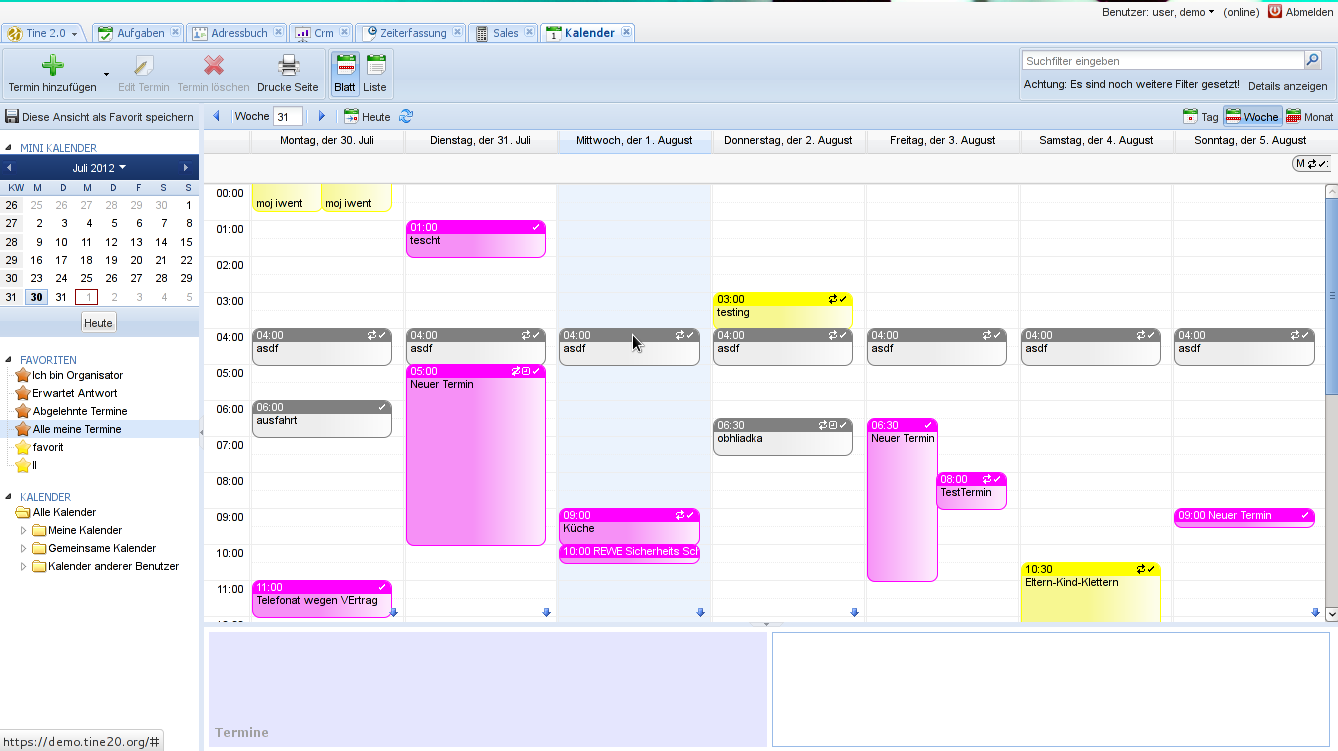
At their core, digital calendars operate as specialized databases that store events as unique objects with attributes like start time, duration, and recurrence rules. These systems utilize the iCalendar format, a universal standard that allows a user on Apple Calendar to send an invite that renders correctly in Outlook. Synchronization is handled via APIs and protocols like CalDAV or proprietary connectors that push updates across mobile and desktop clients. Modern implementations often include 'free/busy' lookups, which query a server to check availability without revealing specific event details. Advanced platforms now integrate with video conferencing tools like Zoom or Microsoft Teams to automatically generate meeting links upon event creation.
📊 Key Facts & Numbers
The digital calendar market is massive, with Google Workspace alone boasting over 3 billion users as of 2024, most of whom utilize the integrated calendar. Statistics show that the average office worker spends nearly 5 hours per week just managing their schedule or attending meetings scheduled via these platforms. In the enterprise sector, Microsoft 365 maintains a dominant 45% market share in productivity software, where the calendar is a central retention hook. Research indicates that 70% of adults in developed economies rely on a digital calendar daily, a 25% increase since the pre-pandemic era of 2019. Furthermore, the 'scheduling automation' niche, led by companies like Calendly, was valued at over $3 billion in recent private equity rounds, highlighting the premium placed on time-saving tools.
👥 Key People & Organizations
The trajectory of digital calendaring has been shaped by key engineers and visionary companies. Bill Gates and the early Microsoft team were instrumental in making the calendar a centerpiece of the enterprise 'office suite' philosophy. Later, Jeff Bezos and Amazon influenced the space by treating 'calendar time' as a scarce resource in their high-efficiency corporate culture. In the startup world, Tope Awotona, the founder of Calendly, redefined the category by focusing on the friction of external scheduling. Organizations like the IETF maintain the technical standards that prevent the ecosystem from fracturing into incompatible silos. Meanwhile, design-forward firms like Cron (acquired by Notion) and Amie are currently pushing the boundaries of user interface in the space.
🌍 Cultural Impact & Influence
The cultural phenomenon of 'Calendar Tetris'—the visual struggle of fitting back-to-back meetings into a grid—has become a staple of internet meme culture and workplace humor. This shift has also birthed the 'Time Blocking' productivity movement, popularized by authors like Cal Newport in his work on Deep Work. In the luxury sector, events like the Met Gala or global fashion weeks now distribute digital 'save the dates' to ensure high-profile attendees synchronize their global movements. However, this total digitization of time has also led to 'calendar anxiety,' where an empty day is viewed as a vacuum to be filled rather than a period of rest.
⚡ Current State & Latest Developments
The primary trend is the 'AI-ification' of the grid, with tools like Google Gemini and Microsoft Copilot drafting meeting agendas and suggesting optimal times for focus. New entrants like Notion Calendar are attempting to merge task management with time tracking, breaking the wall between 'what to do' and 'when to do it.' There is also a growing movement toward 'sovereign time,' where users employ tools like Clockwise to automatically protect blocks of time from being booked by colleagues. The integration of Web3 and blockchain for 'token-gated' meetings is a niche but growing experiment in the tech sector. Meanwhile, the mobile experience is being refined with 'Live Activities' on iOS providing real-time countdowns to the next scheduled event.
🤔 Controversies & Debates
The most heated debate in the space centers on 'Scheduling Etiquette' and the perceived power dynamics of sending a Calendly link, which some critics argue offloads the labor of scheduling onto the recipient. Privacy remains a significant concern, as digital calendars contain highly sensitive data about a person's location, associations, and daily habits, making them prime targets for cybersecurity breaches. There is also a philosophical critique regarding the 'commodification of time,' where every minute of human existence is quantified and optimized for productivity. Some psychologists argue that the rigid structure of digital calendars contributes to the 'burnout' epidemic by eliminating the spontaneous 'white space' necessary for creativity. Furthermore, the 'walled garden' approach of some tech giants occasionally threatens the open-standard interoperability that iCalendar was designed to protect.
🔮 Future Outlook & Predictions
The future of digital calendars lies in 'Predictive Scheduling,' where machine learning anticipates a user's needs before they even realize a meeting is necessary. We are moving toward a 'headless' calendar experience, where users interact with their schedule via voice assistants like Alexa or Siri and augmented reality (AR) overlays in Apple Vision Pro. By 2030, calendars may integrate biological data from wearables like Oura or Whoop to suggest meetings only when a user's 'readiness' or energy levels are high. The concept of the 'Social Graph' will likely merge with the 'Time Graph,' creating a seamless map of who you spend time with and why. We may also see the rise of 'Anti-Calendars'—apps designed specifically to help users reclaim unscheduled time in an increasingly hyper-optimized world.
💡 Practical Applications
Practical application of digital calendars extends far beyond personal reminders into complex logistics and resource management. In healthcare, systems like Epic Systems use integrated calendars to manage patient flow and surgical suite availability across massive hospital networks. The logistics industry utilizes 'Fleet Calendars' to track vehicle maintenance and driver shifts, ensuring compliance with labor laws. Educational institutions rely on platforms like Canvas to sync assignment deadlines directly into students' personal feeds. For the individual, 'Time Auditing'—the practice of reviewing past calendar data to see where time was actually spent—has become a key technique for executive coaching and personal development. Even in the creator economy, influencers use shared calendars to coordinate multi-platform content drops and brand partnerships.
Key Facts
- Category
- technology
- Type
- topic