
Contents
Overview
The genesis of the Eckert–Mauchly Computer Corporation (EMCC) lies in the monumental effort behind the ENIAC, the Electronic Numerical Integrator and Computer, developed during World War II at the University of Pennsylvania. J. Presper Eckert and John Mauchly, the principal architects of ENIAC, recognized the immense commercial potential of their creation beyond its military applications. In March 1946, they left academia to form the Electronic Control Company, a venture aimed at commercializing electronic computing. The company was officially incorporated as the Eckert–Mauchly Computer Corporation on December 22, 1947, with its headquarters in Philadelphia. Their initial focus was on developing smaller, more practical machines than ENIAC, leading to designs like the BINAC for the Aero Technical Corporation and, most famously, the UNIVAC I for the U.S. Census Bureau. This transition from a research project to a commercial enterprise marked a pivotal moment in computing history.
⚙️ How It Works
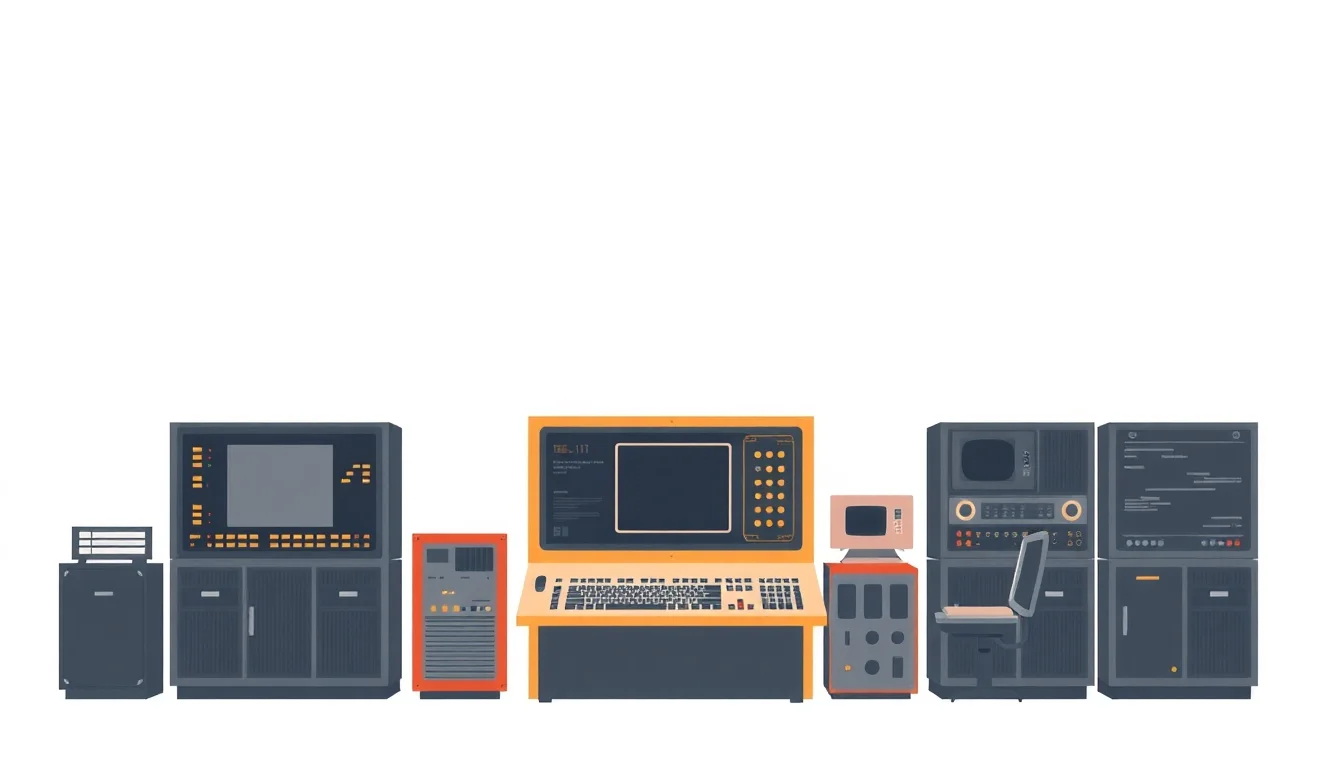
EMCC's engineering philosophy centered on translating the complex, vacuum-tube-based architectures of early computers into more reliable and user-friendly systems. Their flagship product, the UNIVAC I, was a marvel of 1950s engineering. It utilized approximately 5,000 vacuum tubes, mercury delay-line memory, and magnetic tape for input/output, capable of performing around 1,905 calculations per second. Unlike earlier machines designed for specific scientific or military tasks, UNIVAC I was engineered for business data processing, handling alphanumeric data and performing complex statistical analyses. The design emphasized modularity where possible, allowing for easier maintenance and upgrades, a concept that would become standard in later computer generations. The company's innovations in memory technology and input/output mechanisms set crucial precedents for future computer designs.
📊 Key Facts & Numbers
EMCC's operational period, though brief, was marked by significant milestones. The company secured its first major contract with the U.S. Census Bureau in 1948 for two UNIVAC systems, with the first delivered in 1951. The total value of this contract was approximately $1.5 million, a colossal sum for the era. By the time of its acquisition in 1950, EMCC had employed around 150 individuals. The sale price to Remington Rand was $1 million, a figure that some historians argue undervalued the company's potential and intellectual property, especially considering the UNIVAC I's future success. The company's initial funding rounds were modest, reflecting the speculative nature of the early computer market.
👥 Key People & Organizations
The driving force behind EMCC was its visionary duo: J. Presper Eckert and John Mauchly. Eckert, a brilliant electrical engineer, was the technical mastermind, responsible for much of the hardware design, including the memory systems. Mauchly, a physicist and educator, brought a broader vision for computing's applications and was instrumental in the conceptualization and promotion of their machines. Key figures within the company included individuals like Irving Serlin, who played a role in early business development, and Charles Catalano, who managed manufacturing. After EMCC's acquisition, Eckert and Mauchly continued to work on computing projects within Remington Rand and later founded Mauchly Associates and Consulting Computer Corporation respectively, further shaping the industry. The company's primary client, the U.S. Census Bureau, was also a critical partner in validating and driving the development of commercial computing.
🌍 Cultural Impact & Influence
The cultural impact of the Eckert–Mauchly Computer Corporation is profound, marking the birth of the commercial computer industry. The successful deployment of the UNIVAC I by the U.S. Census Bureau in 1951, and its subsequent prediction of the 1952 U.S. presidential election outcome on live television, captured the public imagination. This event, broadcast on CBS, demonstrated the power of electronic computation to a mass audience, moving computers from the realm of specialized scientific tools to potential business assets. EMCC's work directly inspired the creation of the UNIVAC division within Remington Rand, which became a dominant force in early mainframe computing. The company's legacy is embedded in the very concept of a "computer company" and the subsequent proliferation of businesses like IBM, Control Data Corporation, and eventually, the personal computer revolution spearheaded by Apple and Microsoft.
⚡ Current State & Latest Developments
As an independent entity, EMCC ceased to exist in 1950. However, its technological lineage continued robustly. The UNIVAC brand, born from EMCC, remained a significant player in the mainframe market under Remington Rand and its successors, Sperry Corporation, and later Unisys. The core innovations in data processing, memory, and input/output developed by Eckert and Mauchly at EMCC were foundational. While the specific EMCC corporate structure is gone, the spirit of their enterprise lives on in the ongoing evolution of computing, from cloud computing services offered by AWS to the specialized processors powering AI research, all of which owe a debt to the pioneering work done in Philadelphia in the late 1940s.
🤔 Controversies & Debates
One of the primary controversies surrounding EMCC involves the perceived undervaluation of the company during its sale to Remington Rand. Eckert and Mauchly reportedly felt that the $1 million acquisition price in 1950 did not adequately reflect the immense potential of their UNIVAC technology, particularly the UNIVAC I. Critics argue that Remington Rand, primarily a typewriter and office equipment manufacturer, initially struggled to fully grasp or capitalize on the computer market, potentially stifling EMCC's rapid growth. Another area of debate is the extent of credit due to Eckert and Mauchly versus other contributors to early computing projects like ENIAC, though their entrepreneurial drive to commercialize computing is widely acknowledged as unique.
🔮 Future Outlook & Predictions
The future outlook for companies inspired by EMCC's pioneering spirit remains dynamic. The ongoing demand for sophisticated data processing, artificial intelligence, and high-performance computing suggests that the foundational principles EMCC championed are more relevant than ever. While the specific vacuum-tube technology of the UNIVAC I is long obsolete, the drive to create more powerful, efficient, and accessible computing solutions continues. Companies like Nvidia in AI hardware and Google in cloud infrastructure are, in a sense, carrying forward the torch of commercializing advanced computational power. The legacy of EMCC serves as a reminder that disruptive technological innovation often emerges from visionary individuals willing to bridge the gap between research and market application.
💡 Practical Applications
The most significant practical application stemming directly from EMCC's work was the UNIVAC I. This machine was instrumental for the U.S. Census Bureau in processing the 1950 census data, a task that would have been nearly impossible with electromechanical calculators. Its ability to handle large volumes of data and perform complex calculations made it invaluable for statistical analysis. Beyond the Census Bureau, UNIVAC systems were adopted by various government agencies and large corporations, including the U.S. Air Force for ballistic missile calculations and the Prudential Insurance Company for actuarial computations. These early applications demonstrated the transformative potential of electronic computers in automating complex tasks and enabling new forms of data-driven decision-making across diverse sectors.
Key Facts
- Category
- technology
- Type
- topic