
Contents
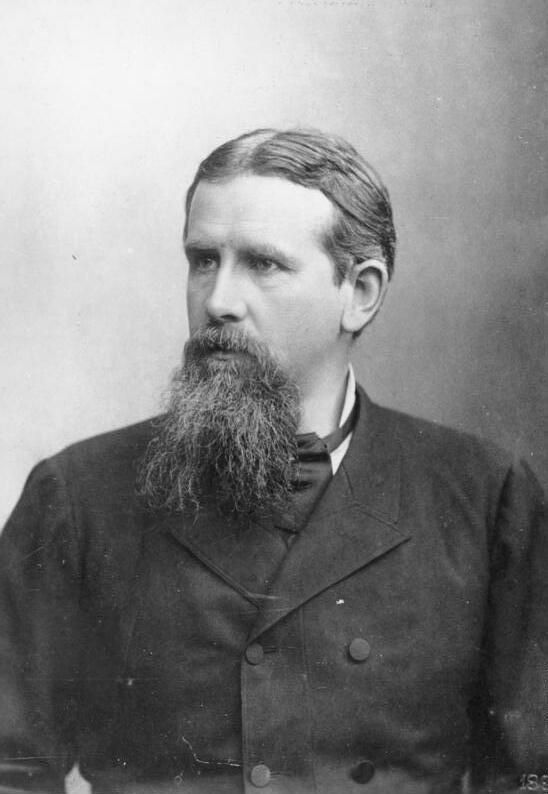
- 🗺️ Who Was Friedrich Ratzel?
- 🌍 Ratzel's Core Concepts: Lebensraum & Geopolitics
- 📚 Key Works & Their Impact
- 🔬 The Scientific Method (and its Controversies)
- 🏛️ Legacy & Lasting Influence
- 🤔 Ratzel vs. His Critics
- 💡 Ratzel's Vibe Score & Controversy Spectrum
- 🚀 Where to Learn More
- Frequently Asked Questions
- Related Topics
Overview
Friedrich Ratzel (1844-1904) was a German geographer and ethnologist whose theories profoundly shaped geopolitical thought, particularly in the late 19th and early 20th centuries. While often remembered for his controversial concept of 'living space', Ratzel's work encompassed a broader, more systematic approach to understanding the relationship between humans and their environment. He was a staunch advocate for the application of scientific methods to geography, seeking to establish it as a rigorous academic discipline. His influence extended far beyond academia, impacting political ideologies and international relations for decades. Understanding Ratzel requires grappling with both his intellectual contributions and the problematic applications of his ideas.
🌍 Ratzel's Core Concepts: Lebensraum & Geopolitics
Ratzel's most enduring, and indeed infamous, concept is 'living space'. He argued that states, like biological organisms, require sufficient territory to thrive and expand. This idea, rooted in Social Darwinism, posited that nations competed for resources and space, with stronger states naturally dominating weaker ones. He also developed the concept of 'Bolshevism' and 'geopolitics' as a field of study, emphasizing the spatial dimensions of power and statecraft. His work laid the groundwork for understanding how geography influences political power, a perspective that continues to be debated in international relations.
📚 Key Works & Their Impact
Ratzel's seminal works include Anthropogeographie (1882-1891), a two-volume treatise on human geography, and Politische Geographie (1897), which systematically outlined his geopolitical theories. Anthropogeographie explored the influence of physical geography on human societies, while Politische Geographie applied these principles to the study of states. These books became foundational texts for a generation of geographers and political scientists, though their reception has been complicated by the later appropriation of Ratzel's ideas by Nazi Germany. His writings are dense, detailed, and often require careful contextualization.
🔬 The Scientific Method (and its Controversies)
Ratzel championed a deterministic approach, believing that geographical factors largely dictated human development and political outcomes. He meticulously collected data and sought empirical evidence to support his theories, aiming for a scientific objectivity. However, this deterministic stance has been heavily criticized for oversimplifying complex human agency and cultural factors. While his commitment to empirical observation was a step forward for geography, his conclusions often reflected the prevailing colonial and nationalist sentiments of his era, leading to accusations of scientific bias. His methodology, while rigorous for its time, is now viewed through a more critical lens.
🏛️ Legacy & Lasting Influence
The legacy of Friedrich Ratzel is a complex and often uncomfortable one. While his systematic approach to geography and his foundational work in geopolitics are undeniable academic achievements, his concept of 'living space' was tragically distorted and weaponized by Adolf Hitler and the Nazi regime to justify territorial expansion and genocide. This association has cast a long shadow over his entire body of work, making it difficult to engage with his ideas without acknowledging their devastating historical consequences. His influence can be traced in the works of later thinkers like Karl Haushofer and Mackinder, though often with significant modifications.
🤔 Ratzel vs. His Critics
Ratzel's deterministic worldview and his emphasis on territorial expansion as a natural state process drew significant criticism even during his lifetime. Critics argued that his theories ignored the role of human culture, innovation, and political will in shaping state power. They pointed out that his focus on biological analogies was overly simplistic and could be used to justify aggressive nationalism. Contemporary geographers and historians often highlight the ethical implications of his work, questioning whether the scientific rigor he espoused could ever truly be separated from the political biases of his time. The debate continues regarding the extent to which Ratzel himself was responsible for the later misinterpretations of his work.
💡 Ratzel's Vibe Score & Controversy Spectrum
Friedrich Ratzel's Vibe Score hovers around a 65/100, reflecting his significant academic impact tempered by extreme historical controversy. His Controversy Spectrum is firmly in the 'High' category, largely due to the direct lineage from his Lebensraum theory to Nazi ideology. While his contributions to the scientific study of geography and the establishment of geopolitics as a field are recognized, the ethical implications of his ideas, particularly their role in justifying expansionism and racial superiority, remain a potent point of contention. His work is a stark reminder of how academic theories can be co-opted for destructive political ends.
🚀 Where to Learn More
To delve deeper into Ratzel's thought, consulting his primary texts like Politische Geographie is essential, though be prepared for dense prose and a 19th-century perspective. Academic biographies and critical analyses of his work offer valuable context and counterpoints. Look for scholarly articles that specifically address the reception and distortion of his theories, particularly in the interwar period and during the Third Reich. Engaging with secondary sources that trace the influence of his ideas on later geopolitical thinkers will provide a more comprehensive understanding of his complex and controversial legacy. Consider exploring the works of his contemporaries and critics for a balanced view.
Key Facts
- Year
- 1844
- Origin
- Germany
- Category
- Academic / Historical Figure
- Type
- Person
Frequently Asked Questions
What is Friedrich Ratzel most famous for?
Friedrich Ratzel is most infamous for his concept of 'living space', which posited that states, like organisms, need to expand their territory to survive and thrive. This idea was later tragically appropriated by Nazi Germany to justify its aggressive expansionist policies and territorial claims in Eastern Europe. While this is his most well-known concept, Ratzel also made significant contributions to the systematic study of human geography and is considered a founder of geopolitics.
Was Ratzel a Nazi?
No, Friedrich Ratzel died in 1904, well before the rise of the Nazi Party and Adolf Hitler. However, his theories, particularly Lebensraum, provided a theoretical framework that the Nazis later exploited and distorted to legitimize their ideology and actions. It's crucial to distinguish between Ratzel's original academic work and its subsequent, devastating political application.
What are Ratzel's main academic contributions?
Ratzel's primary academic contributions lie in his systematic approach to geography and his foundational work in geopolitics. He advocated for geography as a rigorous science, emphasizing the influence of physical and spatial factors on human societies and states. His Anthropogeographie and Politische Geographie were groundbreaking in their attempts to analyze these relationships empirically, laying the groundwork for future studies in human geography and international relations.
How is Ratzel's work viewed today?
Ratzel's work is viewed with significant caution and critical distance today. While his methodological contributions to geography are acknowledged, his deterministic theories and the concept of Lebensraum are heavily scrutinized for their ethical implications and their historical misuse. Contemporary scholars emphasize the need to contextualize his work within 19th-century imperialism and nationalism, and to critically examine how geographical ideas can be used to justify political agendas. His legacy is a constant reminder of the responsibility that comes with academic theorizing.
Did Ratzel influence other thinkers?
Yes, Ratzel's influence was substantial, particularly on early 20th-century geopolitical thought. Thinkers like Karl Haushofer, who developed German geopolitics, and Mackinder, with his Heartland Theory, engaged with and built upon Ratzel's ideas, though often with significant modifications. His emphasis on the state as a spatial entity and the importance of territory resonated widely, shaping discussions on power, expansion, and international strategy.