
Contents
Overview
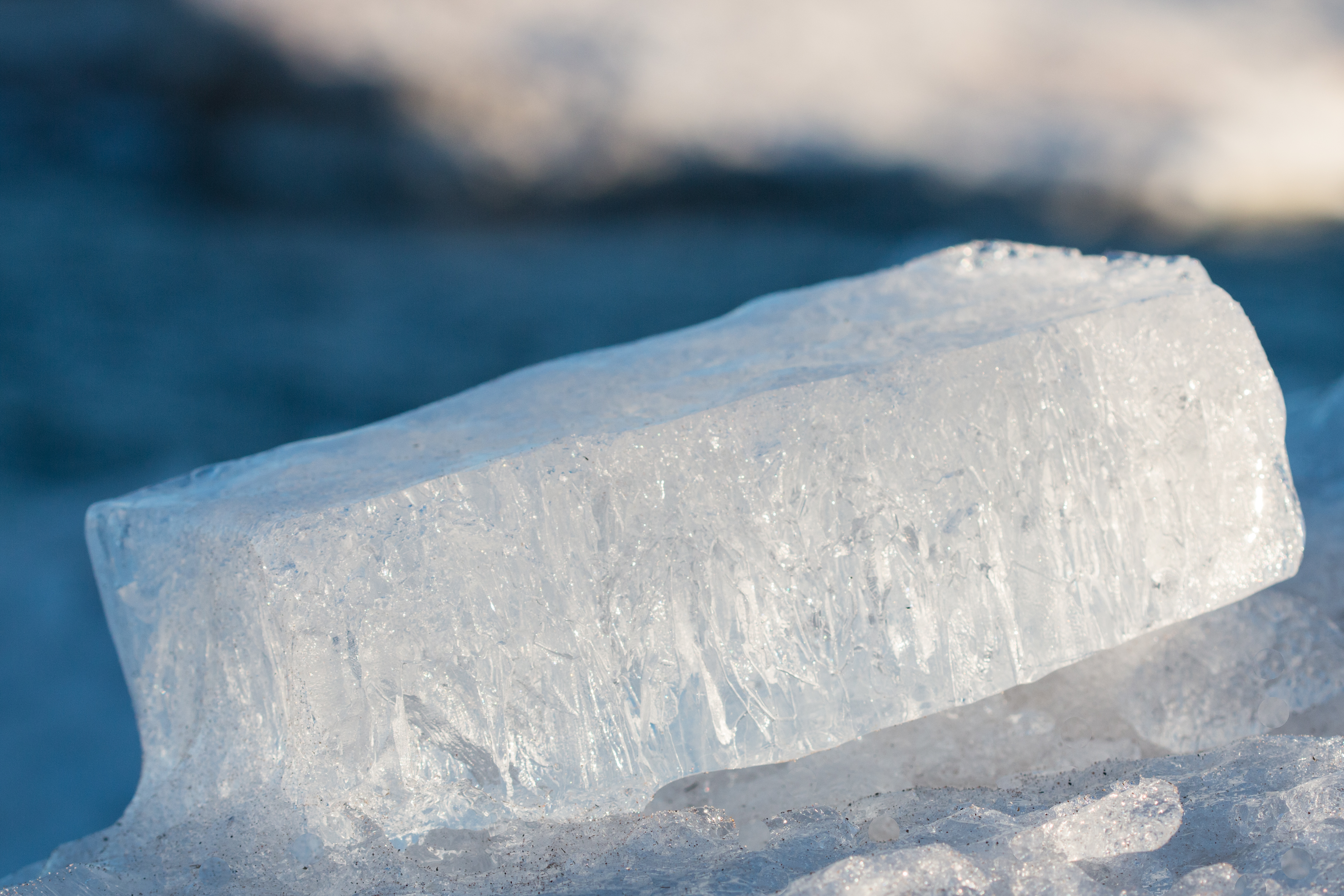
Frozen water, commonly known as ice, is the solid state of H₂O, forming when liquid water cools to 0°C (32°F) or below at standard atmospheric pressure. It's a naturally occurring crystalline inorganic solid, considered a mineral due to its ordered structure. Ice's appearance ranges from transparent to opaque bluish-white, influenced by impurities like air bubbles and soil particles. While the hexagonal crystalline structure (ice Ih) dominates Earth's natural ice, at least nineteen distinct phases of ice exist under varying temperature and pressure conditions, with amorphous ice forming under rapid cooling. Its presence is fundamental to Earth's climate system, shaping geological formations, influencing weather patterns, and serving as a critical habitat for numerous species. From ancient glaciers to modern refrigeration, frozen water has profoundly impacted human history and continues to be a subject of scientific inquiry and environmental concern.
🎵 Origins & History
The phenomenon of frozen water, or ice, has been a constant presence throughout Earth's history, predating humanity by billions of years. Ancient civilizations, from the Romans to the Greeks, understood and utilized ice, often storing it in insulated pits for cooling during warmer months.
⚙️ How It Works
Frozen water is a result of the hydrogen bonds between water molecules becoming more rigid and ordered as thermal energy decreases.
📊 Key Facts & Numbers
Globally, ice covers approximately 10% of the Earth's surface, with about 68.7% of the world's freshwater locked up in glaciers and ice sheets, primarily in Antarctica and Greenland. The Arctic sea ice extent has seen a decline of about 13% per decade since 1979, with the minimum extent in September 2012 reaching a record low of 3.41 million square kilometers. Glaciers worldwide are losing mass at an accelerating rate, contributing significantly to sea-level rise, which has averaged about 3.4 millimeters per year since 1993, according to NASA. The total volume of ice on Earth is estimated to be around 24 million cubic kilometers. In industrial applications, the global ice production market was valued at over $3.5 billion USD in 2023, with significant demand from the food and beverage, healthcare, and construction sectors.
👥 Key People & Organizations
While no single individual 'discovered' frozen water, numerous scientists have elucidated its properties. Anders Celsius developed the temperature scale that defines the freezing point of water at 0°. James Dewar was a pioneer in cryogenics, liquefying gases and studying their properties at low temperatures, including ice. Dorothy Hodgkin utilized X-ray crystallography to determine the structure of ice Ih, a technique that earned her the Nobel Prize. Organizations like the National Snow and Ice Data Center (NSIDC) in Boulder, Colorado, and the World Glacier Monitoring Service (WGMS) at the University of Zurich are crucial for monitoring ice-related phenomena and collecting vital data on ice sheets, glaciers, and sea ice extent. The IPCC also heavily relies on data concerning frozen water to assess global climate trends.
🌍 Cultural Impact & Influence
Frozen water has permeated human culture and mythology for millennia. In Norse mythology, the primordial realm of Niflheim was a land of ice and mist. The development of refrigeration technology in the 19th century, pioneered by figures like Jacob Perkins and later Carl von Linde, revolutionized food preservation and enabled global trade of perishable goods. Ice skating, a sport dating back to at least ancient times in Scandinavia, has evolved into a major Olympic sport, showcasing human grace and athleticism on frozen surfaces. The iconic imagery of glaciers and icebergs has inspired countless artists, writers, and filmmakers, often symbolizing both the sublime power of nature and the fragility of our planet. The very concept of 'ice breaking' has become a metaphor for initiating social interaction, highlighting its subtle but pervasive influence on human behavior.
⚡ Current State & Latest Developments
The current state of frozen water is inextricably linked to global climate change. Arctic sea ice continues its dramatic decline, with projections suggesting ice-free summers are increasingly likely within decades, a scenario previously considered unlikely before 2050. Antarctic ice sheets, particularly the West Antarctic Ice Sheet, are showing signs of instability, raising concerns about accelerated sea-level rise. In mountain regions worldwide, glaciers are retreating at unprecedented rates, impacting water resources for millions of people downstream, as documented by the WGMS. Simultaneously, advancements in cryogenics and materials science are leading to new applications for frozen water, from advanced cooling systems in supercomputers to novel methods for preserving biological materials, as explored by organizations like 21st Century Medicine.
🤔 Controversies & Debates
The most significant controversy surrounding frozen water today is its role in climate change. While the scientific consensus, as reported by the IPCC, is overwhelming regarding the human-driven warming causing ice melt, debates persist regarding the precise rate of future melt, the potential for tipping points in ice sheet stability, and the socio-economic implications of these changes. Some argue that the focus on ice melt distracts from other pressing environmental issues, while others contend that the irreversible nature of ice loss makes it the most critical indicator of planetary health. Furthermore, the potential for 'geoengineering' solutions involving ice, such as proposals to artificially thicken Arctic sea ice, raises ethical and practical questions about human intervention in natural systems, as debated by researchers at institutions like the Stockholm Resilience Centre.
🔮 Future Outlook & Predictions
The future of frozen water is largely dictated by global climate trajectories. Under high-emission scenarios, the Arctic could be ice-free in summer by mid-century, with significant impacts on global weather patterns and sea levels. Greenland's ice sheet is projected to lose billions of tons of ice annually, contributing substantially to rising oceans. Conversely, aggressive global efforts to reduce greenhouse gas emissions could stabilize or even slow the rate of ice loss, preserving critical ecosystems and mitigating extreme climate impacts. Research into new ice phases and their properties may unlock novel applications in energy storage and materials science. The long-term future also involves understanding the potential for ice formation on exoplanets, expanding our search for extraterrestrial life beyond Earth.
💡 Practical Applications
Frozen water is indispensable in numerous practical applications. It's fundamental to refrigeration and air conditioning systems, enabling food preservation, climate control in buildings, and the transport of temperature-sensitive goods. In the medical field, ice is used for cryotherapy to reduce swelling and pain, and cryopreservation, utilizing ultra-low temperatures, is vital for storing cells, tissues, and organs for transplantation and research, as pioneered by cryonics organizations. The construction industry uses ice in specialized applications like i
Key Facts
- Category
- nature
- Type
- topic