
Contents
Overview
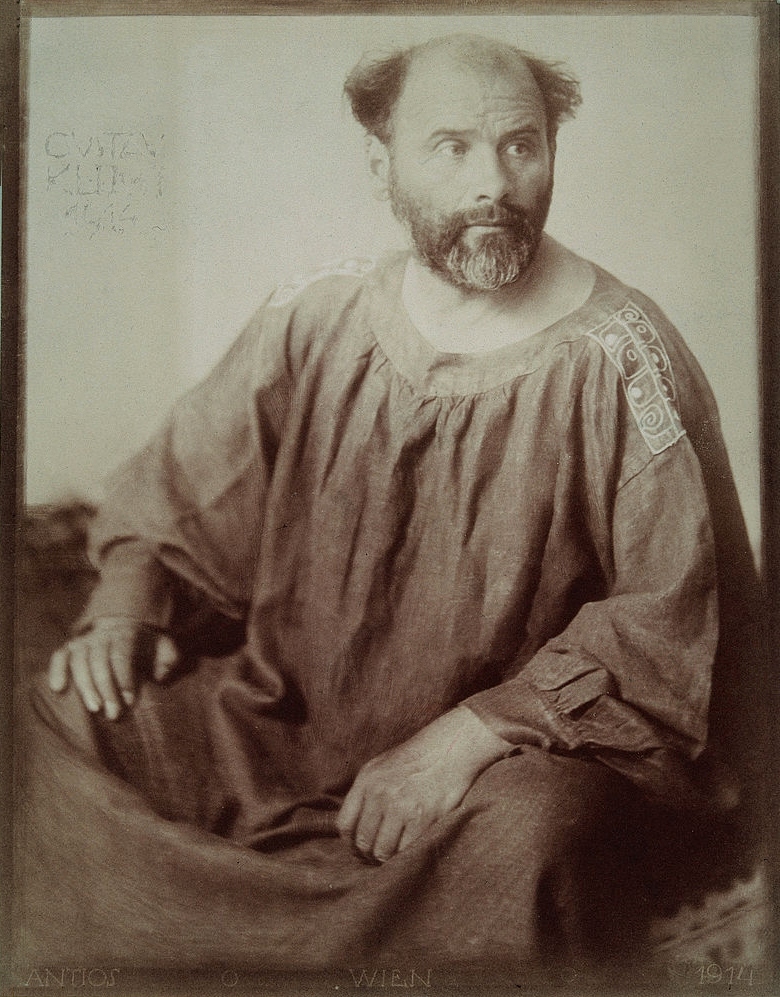
Born on July 14, 1862, in Baumgarten, near Vienna, Gustav Klimt emerged from a family steeped in artistic pursuits; his father, Ernst Klimt, was a gold engraver, and his younger brothers, Ernst and Georg, also became artists. Klimt's early artistic education began at the Vienna School of Arts and Crafts (now the University of Applied Arts Vienna) in 1876, where he trained in architectural painting under Professor Ferdinand Laufberger. Initially, he worked with his brother Ernst in their company, the Klimt Studio, creating decorative murals for public buildings in a conservative, academic style, including the Burgtheater and the Kunsthistorisches Museum in Vienna. However, by the early 1890s, Klimt began to diverge from this traditional path, seeking a more personal and symbolic artistic language, a shift that would eventually lead to the formation of the Vienna Secession in 1897, a movement he co-founded to challenge the established artistic norms and promote avant-garde art.
⚙️ How It Works
Klimt's artistic process was characterized by a meticulous layering of symbolic imagery and decorative elements, often beginning with detailed preparatory drawings and studies. His most recognizable technique involved the extensive use of gold leaf, inspired by Byzantine mosaics he encountered during a trip to Ravenna, Italy, which he masterfully integrated with oil paint to create shimmering, almost otherworldly surfaces. This 'Golden Phase' is exemplified in works like The Kiss (1907-1908) and Portrait of Adele Bloch-Bauer I (1907). He employed a distinctive blend of realism in portraiture, particularly in rendering faces and hands, with highly stylized, flattened patterns for clothing and backgrounds, creating a tension between the tangible and the ethereal. His compositions often featured intricate, ornamental motifs, drawing from nature, mythology, and eroticism, reflecting a deep engagement with psychoanalytic theories and the burgeoning interest in the subconscious during the late 19th and early 20th centuries, influenced by thinkers like Sigmund Freud.
📊 Key Facts & Numbers
Gustav Klimt created approximately 50 paintings during his career, with a significant portion falling into his celebrated 'Golden Phase.' His most famous work, 'The Kiss,' is estimated to be valued at over $100 million in today's market, though it has never been sold. 'Portrait of Adele Bloch-Bauer I,' also known as 'The Woman in Gold,' achieved a record-breaking $135 million in a private sale in 2006, making it one of the most expensive paintings ever sold at the time. Klimt's output also includes over 250 drawings, many of which are highly erotic studies. His murals for the University of Vienna's Great Hall, completed between 1894 and 1907, were destroyed by retreating SS troops in May 1945, a devastating loss of cultural heritage. Despite this, his surviving works continue to command immense value, with his paintings regularly fetching tens of millions of dollars at auction houses like Sotheby's and Christie's.
👥 Key People & Organizations
Beyond his immediate family, including his father Ernst Klimt the Elder and brothers Ernst Klimt and Georg Klimt, Gustav Klimt's artistic circle was profoundly shaped by his association with the Vienna Secession. Key figures within this movement included architect Josef Hoffmann, designer Koloman Moser, and painter Egon Schiele, who was deeply influenced by Klimt's work and for whom Klimt served as a mentor. His patrons, most notably Ferdinand and Adele Bloch-Bauer, commissioned several of his most iconic portraits, including the two portraits of Adele. Klimt also maintained a close relationship with Emilie Flöge, a fashion designer and his lifelong companion, who was a frequent model and muse, appearing in works like 'The Kiss' and 'Death and Life.' The Belvedere Gallery in Vienna holds a significant collection of his works, including 'The Kiss.'
🌍 Cultural Impact & Influence
Klimt's impact on the art world and broader culture is immeasurable. He was instrumental in shifting the artistic center of gravity towards Vienna at the turn of the 20th century, fostering a climate of innovation that produced other luminaries like Egon Schiele and Oskar Kokoschka. His opulent style, particularly the use of gold, has permeated decorative arts, fashion, and even commercial design, influencing countless artists and designers. The 'Golden Phase' aesthetic, with its intricate patterns and sensual symbolism, remains a powerful visual language. Klimt's frank depiction of female sexuality, though controversial in his time, paved the way for greater artistic freedom in representing the human body and its desires. His works are not merely paintings; they are cultural artifacts that speak to the anxieties and aspirations of the fin-de-siècle era, resonating with themes of identity, mortality, and sensuality that remain relevant today, as evidenced by their enduring popularity in exhibitions and reproductions worldwide.
⚡ Current State & Latest Developments
In the contemporary art market, Gustav Klimt's works continue to be highly sought after, with his paintings regularly achieving record-breaking prices at auctions. Exhibitions dedicated to his art continue to draw massive crowds globally, demonstrating his persistent appeal. For instance, major retrospectives at institutions like the Albertina Museum in Vienna and the Guggenheim Museum in New York have seen unprecedented visitor numbers. Furthermore, his iconic imagery, particularly 'The Kiss,' is widely reproduced on everything from posters and scarves to jewelry and home decor, indicating a sustained commercial and cultural presence. The ongoing scholarly research into his oeuvre, including the authentication of newly discovered sketches and the restoration of existing works, ensures his legacy remains dynamic and subjects of continued art historical discourse.
🤔 Controversies & Debates
Klimt's career was marked by significant controversy, most notably the backlash against his allegorical ceiling paintings for the University of Vienna's Great Hall, commissioned in 1894. Works like 'Philosophy,' 'Medicine,' and 'Jurisprudence,' completed around 1900, were deemed excessively erotic and pessimistic by the university and the public, leading to accusations of 'pornography' and 'perversion.' The scandal was so intense that Klimt ultimately withdrew the paintings, receiving no further public commissions for over a decade. His highly symbolic and often sensual depictions of women also challenged the prevailing Victorian sensibilities of the era. The debate surrounding the interpretation of his work—whether it represented profound psychological insight or mere decorative sensuality—persisted throughout his life and continues to be a point of discussion among art historians, with some critics arguing his focus on decorative elements sometimes overshadowed deeper conceptual meaning.
🔮 Future Outlook & Predictions
The enduring appeal of Klimt's 'Golden Phase' suggests a continued demand for opulent, symbolic art. Future exhibitions will likely focus on lesser-known aspects of his work, such as his landscape paintings or his extensive graphic art, offering new perspectives on his versatility. There is also potential for further discoveries of lost or previously uncatalogued works, which could reignite public and critical interest. As digital art and AI-generated imagery evolve, Klimt's unique blend of traditional technique and symbolic depth may offer a counterpoint, emphasizing the value of human artistry and handcrafted beauty. His influence is likely to persist in fashion and design, with designers continually drawing inspiration from his rich patterns and color palettes, ensuring his aesthetic remains relevant for generations to come.
💡 Practical Applications
Klimt's art, while primarily appreciated in galleries and museums, has found practical applications in various commercial spheres. His iconic patterns and motifs are frequently licensed for use in textiles, fashion accessories, and home furnishings, bringing his distinctive aesthetic into everyday life. The 'Golden Phase' style, with its shimmering
Key Facts
- Category
- aesthetics
- Type
- topic