
Contents
Overview
The lineage of the longship stretches back to at least the 4th century AD, evolving from earlier Nordic shipbuilding traditions. These vessels were not born in a vacuum; they were the culmination of centuries of maritime innovation by Germanic tribes and Norse peoples. The clinker-built construction, where planks overlap and are fastened with rivets, provided both flexibility and strength, crucial for navigating the rough seas of the North Atlantic. Early examples, predating the peak Viking Age, demonstrate a clear progression towards the sleek, efficient designs that would later become synonymous with Viking raids. The transition from purely oar-powered vessels to incorporating sails marked a significant leap in their operational range and speed, enabling voyages to Iceland, Greenland, and even North America. The development of the longship is intrinsically linked to the expansionist ambitions and seafaring prowess of the Norsemen, transforming them from coastal dwellers into transcontinental explorers and raiders.
⚙️ How It Works
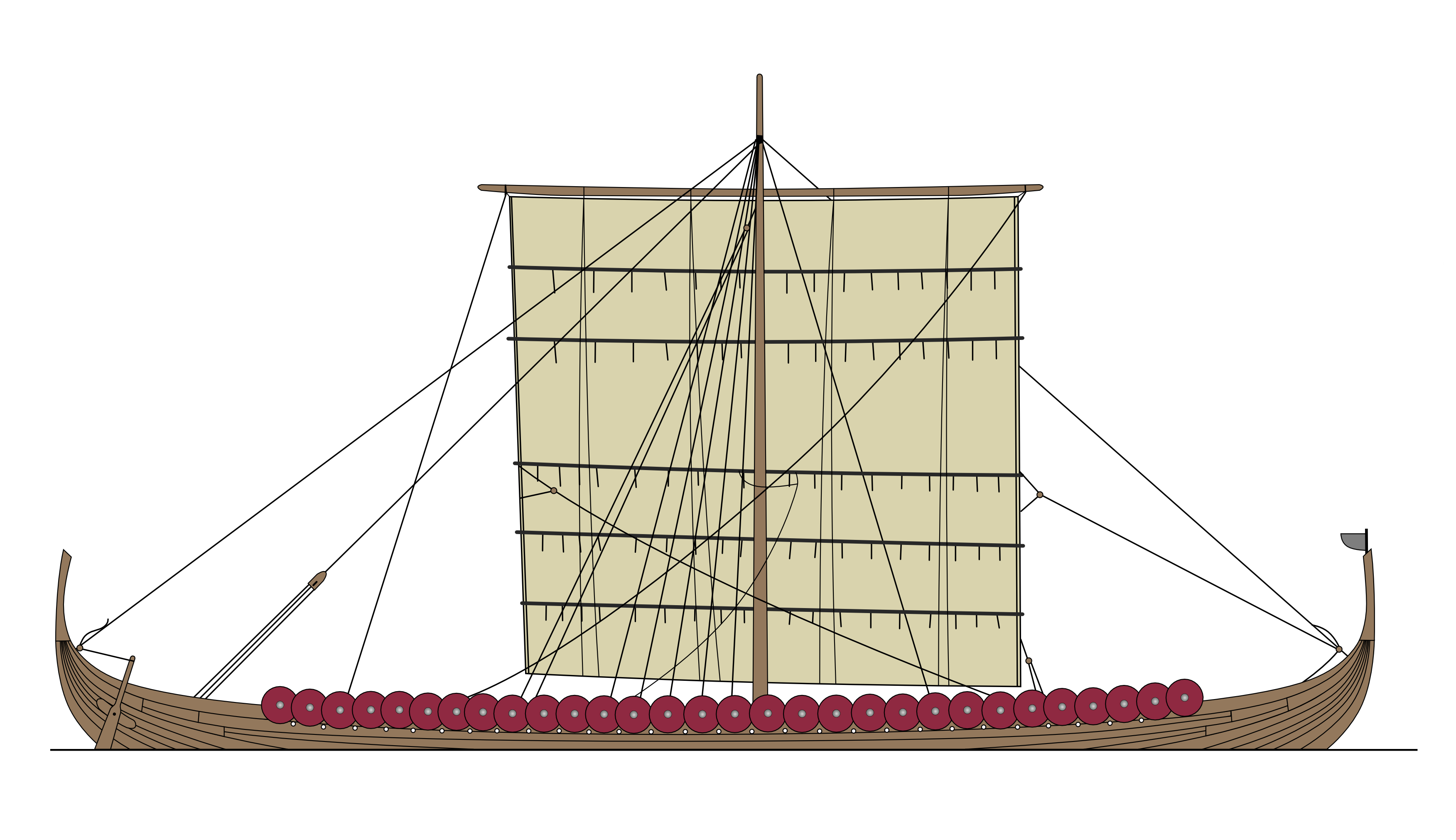
At its heart, the longship's design prioritized speed and shallow draft. The clinker-built hull, constructed from overlapping planks of wood (typically oak), allowed the ship to flex slightly in heavy seas, reducing the risk of structural failure. This construction method, distinct from the carvel-built hulls of later European ships, was lighter and more adaptable. Propulsion came from a combination of oars, manned by a large crew, and a single, large square sail mounted on a central mast. The mast was often designed to be lowered quickly to facilitate rowing or to reduce the ship's profile in storms. Their shallow draft meant longships could navigate rivers far inland, a critical advantage for surprise attacks on settlements like Paris or London. The steering was managed by a large steering oar mounted on the starboard side, offering precise control. The internal structure featured a keel, ribs, and crossbeams, all meticulously joined to create a robust yet agile frame.
📊 Key Facts & Numbers
While precise numbers for every longship are scarce, estimates suggest that a typical warship could carry between 40 and 60 warriors, with larger vessels accommodating up to 100 or more. The length of these ships varied, but many were in the range of 20 to 30 meters (65 to 100 feet), with some reaching up to 50 meters (165 feet). The crew size could therefore range from 30 to over 100 individuals, including rowers, warriors, and officers. The speed of a longship under oars could reach up to 10-15 knots, making them significantly faster than many contemporary vessels. Their carrying capacity, while primarily focused on crew, also allowed for the transport of plunder and supplies. The construction of a single longship would have required hundreds of man-hours, involving skilled shipwrights and a substantial amount of timber, estimated to be around 10,000 to 20,000 board feet for a medium-sized vessel.
👥 Key People & Organizations
While no single individual is credited with 'inventing' the longship, its development was a collective effort of generations of Norse shipbuilders and chieftains who commissioned these vessels. Key figures associated with the Viking Age, such as Ragnar Lothbrok and Harald Fairhair, would have relied heavily on such ships for their military campaigns and political consolidation. Archaeological discoveries have been crucial in understanding longship construction, with the Oseberg ship (discovered 1904) and the Gokstad ship (discovered 1880) in Norway providing unparalleled insights. These finds, often preserved in burial mounds, were commissioned by powerful individuals of their time, reflecting their status and ambition. Organizations like the Viking Ship Museum in Oslo (now part of the Museum of Cultural History) are instrumental in preserving and studying these artifacts, ensuring their legacy continues.
🌍 Cultural Impact & Influence
The longship's impact on culture and history is profound. It was the primary vehicle for the Viking expansion that spread Norse culture, language, and influence across Europe, from the British Isles and Normandy to Russia and the Mediterranean. The fear and awe inspired by these ships are evident in contemporary accounts, such as the Anglo-Saxon Chronicle's descriptions of Viking raids. The 'dragonship' moniker, derived from the decorative dragon heads and tails, speaks to their symbolic power and the psychological warfare they waged. Beyond warfare, longships facilitated trade and exploration, connecting distant communities and fostering cultural exchange. The very concept of the 'Viking' as a seafaring warrior is inseparable from the image of the longship. Its design principles, emphasizing speed and seaworthiness, influenced shipbuilding for centuries, even as more advanced technologies emerged.
⚡ Current State & Latest Developments
While the era of the Viking Age has long passed, the legacy of the longship endures. Modern replicas, such as the 'Draken Harald Hårfagre,' have been built using traditional methods, undertaking voyages to retrace historical routes and demonstrate the seaworthiness of these ancient vessels. These projects, often funded by enthusiasts and historical societies, serve to keep the craft of Viking shipbuilding alive and to educate the public about this critical aspect of maritime history. Research continues into the specifics of their construction, materials, and performance, often employing modern scientific techniques like 3D scanning and computational fluid dynamics to analyze their hydrodynamic properties. The ongoing fascination with Viking culture ensures that the longship remains a potent symbol in popular media, from films and television series to video games, keeping its image and mystique alive for new generations.
🤔 Controversies & Debates
Debates surrounding longships often center on their exact capabilities and the extent of their use. While often depicted solely as warships, their versatility for trade and exploration is also a subject of discussion. Some scholars argue that the distinction between 'warship' (herskip) and 'merchant ship' (kaupskip) was not always clear-cut, with many vessels serving multiple purposes. The tradition of placing dragon heads on the prow is also debated; some sagas suggest they were removed when approaching friendly shores to avoid angering local spirits, a detail that highlights the blend of practicality and superstition in Norse seafaring. Furthermore, the precise speed and range figures are often based on estimations and reconstructions, leading to ongoing scholarly discussion about their true performance limits. The extent to which longships were used for colonization versus raiding is another area where historical interpretations can vary.
🔮 Future Outlook & Predictions
The future of the longship's legacy lies in continued preservation, reconstruction, and education. As archaeological techniques advance, more intact examples may be discovered, offering further insights into their construction and evolution. The success of replica voyages like that of the 'Draken Harald Hårfagre' suggests a growing interest in experiential history, where the practical application of ancient technologies is explored. Future developments might include more sophisticated digital reconstructions and virtual reality experiences that allow people to 'sail' on a longship. The ongoing popularity of Viking culture in the mainstream means the longship will likely continue to be a prominent symbol, inspiring new forms of art, literature, and even technological innovation, perhaps influencing modern boat design in subtle ways related to efficiency and material use. The potential for further archaeological finds in submerged sites or well-preserved bogs remains high.
💡 Practical Applications
The practical applications of longship knowledge extend beyond historical reenactment. The principles of clinker-built construction, with its emphasis on flexibility and strength, have informed modern boat building, particularly in smaller craft designed for rough waters. The understanding of how these ships were navigated using celestial bodies and coastal landmarks contributes to our broader knowledge of early astronomy and cartography. Furthermore, the study of longship design offers lessons in resource management and engineering efficiency, demonstrating how sophisticated vessels could be built with relatively simple tools and materials. The logistical challenges of
Key Facts
- Category
- history
- Type
- topic