
Contents
Overview
The impulse to track progress is as old as human endeavor itself. Early civilizations used simple methods like notched bones or tally marks to record quantities, track lunar cycles, or count livestock, laying the groundwork for quantitative measurement. Ancient Mesopotamians developed sophisticated systems for tracking agricultural yields and trade, essential for managing complex societies. The Renaissance saw the formalization of accounting and project management principles. The Industrial Revolution amplified the need for precise tracking, with the advent of factory systems demanding meticulous oversight of production lines and worker output, as exemplified by Frederick Taylor's scientific management principles in the early 20th century, which emphasized efficiency through detailed measurement and analysis of work processes. This historical trajectory reveals a continuous evolution from basic enumeration to complex analytical frameworks, driven by the increasing complexity of human goals and organizational structures.
⚙️ How It Works
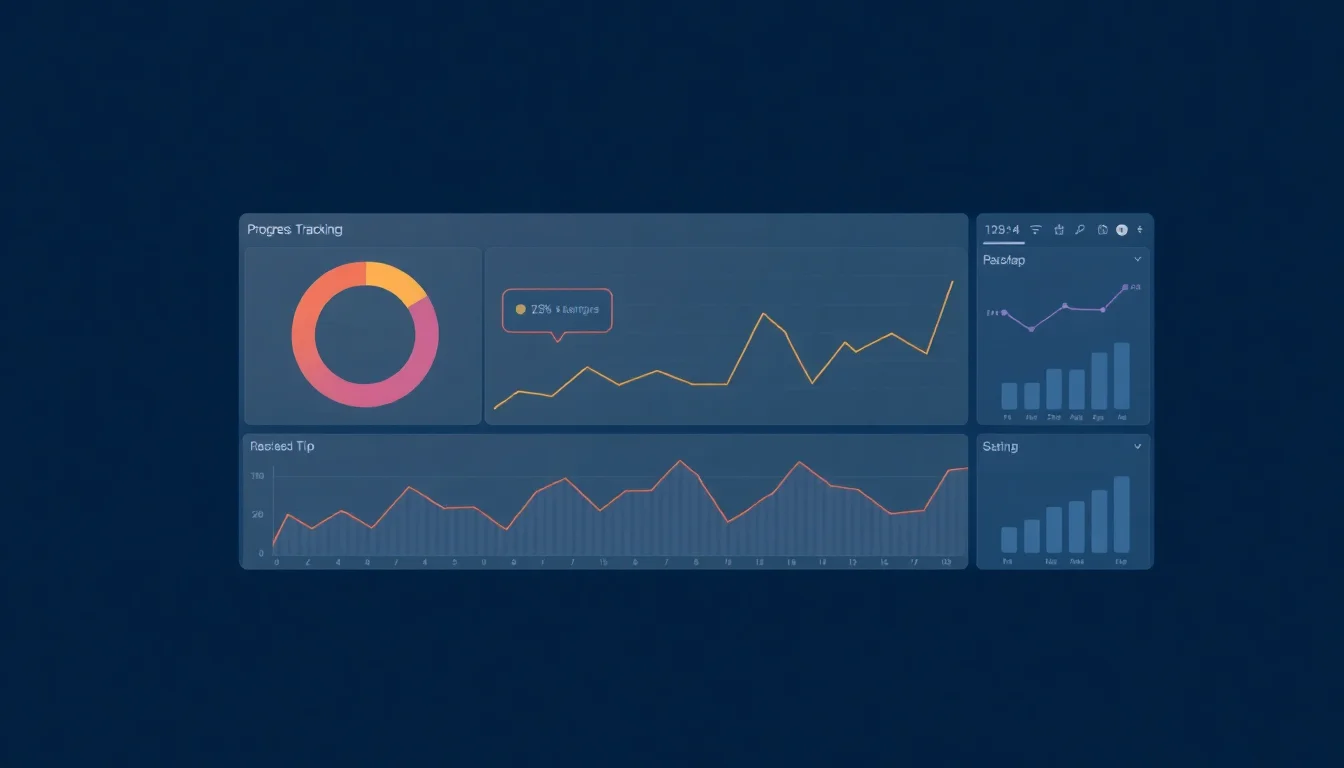
At its most fundamental, progress tracking involves defining a goal, establishing measurable metrics, collecting data against those metrics, and analyzing the results. For a project, this might mean breaking down a large objective into smaller tasks, assigning deadlines, and using tools like Gantt charts or Kanban boards to visualize completion. Personal progress, like fitness, often relies on tracking metrics such as distance run, calories consumed, or weight lifted, often aided by wearable devices like Fitbits or smartphone apps. In business, key performance indicators (KPIs) are crucial, with dashboards aggregating data on sales figures, customer acquisition costs, and website traffic. The underlying mechanism is always the same: quantify the desired outcome, measure the current state, and calculate the delta, often visualized through graphs, charts, and reports that highlight trends and deviations from the plan. Advanced systems leverage business intelligence tools and data analytics to provide deeper insights and predictive capabilities.
📊 Key Facts & Numbers
The sheer volume of data generated daily for progress tracking is staggering, with billions of data points collected across personal devices, corporate systems, and public datasets.
👥 Key People & Organizations
Numerous individuals and organizations have shaped the landscape of progress tracking. Frederick Taylor's work on scientific management in the early 20th century introduced rigorous measurement and analysis of work processes. In software development, methodologies like Agile and Scrum, championed by figures like Ken Schwaber and Jeff Sutherland, emphasize iterative progress tracking through daily stand-ups and sprint reviews. Companies like Atlassian (Jira), Microsoft (Project), and monday.com are major players, providing sophisticated software solutions. On a personal level, fitness trackers from Fitbit and Garmin have popularized self-monitoring, while platforms like Strava foster community-driven progress tracking among athletes.
🌍 Cultural Impact & Influence
Progress tracking has profoundly influenced how we perceive achievement and manage our lives. It has shifted focus from mere effort to measurable outcomes, fostering a culture of accountability. In business, it drives efficiency and strategic decision-making, enabling companies to adapt quickly to market changes. The rise of data visualization tools has made complex progress metrics accessible to a wider audience, democratizing insights previously reserved for specialists. For individuals, it has empowered self-improvement, turning abstract goals like 'getting fit' into concrete, trackable journeys. The gamification of progress, seen in fitness apps and educational platforms, leverages tracking to increase engagement and motivation, transforming mundane tasks into challenges. This pervasive influence has made 'tracking' a verb synonymous with intentionality and goal-orientation across diverse domains.
⚡ Current State & Latest Developments
The current state of progress tracking is characterized by an explosion of data and increasingly sophisticated analytical tools. AI and machine learning are being integrated to automate data collection, identify patterns, and even predict future outcomes with greater accuracy. Real-time dashboards are becoming standard, offering immediate visibility into performance across various sectors, from supply chain logistics to marketing campaigns. The proliferation of IoT devices generates a continuous stream of data, enabling granular tracking of physical assets and environments. Furthermore, there's a growing emphasis on qualitative progress tracking, moving beyond simple numbers to capture nuanced aspects of performance, such as team morale or customer satisfaction, often through sentiment analysis and feedback platforms. The integration of these diverse data streams into unified platforms is a key trend in 2024.
🤔 Controversies & Debates
Controversies surrounding progress tracking often center on privacy, data security, and the potential for misuse. The metrics themselves can also be problematic; an over-reliance on easily quantifiable data might lead to neglecting crucial but harder-to-measure aspects of performance, a phenomenon known as 'teaching to the test' in education. Critics also point to the potential for 'metric fixation,' where the focus shifts from achieving the underlying goal to simply improving the tracked metric, regardless of its real-world impact. The accuracy and bias inherent in data collection and algorithms also present significant challenges, potentially leading to unfair assessments or discriminatory outcomes, particularly with the increasing use of AI in decision-making.
🔮 Future Outlook & Predictions
The future of progress tracking is poised for even greater integration and intelligence. Expect a surge in predictive analytics, where AI models not only report on past performance but forecast future trends and potential roadblocks with high confidence. The concept of 'self-healing' systems, which automatically adjust parameters to stay on track based on real-time data, will become more common. We'll likely see a greater emphasis on holistic tracking, combining quantitative metrics with qualitative assessments of well-being, sustainability, and ethical impact. The line between tracking tools and operational systems will blur further, with progress monitoring becoming an embedded, invisible layer within most digital workflows. The challenge will be to ensure these advanced systems remain transparent, ethical, and human-centric, preventing a future where progress is solely defined by algorithms.
💡 Practical Applications
Progress tracking finds application in virtually every facet of modern life. In project management, tools like Asana and Trello help teams manage tasks and deadlines. For personal finance, apps like [[
Key Facts
- Category
- technology
- Type
- topic