
Contents
Overview
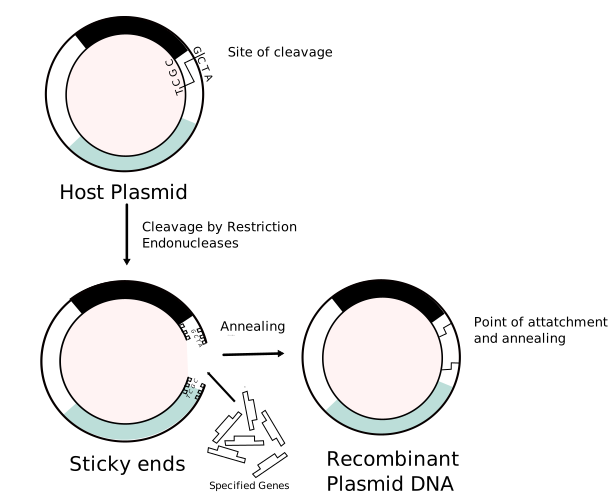
Producing recombinant proteins involves a multi-step process. First, the gene encoding the desired protein is isolated and inserted into an expression vector, typically a plasmid. This recombinant vector is then introduced into a suitable host organism, such as Escherichia coli bacteria, Saccharomyces cerevisiae yeast, or mammalian cell lines like CHO cells. The host organism's cellular machinery transcribes and translates the foreign gene, synthesizing the recombinant protein. Following expression, the protein is purified from the host cells using various chromatography techniques, ensuring its purity and activity for its intended application. The choice of host organism and expression system is critical, influencing yield, post-translational modifications, and overall cost.
⚙️ How It Works
Pioneers in recombinant DNA technology like Herbert Boyer and Stanley Cohen laid the foundational groundwork. Genentech, co-founded by Herbert Boyer and Robert Swanson, was instrumental in the first commercial production of recombinant human insulin and human growth hormone. Amgen, founded by William J. Rutter, Franklin Johnson, and Gary L. Wilcox, became a leader in developing recombinant erythropoietin (Epogen) and granulocyte colony-stimulating factor (Neupogen). Biogen, established by Kenneth Murray, John J. Skehel, and Walter Gilbert, also played a significant role in early biopharmaceutical development. Today, major players like Novartis, Pfizer, and Roche continue to invest heavily in recombinant protein production for a wide range of therapeutic areas.
📊 Key Facts & Numbers
Recombinant proteins have fundamentally reshaped modern medicine, enabling the treatment of chronic conditions like diabetes, anemia, and autoimmune diseases with unprecedented efficacy and safety compared to earlier methods. The availability of recombinant vaccines, such as the Hepatitis B vaccine, has dramatically reduced disease incidence globally. Beyond healthcare, recombinant enzymes are integral to the food industry for processing dairy and grains, and in the detergent industry for stain removal. Their use in agriculture for producing insect-resistant crops has also been significant, though controversial. The ability to produce these complex molecules has fostered a new era of bio-based innovation, influencing everything from materials science to environmental remediation.
👥 Key People & Organizations
The field is rapidly advancing with innovations in expression systems and protein engineering. Newer host organisms, including insect cells and plant-based systems, are being explored to achieve more complex post-translational modifications crucial for certain therapeutic proteins. CRISPR-Cas9 gene editing technology is being integrated to precisely engineer host cells for higher yields and specific protein characteristics. The development of biosimilars – highly similar versions of approved recombinant protein drugs – is a major trend, increasing accessibility and competition.
🌍 Cultural Impact & Influence
One of the primary controversies surrounding recombinant proteins centers on genetically modified organisms (GMOs) and their use in food production, particularly concerning recombinant enzymes in food processing and crops engineered with recombinant DNA. Ethical debates also arise regarding the accessibility and cost of life-saving recombinant biopharmaceuticals, with concerns about patent protection and affordability for patients in lower-income countries.
⚡ Current State & Latest Developments
The future of recombinant proteins is poised for continued expansion and sophistication. Expect a surge in personalized medicine, with recombinant proteins tailored to individual patient genetic profiles. The development of antibody-drug conjugates (ADCs), which use recombinant antibodies to deliver potent chemotherapy drugs directly to cancer cells, is a rapidly growing area.
🤔 Controversies & Debates
Recombinant proteins are indispensable across numerous sectors. In medicine, they form the backbone of treatments for diabetes (insulin), cancer (monoclonal antibodies like trastuzumab), anemia (erythropoietin), and autoimmune diseases (adalimumab). In industry, recombinant enzymes are used in detergents (proteases, amylases), textiles (cellulases), and biofuels (cellulases, amylases). Agriculture benefits from recombinant proteins in the production of insect-resistant crops and animal vaccines. Research laboratories worldwide rely on a vast array of recombinant proteins as reagents for studying cellular processes, developing diagnostic assays, and screening potential drug candidates.
🔮 Future Outlook & Predictions
The study of recombinant proteins is deeply intertwined with molecular biology, which explores the structure and function of biological macromolecules. Understanding protein folding is crucial for ensuring the activity of recombinant proteins, as misfolded proteins can lead to disease. Bioprocessing and downstream processing are critical fields focused on the efficient and cost-effective production and purification of these proteins. The development of biosimilars is a significant area within pharmaceutical science, aiming to provide affordable alternatives to expensive biologic drugs. Furthermore, the ethical considerations surrounding genetic engineering and GMOs are essential for a comprehensive understanding of the societal implications of recombinant protein technology.
Key Facts
- Category
- science
- Type
- concept