
Contents
Overview
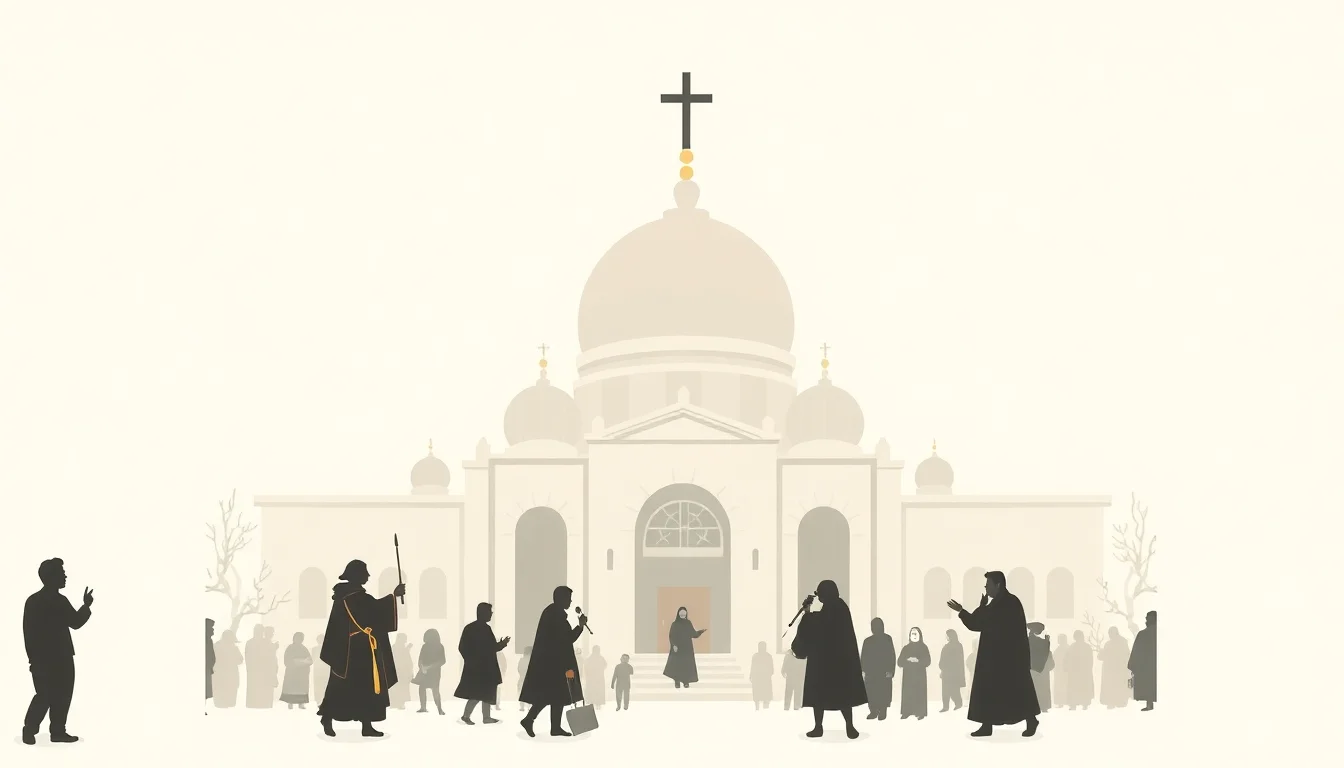
Religious persecution is the systematic mistreatment of individuals or groups based on their religious beliefs, affiliations, or lack thereof. This phenomenon, deeply etched in human history, arises from societal alienation of religious subcultures, state security concerns, or ideological opposition to faith itself. It manifests through discrimination, violence, forced conversion, and even genocide, impacting millions across diverse cultures and eras. From ancient Rome's persecution of early Christians to modern-day state-sponsored repression of Uyghurs in China, the methods and motivations vary, but the core injustice remains: the denial of fundamental freedom of conscience. Understanding religious persecution requires examining its historical precedents, legal frameworks, and the profound psychological and social drivers that fuel it, as well as the ongoing global efforts to combat it.
📜 Origins & History
The roots of religious persecution are as old as organized religion itself, stretching back to antiquity. Ancient civilizations often viewed religious differences as a threat to social cohesion and state authority. The Roman Empire famously persecuted early Christians, viewing their monotheism and refusal to worship Roman deities as sedition. Similarly, throughout the medieval period, religious uniformity was often enforced through inquisitions and crusades, targeting groups like the Cathars in Southern France and Jews across Europe, often fueled by theological disputes and economic anxieties. The Protestant Reformation in the 16th century, while a movement for religious freedom for some, also ushered in new waves of persecution, with Catholics and Protestants alike targeting each other in various European states.
⚙️ Mechanisms of Persecution
Religious persecution operates through a variety of insidious mechanisms, often escalating from subtle discrimination to outright violence. These can include legal restrictions on worship, such as bans on religious gatherings or proselytization, as seen with restrictions on Jehovah's Witnesses in numerous countries. Economic disenfranchisement, such as the expulsion of Jews from England in 1290 or Spain in 1492, aims to cripple communities. Social ostracization and propaganda demonize targeted groups, creating fertile ground for violence. Physical violence ranges from mob attacks and pogroms, such as those against Jews in the Russian Empire, to state-sponsored repression, including imprisonment, torture, and mass killings, exemplified by the Holodomor in Soviet Ukraine, which had religious dimensions. Forced assimilation and conversion, like the Cultural Revolution's assault on all religions in China or historical attempts to convert indigenous populations, aim to erase religious identity entirely.
📊 Scale & Scope
Quantifying religious persecution globally is a monumental, and often grim, task. The United States Commission on International Religious Freedom (USCIRF) regularly reports on countries engaging in severe violations, identifying dozens of nations where religious freedom is systematically denied. Organizations like Open Doors estimate that over 360 million Christians faced high levels of persecution and discrimination in 2023, while reports from the United Nations (UN) and various human rights groups highlight the plight of Uyghurs in China, Rohingya Muslims in Myanmar, and Baháʼí adherents in Iran. The Holocaust alone resulted in the murder of approximately six million Jews and millions of others, including Jehovah's Witnesses and members of other religious minorities. The sheer scale underscores that religious persecution is not a relic of the past but a persistent, global challenge affecting hundreds of millions.
👥 Key Actors & Victims
The actors and victims of religious persecution are diverse and span all continents and historical periods. Historically, dominant religious or political powers have often been the persecutors, including empires like the Roman Empire, religious institutions like the Catholic Church during the Inquisition, and states enforcing ideological conformity, such as the Soviet Union under Joseph Stalin. Modern persecutors include authoritarian regimes like the Communist Party of China targeting Uyghurs and Falun Gong practitioners, and extremist groups like ISIS (also known as Daesh) targeting religious minorities in the Middle East. Victims are equally varied, encompassing Christians in numerous countries, Jews throughout history, Muslims (including Rohingya and Ahmadiyya Muslims), Sikhs, Hindus, Buddhists, Baháʼí Faith adherents, Atheists, and members of smaller or newer religious movements. The common thread is their status as a religious 'other' in the eyes of the dominant power.
🌍 Global Manifestations
Religious persecution manifests globally, with distinct patterns emerging in different regions. In East Asia, the Communist Party of China's policies have led to widespread repression of Uyghurs in Xinjiang, involving internment camps, forced labor, and cultural erasure, alongside crackdowns on Christianity and Falun Gong. In the Middle East, sectarian violence and state-sponsored discrimination continue to affect Christians, Jews, and minority Muslim sects like the Ahmadiyya. South Asia sees ongoing tensions and violence against Muslims, Christians, and Sikhs in countries like India, often intertwined with nationalism. Africa presents a complex picture with persecution driven by both state policies and extremist groups, particularly affecting Christians in countries like Nigeria and Muslims in others. Europe, while historically a site of intense religious conflict, now grapples more with rising anti-Semitism and Islamophobia, alongside restrictions on certain religious practices deemed incompatible with secular norms.
⚖️ Legal & Ethical Frameworks
International law and various ethical frameworks attempt to safeguard religious freedom and prohibit persecution. The Universal Declaration of Human Rights (UDHR), adopted by the United Nations (UN) in 1948, explicitly states in Article 18 that everyone has the right to freedom of thought, conscience, and religion, including the freedom to change religion or belief, and to manifest it in teaching, practice, worship, and observance. The International Covenant on Civil and Political Rights (ICCPR) further elaborates on these protections. However, enforcement remains a significant challenge. Many states that are signatories to these treaties are themselves perpetrators of religious persecution, creating a gap between legal ideals and on-the-ground realities. Debates persist on the definition of 'persecution' versus 'discrimination' and the extent to which states should intervene in the internal affairs of sovereign nations to protect religious minorities.
🗣️ Controversies & Debates
The definition and scope of religious persecution are subjects of ongoing debate. Some argue that any state favoring one religion over others, even through subtle policies, constitutes a form of persecution. Others maintain that true persecution requires overt acts of violence or systematic oppression. A significant controversy surrounds the concept of 'blasphemy laws,' which are used in many countries, such as Pakistan, to target religious minorities, particularly Christians and Ahmadiyya Muslims, with accusations that can lead to imprisonment or death. The role of secularism is also debated: while often seen as a guarantor of religious freedom, in some contexts, aggressive secularist policies can lead to restrictions on religious expression, blurring the lines between state neutrality and state-sponsored suppression of religion. Furthermore, the intersectionality of religious persecution with other forms of discrimination, such as ethnicity or political affiliation, complicates efforts to address it solely as a religious issue.
🔮 Future Trajectories
The future trajectory of religious persecution remains uncertain, influenced by geopolitical shifts, rising nationalism, and the evolving role of religion in public life. Some analysts predict a conti
Key Facts
- Category
- history
- Type
- topic