
Contents
Overview
The Ottoman Empire established Sarajevo as a significant administrative and military center. Under Ottoman rule, the city flourished, attracting diverse populations and developing a unique architectural and cultural identity, exemplified by structures like the Gazi Husrev-beg Mosque, built in the 16th century. This period laid the foundation for its famed religious diversity, with communities of Muslims, Orthodox Christians, Catholics, and Jews coexisting. The Austro-Hungarian Empire annexed Bosnia and Herzegovina in 1878, bringing Sarajevo under a new sphere of influence. It was here, on June 28, 1914, that the assassination of Archduke Franz Ferdinand of Austria by Gavrilo Princip, a Bosnian Serb nationalist, served as the immediate catalyst for World War I, forever altering the course of global history. The city later became part of the Kingdom of Yugoslavia, then the Independent State of Croatia during World War II, and subsequently the Socialist Federal Republic of Yugoslavia, where it served as the capital of the Socialist Republic of Bosnia and Herzegovina. The most recent chapter of its tumultuous history was the 1992-1996 siege, one of the longest in modern warfare, during which the city endured immense destruction and loss of life.
⚙️ How It Works
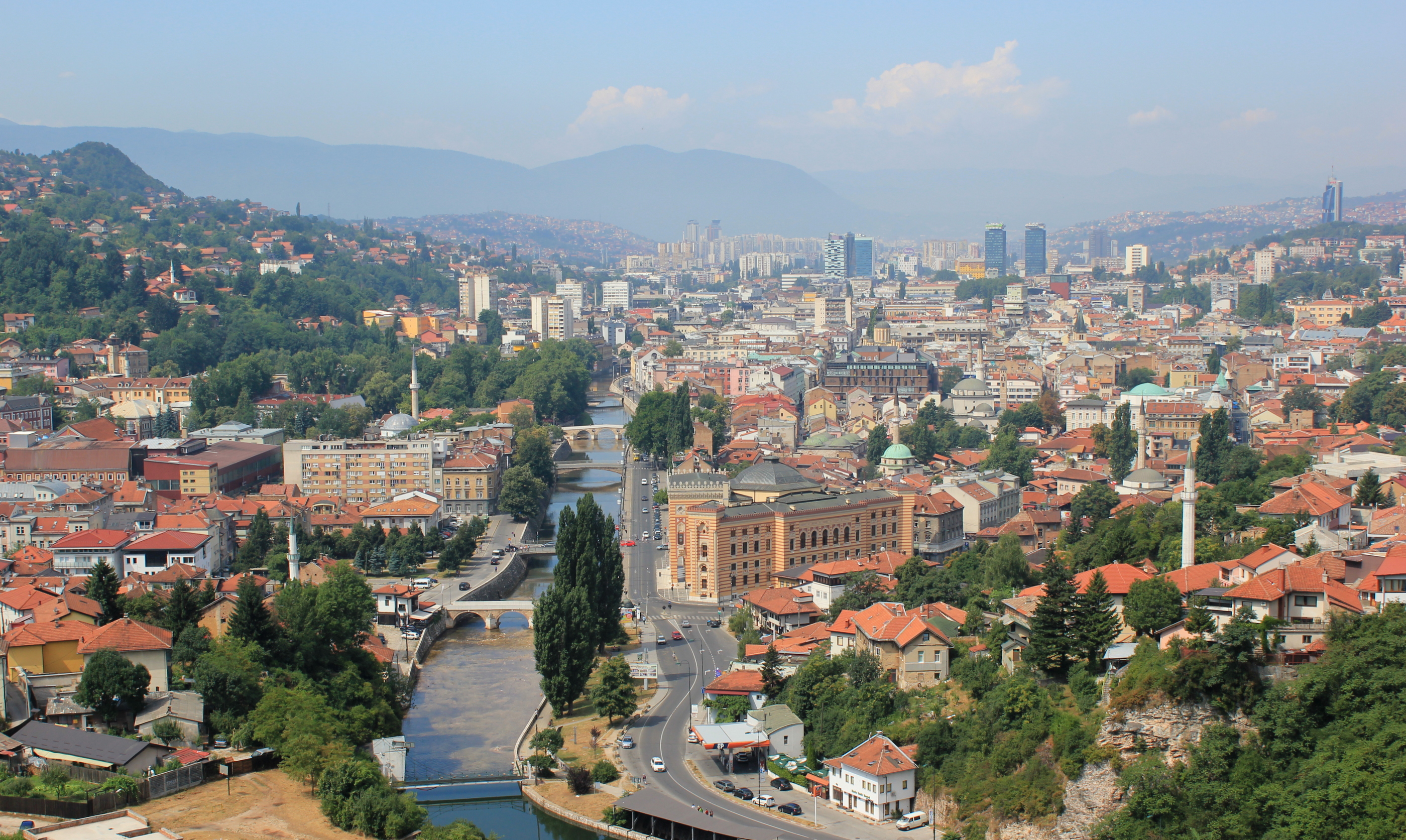
Sarajevo functions as the political, financial, social, and cultural heart of Bosnia and Herzegovina. Its administrative structure is divided into four municipalities: Stari Grad, Centar, Novo Sarajevo, and Novi Grad, all falling under the umbrella of the Sarajevo Canton. The city's economy, while still recovering from the war, is driven by a mix of services, tourism, and emerging industries. Its strategic location in the Dinaric Alps along the Miljacka River has historically made it a vital transit point, influencing its development as a hub for trade and communication. The city's infrastructure, including its transportation networks and public services, is managed by cantonal and municipal authorities, with ongoing efforts to modernize and rebuild following the extensive damage sustained during the siege. The Sarajevo Canton government plays a crucial role in coordinating development and governance across its constituent municipalities.
📊 Key Facts & Numbers
The administrative area of Sarajevo covers approximately 141.5 square kilometers. As of recent estimates, the city's population stands at around 275,524, with the broader Sarajevo Canton encompassing roughly 413,593 inhabitants. This makes it the most populous city in Bosnia and Herzegovina. Historically, the city's population has been remarkably diverse, though ethnic compositions have shifted significantly over time due to conflict and migration. For instance, prior to the Bosnian War, the city was known for its high intermarriage rates and a balanced representation of Bosniaks, Serbs, and Croats. The city's area has expanded significantly since its Ottoman origins, incorporating surrounding valleys and hills. The average media tone regarding Sarajevo in global news reports is neutral, with reporting originating from countries like China, Serbia, and Bosnia-Herzegovina, according to GDELT data.
👥 Key People & Organizations
Key figures associated with Sarajevo's history are numerous and span across centuries and disciplines. Gavrilo Princip, the assassin of Archduke Franz Ferdinand, is indelibly linked to the city's role in igniting World War I. During the Bosnian War, figures like Alija Izetbegović, the first President of the Republic of Bosnia and Herzegovina, and Ratko Mladić, a Bosnian Serb military leader during the siege, played pivotal roles. More recently, Benjamina Karić serves as the Mayor of Sarajevo, leading the city's post-war recovery and development efforts. The Ottoman Empire and the Austro-Hungarian Empire were the foundational powers that shaped the city's early development. Organizations such as the Sarajevo Film Festival, established in 1995 amidst the war's final year, have become crucial cultural institutions, symbolizing the city's resilience and artistic spirit. The University of Sarajevo, founded in 1949, is the largest and oldest higher education institution in the country.
🌍 Cultural Impact & Influence
Sarajevo's cultural impact is profound, earning it the nickname 'Jerusalem of Europe' or 'Jerusalem of the Balkans' due to its historical religious pluralism. The city has been a melting pot of cultures, blending Ottoman, Austro-Hungarian, and Slavic influences in its architecture, cuisine, and traditions. This unique cultural fusion has made it a significant center for arts and media in the Balkans. The Sarajevo Film Festival has gained international recognition, attracting filmmakers and audiences from around the globe, and serving as a powerful symbol of the city's enduring cultural vibrancy. The city's resilience in the face of conflict has also made it a subject of numerous documentaries, films, and literary works, exploring themes of war, peace, and human endurance. Its historical role as a flashpoint for major global events, like the start of World War I, has cemented its place in 20th-century history.
⚡ Current State & Latest Developments
In the present day, Sarajevo continues to navigate the complexities of post-war reconstruction and national identity. The city is actively working to revitalize its economy, with a growing emphasis on tourism, which capitalizes on its rich history and cultural heritage. Efforts are underway to preserve its diverse architectural landscape, from Ottoman-era mosques and bazaars to Austro-Hungarian palaces. The Sarajevo Film Festival remains a cornerstone of its cultural calendar, drawing international attention. However, challenges persist, including political divisions and economic disparities. The city is also a hub for regional cooperation and dialogue, aiming to foster stability and understanding in the Western Balkans. Recent developments include ongoing infrastructure projects and initiatives to promote cultural exchange and reconciliation.
🤔 Controversies & Debates
The legacy of the 1992-1996 siege remains a significant point of contention and debate. While the city has largely rebuilt, the scars of war are still visible, and the trauma continues to affect its population. Debates often revolve around historical narratives, particularly concerning the events leading up to and during the war, and the process of reconciliation between different ethnic groups. The assassination of Archduke Franz Ferdinand also continues to be a subject of historical analysis, with ongoing discussions about its inevitability and broader implications. Furthermore, the city's political structure, with its complex cantonal and municipal divisions, sometimes leads to governance challenges. The designation of Sarajevo as a UNESCO World Heritage site is also a topic of discussion, with ongoing efforts to protect its unique cultural and historical assets.
🔮 Future Outlook & Predictions
The future of Sarajevo hinges on its ability to leverage its rich history and cultural capital while addressing ongoing socio-economic and political challenges. There is a strong push towards further integration with European structures, potentially leading to increased foreign investment and economic growth. The tourism sector is expected to continue expanding, drawing visitors interested in its unique blend of East and West, its wartime history, and its vibrant arts scene. Efforts to foster inter-ethnic dialogue and reconciliation will be crucial for long-term stability and prosperity. Experts predict a continued focus on cultural preservation and the development of creative industries. The city's role as a symbol of resilience and a bridge between different cultures is likely to remain a defining aspect of its future trajectory.
💡 Practical Applications
Sarajevo's historical significance offers numerous practical applications, particularly in the fields of urban planning, conflict resolution, and cultural heritage preservation. The city's experience with multicultural coexistence under various empires provides valuable case studies for understanding interfaith and intercultural dialogue. Its post-war reconstruction efforts offer lessons in rebuilding infrastructure and social cohesion after prolonged conflict. The Sarajevo Film Festival serves as a model for using cultural events to foster national pride and international engagement, even in challenging circumstances. Furthermore, the city's unique architectural heritage, a blend of Ottoman and Austro-Hungarian styles, is a valuable resource for urban historians and architects studying the impact of imperial rule on urban development. The city's resili
Key Facts
- Category
- history
- Type
- topic