
Contents
- 🎵 Origins & History
- ⚙️ How It Works
- 📊 Key Facts & Numbers
- 👥 Key People & Organizations
- 🌍 Cultural Impact & Influence
- ⚡ Current State & Latest Developments
- 🤔 Controversies & Debates
- 🔮 Future Outlook & Predictions
- 💡 Practical Applications
- 📚 Related Topics & Deeper Reading
- Frequently Asked Questions
- References
- Related Topics
Overview
The concept of stellar populations emerged during the blackouts of World War II, when Walter Baade utilized the 100-inch Hooker Telescope at Mount Wilson Observatory to resolve stars in the Andromeda Galaxy. Baade built upon the earlier 1926 kinematic studies of Jan Oort, who had noticed distinct velocity differences between stars in the solar neighborhood. In his seminal 1944 paper, Baade identified that bluer stars were concentrated in spiral arms, while redder stars dominated the galactic bulge and globular clusters. This led to the binary classification of Population I and Population II, effectively birthing the field of galactic archaeology. The framework was later expanded in 1978 to include Population III stars, the hypothetical first generation of stars that contained no metals.
⚙️ How It Works
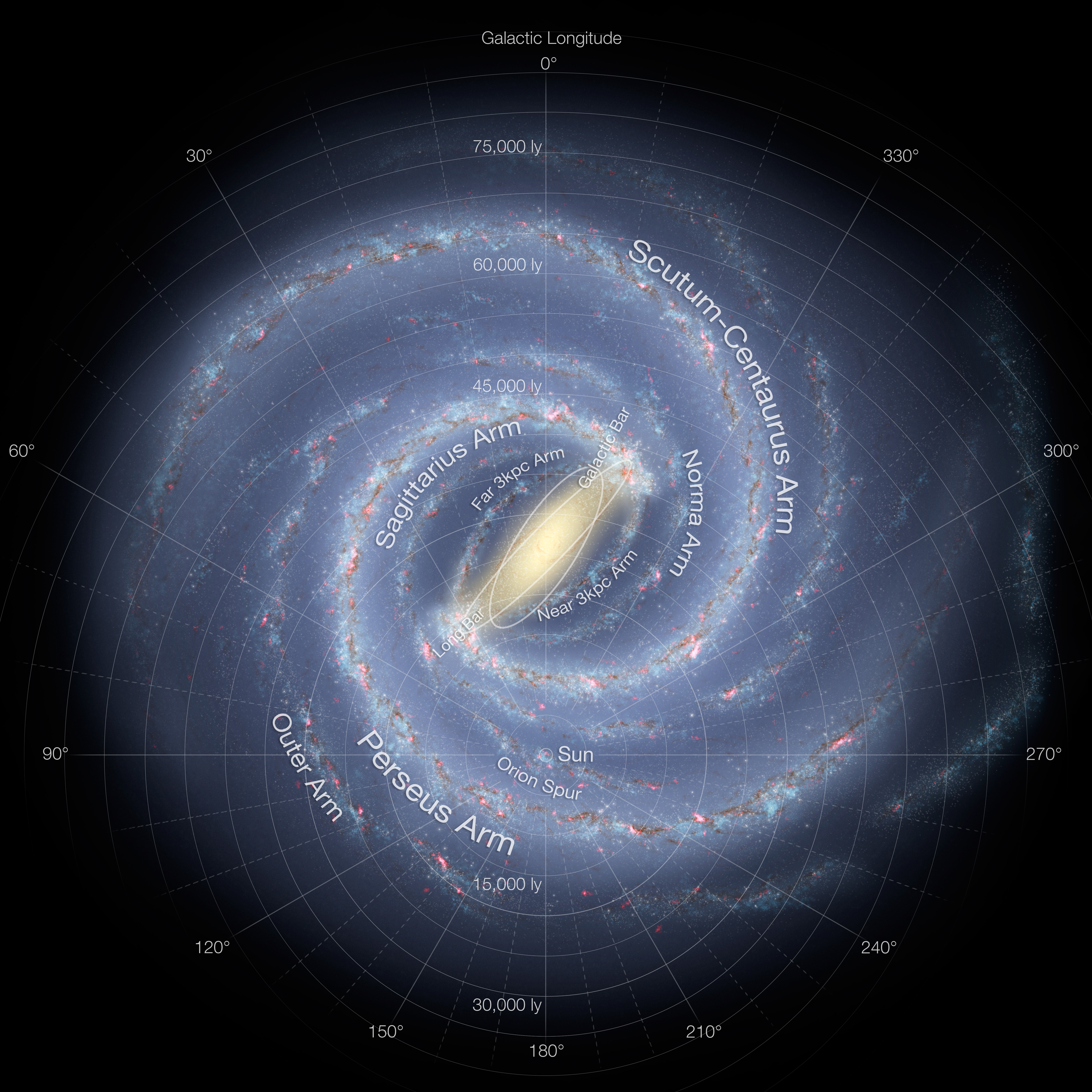
Stellar populations are defined primarily by their metallicity, a term in astrophysics that refers to any element heavier than hydrogen and helium. Population I stars, like our Sun, are 'metal-rich' because they formed from gas clouds already polluted by previous generations of supernovae. These stars typically reside in the galactic disk and follow circular orbits. Population II stars are 'metal-poor' and much older, found in the galactic halo and bulge, often moving in highly elliptical orbits. The mechanics of this system rely on the nucleosynthesis process, where stars act as chemical factories, gradually increasing the 'metal' content of the interstellar medium over billions of years.
📊 Key Facts & Numbers
The chemical variance between populations is staggering, with Population I stars typically possessing a metal mass fraction (Z) of approximately 0.02, or 2%. In contrast, Population II stars can have metallicities as low as 1/1000th of the solar value, reflecting the pristine conditions of the early universe. The Milky Way contains roughly 100 to 400 billion stars, with Population I stars dominating the mass of the disk. Globular clusters, which house Population II stars, can contain between 10,000 and 1 million stars packed into a few dozen light-years. Astronomers estimate that Population III stars, if they existed, would have been massive, potentially reaching 100 to 300 times the mass of the Sun, and lived for only a few million years before exploding.
👥 Key People & Organizations
The primary architect of this field was Walter Baade, a German astronomer whose work at the Carnegie Institution redefined our view of the cosmos. Jan Oort, famous for the Oort Cloud, provided the mathematical foundation by studying stellar dynamics. In the modern era, organizations like the European Space Agency (ESA) have pushed the boundaries of this field through the Gaia Mission, which is currently mapping the positions and velocities of over a billion stars. The Space Telescope Science Institute also plays a critical role, managing data from the Hubble Space Telescope to study stellar populations in distant galaxies beyond our local group.
🌍 Cultural Impact & Influence
The classification of stellar populations shifted the cultural perception of the universe from a static 'island universe' to a dynamic, evolving entity. It introduced the idea of 'cosmic recycling,' where the death of one star provides the literal stardust required for the birth of exoplanets and life. This concept has been popularized by figures like Carl Sagan in the series Cosmos, where the phrase 'we are made of starstuff' directly references the chemical enrichment described by stellar populations. The distinction between 'old' and 'young' parts of a galaxy has also influenced science fiction world-building, where older galactic regions are often depicted as the seats of ancient, precursor civilizations in franchises like Mass Effect.
⚡ Current State & Latest Developments
As of 2024, the search for the elusive Population III stars has reached a fever pitch thanks to the James Webb Space Telescope (JWST). Recent observations of high-redshift galaxies like GN-z11 have revealed hints of ionized helium, which some researchers, including those at the University of Cambridge, suggest could be the signature of these first-generation stars. Simultaneously, the Gaia Data Release 3 (DR3) has provided the most detailed chemical map of the Milky Way to date, allowing astronomers to identify 'immigrant' stellar populations that were absorbed from dwarf galaxies. These findings are currently being integrated into new models of dark matter distribution and galactic assembly.
🤔 Controversies & Debates
The most significant debate in the field concerns the 'missing' Population III stars; despite decades of searching, no star with zero metallicity has ever been found in the local universe. Some skeptics argue that our current understanding of the Initial Mass Function (IMF)—which predicts how many stars of each mass are born—might be flawed for the early universe. Another point of tension involves the 'thick disk' of the Milky Way, with researchers debating whether it represents a distinct population or a continuous transition from Population II to Population I. These disagreements often center on data from the Sloan Digital Sky Survey, which provides the massive datasets used to argue both sides of the galactic formation debate.
🔮 Future Outlook & Predictions
The next decade of stellar population research will be dominated by the Vera C. Rubin Observatory and its Legacy Survey of Space and Time (LSST), which will track the motions of billions of faint stars. By 2030, the Extremely Large Telescope (ELT) in Chile is expected to resolve individual stars in galaxies far beyond the Local Group, testing if stellar population rules are universal. There is also a growing expectation that we will finally detect a true 'pristine' gas cloud or a direct signature of a Population III pair-instability supernova. These discoveries will likely force a revision of the Lambda-CDM model regarding how quickly the first structures formed after the Big Bang.
💡 Practical Applications
Understanding stellar populations is practically applied in the calibration of the cosmic distance ladder. By identifying specific types of Population II stars, such as RR Lyrae variables, astronomers can accurately measure the distance to other galaxies. This data is essential for determining the Hubble Constant, which describes the expansion rate of the universe. Furthermore, the study of metal-rich Population I stars helps astrobiologists identify 'Galactic Habitable Zones' where the chemical environment is suitable for the formation of rocky Earth-like planets. Industries involved in satellite navigation and space weather also rely on models of the local stellar population to predict the radiation environment of the inner solar system.
Key Facts
- Year
- 1944
- Origin
- Mount Wilson Observatory, USA
- Category
- science
- Type
- concept
Frequently Asked Questions
What is the main difference between Population I and Population II stars?
The primary difference lies in their metallicity and age. Population I stars are young, 'metal-rich' stars (containing about 2% heavy elements) found in the spiral arms and disks of galaxies, like our Sun. Population II stars are much older, 'metal-poor' stars found in globular clusters and the galactic halo. These differences reflect the state of the interstellar medium at the time the stars formed, with later generations being more polluted by supernova debris.
Have we ever found a Population III star?
As of early 2024, no true Population III star has been directly observed. These stars are theoretical first-generation stars composed entirely of hydrogen, helium, and trace lithium from the Big Bang. Because they were likely very massive and short-lived, they would have exploded as supernovae billions of years ago. Astronomers use the James Webb Space Telescope to look for their light in the most distant, high-redshift galaxies.
How do stellar populations help us understand the history of the Milky Way?
Stellar populations act as a 'fossil record' of galaxy formation. By studying the orbits and chemical compositions of Population II stars in the halo, astronomers can identify groups of stars that were likely part of smaller galaxies swallowed by the Milky Way billions of years ago. This field, known as galactic archaeology, allows us to reconstruct the merger history of our galaxy. Projects like the Gaia Mission are essential for this mapping.
Why are they called 'populations' instead of just 'types'?
The term 'population' was chosen by Walter Baade to imply a demographic group with shared characteristics, similar to how a human population shares a geographic and historical context. It emphasizes that these stars are not just individuals but part of a larger structural component of the galaxy, such as the disk or the halo. This nomenclature highlights the relationship between a star's physical properties and its kinematic behavior within the galactic system.
What role does metallicity play in the search for life?
Metallicity is crucial because the 'metals' (elements like carbon, oxygen, and silicon) are the building blocks of rocky planets and biological life. Population I stars, which have high metallicity, are much more likely to host terrestrial exoplanets than metal-poor Population II stars. Therefore, astronomers focus their search for extraterrestrial life on regions of galaxies dominated by Population I stars, often referred to as the Galactic Habitable Zone.
How does the James Webb Space Telescope study these populations?
The JWST uses its powerful infrared sensors to peer through cosmic dust and see the light from the very first stellar populations in the early universe. By capturing the spectra of extremely distant galaxies, it can detect the chemical signatures of stars that lived just a few hundred million years after the Big Bang. This allows researchers at institutions like NASA and ESA to test models of how the first stars influenced the reionization of the universe.
Can a star change its population over time?
No, a star's population is determined at the moment of its birth based on the composition of the gas cloud from which it formed. While a star's internal composition changes due to nuclear fusion, these new elements remain trapped in its core or are ejected at the end of its life. The 'population' label refers to the initial chemical 'DNA' of the star, which remains a permanent marker of the era and location of its formation within the interstellar medium.