
Contents
Overview
The concept of glial cells, initially conceived as mere 'nerve glue' (from the Greek 'glia'), emerged in the mid-19th century. Rudolf Virchow described them as connective tissue elements of the brain. Early research, heavily focused on neurons as the sole functional units of the nervous system, relegated glia to a supporting role. Santiago Ramón y Cajal, a Nobel laureate, famously dismissed glia as insignificant in his early work, reflecting the prevailing neuron-centric view. However, groundbreaking work by scientists like Pio del Río-Hortega, whose techniques allowed for detailed visualization and differentiation of glial subtypes, challenged the simplistic 'glue' analogy and hinted at their active participation in neural processes. The latter half of the 20th century saw a dramatic shift, with researchers uncovering the complex molecular signaling and functional contributions of glia, moving them from the periphery to the center of neuroscience.
⚙️ How It Works
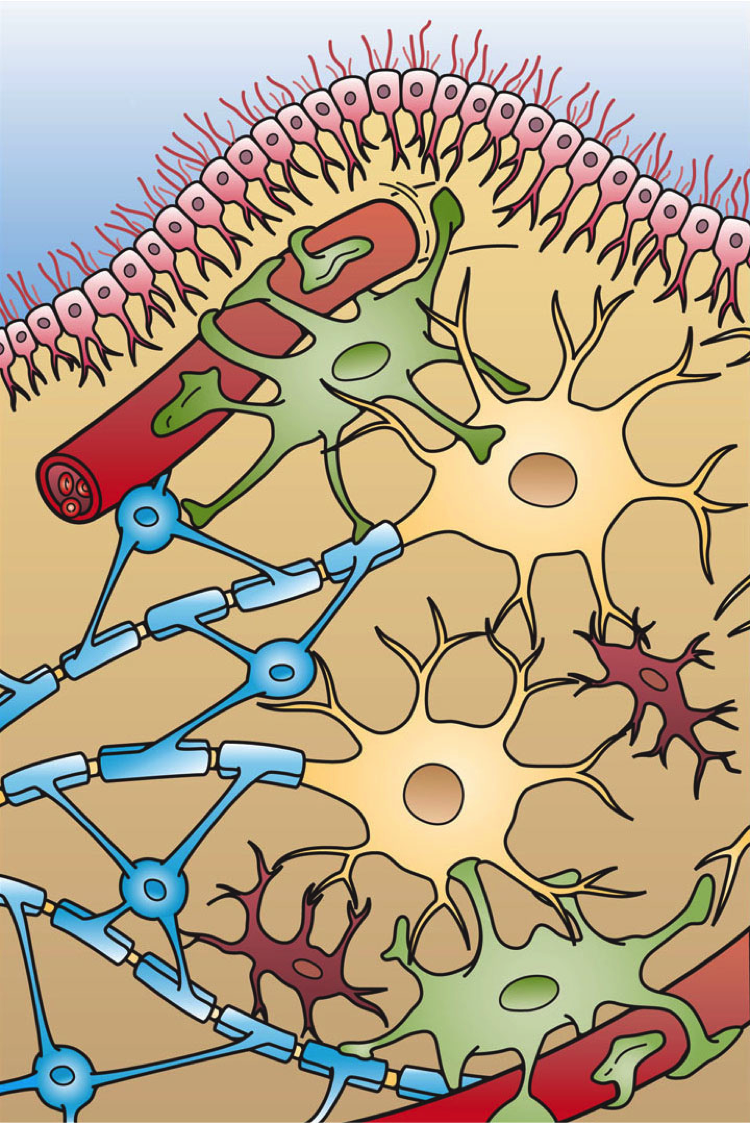
Glial cells perform a diverse array of functions essential for neuronal survival and activity. Astrocytes regulate the extracellular environment by buffering ions and neurotransmitters and provide metabolic support to neurons by supplying glucose and lactate. Oligodendrocytes in the central nervous system and Schwann cells in the peripheral nervous system are responsible for producing myelin, a fatty sheath that wraps around axons, dramatically increasing the speed of electrical impulse conduction through saltatory conduction. Microglia act as the primary immune cells of the central nervous system, constantly surveying their environment for pathogens or cellular debris, and initiating inflammatory responses when necessary. Satellite cells surround neuronal cell bodies in ganglia in the peripheral nervous system, providing metabolic support and regulating the microenvironment.
📊 Key Facts & Numbers
Glial cells are astonishingly numerous, making up approximately 50% of the total cell population in the human brain, and in some regions, they can outnumber neurons by a ratio of up to 10:1. The human brain contains an estimated 100 billion neurons, and a comparable or even greater number of glial cells. Astrocytes alone constitute about 20-40% of the total glial population. A single oligodendrocyte can myelinate up to 50 axons, with each myelin segment being about 1 millimeter long. The myelin sheath, composed of about 70-85% lipid, provides electrical insulation, reducing signal loss and increasing conduction velocity up to 100-fold compared to unmyelinated axons. Microglia comprise about 5-20% of the total glial population in the brain, depending on the region and species. The metabolic support provided by astrocytes can account for up to 20% of the brain's total energy consumption.
👥 Key People & Organizations
Pioneering figures in glial research include Pio del Río-Hortega, whose staining techniques revealed microglia. More recently, scientists like Ben Barres at Stanford University revolutionized our understanding of astrocyte biology, demonstrating their active role in synapse formation and function, challenging the long-held view of them as passive support cells. His work, alongside that of Karen L. Blackwell and others, has highlighted the critical role of glia in neurodevelopment and disease. Organizations such as the Society for Neuroscience and the International Society for Neurochemistry provide platforms for researchers to share findings on glial biology. Key institutions like the Max Planck Institutes and NIH fund extensive research into glial cell function and dysfunction in various neurological conditions.
🌍 Cultural Impact & Influence
The cultural perception of glial cells has undergone a significant transformation. Once dismissed as inert 'nerve glue,' they are now recognized as dynamic and essential players in neural computation and plasticity. This shift in understanding has permeated popular science literature and educational materials, moving beyond the simplified neuron-centric model. The increasing focus on glia in neuroscience research has also influenced the development of therapeutic strategies for neurological disorders, shifting focus from solely targeting neurons to also considering glial involvement. For instance, research into neuroinflammation, heavily driven by microglia, has opened new avenues for treating conditions like Alzheimer's disease and multiple sclerosis. The very definition of 'brain function' is expanding to encompass the complex interplay between neurons and glia.
⚡ Current State & Latest Developments
Current research is rapidly unraveling the intricate communication networks between neurons and glia, and among glial cells themselves. Recent advancements in single-cell RNA sequencing and advanced imaging techniques, such as two-photon microscopy, are providing unprecedented detail into glial subtype heterogeneity and their dynamic interactions in vivo. The role of microglia in synaptic pruning during development and in neurodegenerative diseases is a major area of focus, with new findings emerging regularly. Furthermore, the concept of 'gliotransmission' – the release of signaling molecules by glia – is being further investigated, suggesting glia actively modulate neuronal activity. The development of novel therapeutic targets aimed at modulating glial function for conditions like chronic pain, epilepsy, and psychiatric disorders is a significant ongoing effort, with clinical trials exploring these avenues in 2024 and beyond.
🤔 Controversies & Debates
A significant debate revolves around the extent to which glia actively 'compute' or merely 'support' neuronal computation. While the 'gliotransmission' hypothesis suggests glia can directly influence neuronal firing and synaptic plasticity, some researchers remain skeptical, arguing that observed glial signaling might be more reactive than proactive, or that its functional impact is less profound than initially proposed. The precise role of microglia in neuroinflammation is another contentious area; while they are crucial for clearing debris and fighting infection, their chronic activation in diseases like Alzheimer's disease is increasingly seen as detrimental, leading to a debate on how to modulate their activity without compromising essential protective functions. The heterogeneity of glial populations, particularly astrocytes, also presents a challenge, with ongoing efforts to define distinct functional subtypes and their specific roles in health and disease.
🔮 Future Outlook & Predictions
The future of glial research is exceptionally bright, promising to redefine our understanding of brain function and disease. We can anticipate the development of highly targeted therapies that modulate specific glial subtypes for conditions ranging from neurodevelopmental disorders like autism to neurodegenerative diseases such as Parkinson's disease. The exploration of glial contributions to learning and memory is likely to uncover new mechanisms for cognitive enhancement. Furthermore, the integration of glial data into advanced computational models of the brain may lead to more sophisticated artificial intelligence systems. By 2030, it is projected that at least 25% of new neurological drug development will directly target glial cells or their pathways, a significant increase from current levels.
💡 Practical Applications
Supporting glial cells are central to several critical therapeutic and diagnostic applications. In the realm of neurodegenerative diseases, targeting microglia to reduce neuroinflammation is a key strategy for conditions like Alzheimer's disease and ALS. Astrocytes are being investigated as targets for promoting neural repair after stroke or spinal cord injury. In diagnostics, the presence and activation state of glial cells, particularly microglia, in cerebrospinal fluid or via PET imaging, can serve as biomarkers for various neurological conditions. For instance, specific glial activation markers are being explored to predict disease progression in multiple sclerosis
Key Facts
- Category
- science
- Type
- topic