
Contents
Overview
The Tempest is a play that serves as a profound meditation on the power of art, the ethics of colonialism, and the transition from the Renaissance to the early modern era. With its unique blend of tragic stakes and comedic resolutions, it defied the rigid genre classifications of the time. Today, it remains one of the most frequently adapted works in the Western canon.
🎵 Origins & History
The genesis of The Tempest is inextricably linked to the age of maritime exploration. This play features a largely original plot, unlike many of Shakespeare's earlier works, which relied on existing Italian novellas or Plutarch’s histories.
⚙️ How It Works
Structurally, The Tempest is one of the few Shakespearean plays to strictly observe the Classical Unities of time, place, and action, with the plot unfolding in roughly four hours—the same duration as the performance itself. The mechanics of the play rely on the interplay between the 'high' magic of Prospero, mediated through the spirit Ariel, and the 'low' physical reality of the island represented by Caliban.
📊 Key Facts & Numbers
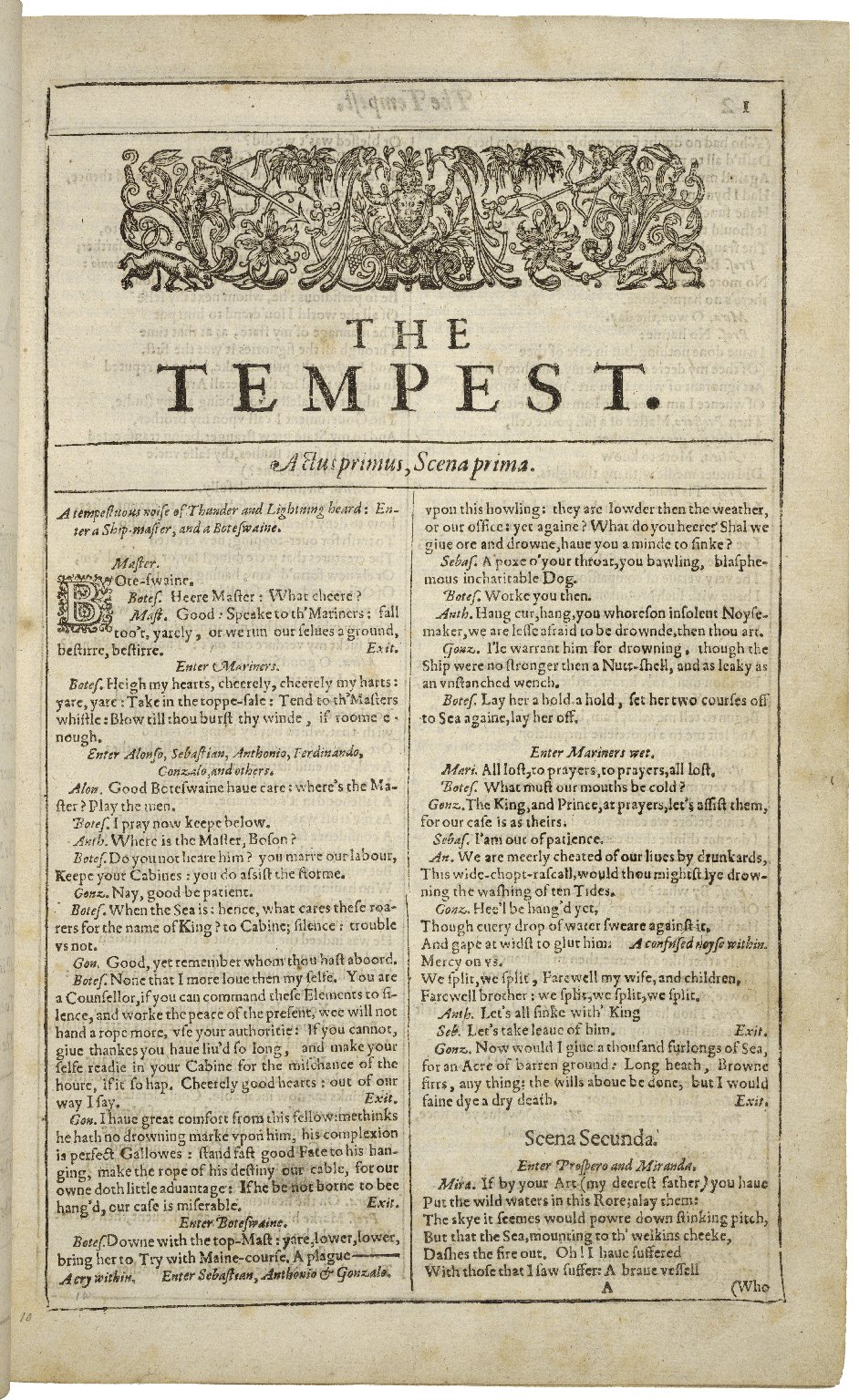
The Tempest is one of Shakespeare's shortest plays, second only to The Comedy of Errors. The play occupies the first 19 pages of the 'Comedies' section in the 1623 First Folio. It contains some of the most famous verse in the English language, including the 12-line 'Our revels now are ended' speech.
👥 Key People & Organizations
The Royal Shakespeare Company has been the vanguard for experimental stagings of The Tempest, featuring legendary performances by actors like Patrick Stewart and Helen Mirren. Literary critics such as Stephen Greenblatt have been instrumental in reframing the play through the lens of New Historicism.
🌍 Cultural Impact & Influence
The cultural footprint of The Tempest is significant, serving as the foundational text for the 'desert island' trope in Western media. The play’s exploration of isolation and 'island fever' saw a resurgence in academic interest following the global lockdowns of the COVID-19 pandemic.
⚡ Current State & Latest Developments
In recent years, The Tempest has been a vehicle for technological innovation in performance, including the use of Augmented Reality and motion-capture technology to render Ariel as a digital avatar. Climate change has also become a dominant theme in contemporary stagings, with directors using the titular storm as a metaphor for the Anthropocene and ecological collapse.
🤔 Controversies & Debates
The central controversy of The Tempest lies in its treatment of Caliban and the ethics of Prospero’s rule. Modern scholars argue over whether the play is an endorsement of imperialism or a subtle critique of it. Another point of contention is the 'biographical reading,' which suggests Prospero’s farewell to magic is actually a personal farewell to the stage.
🔮 Future Outlook & Predictions
The future of The Tempest likely lies in the realm of Virtual Reality (VR) and immersive theater, where audiences can experience the 'isle full of noises' firsthand. As AI-driven storytelling evolves, we may see versions of the play where the 'magic' is generated in real-time by algorithms, mirroring Prospero's control over his environment.
💡 Practical Applications
Beyond the theater, The Tempest is used in leadership training and psychology to study the dynamics of forgiveness and the 'burden of command.' Its themes of restorative justice are often applied in legal theory to discuss the transition from retribution to reconciliation.
Key Facts
- Category
- culture
- Type
- topic