
Contents
Overview
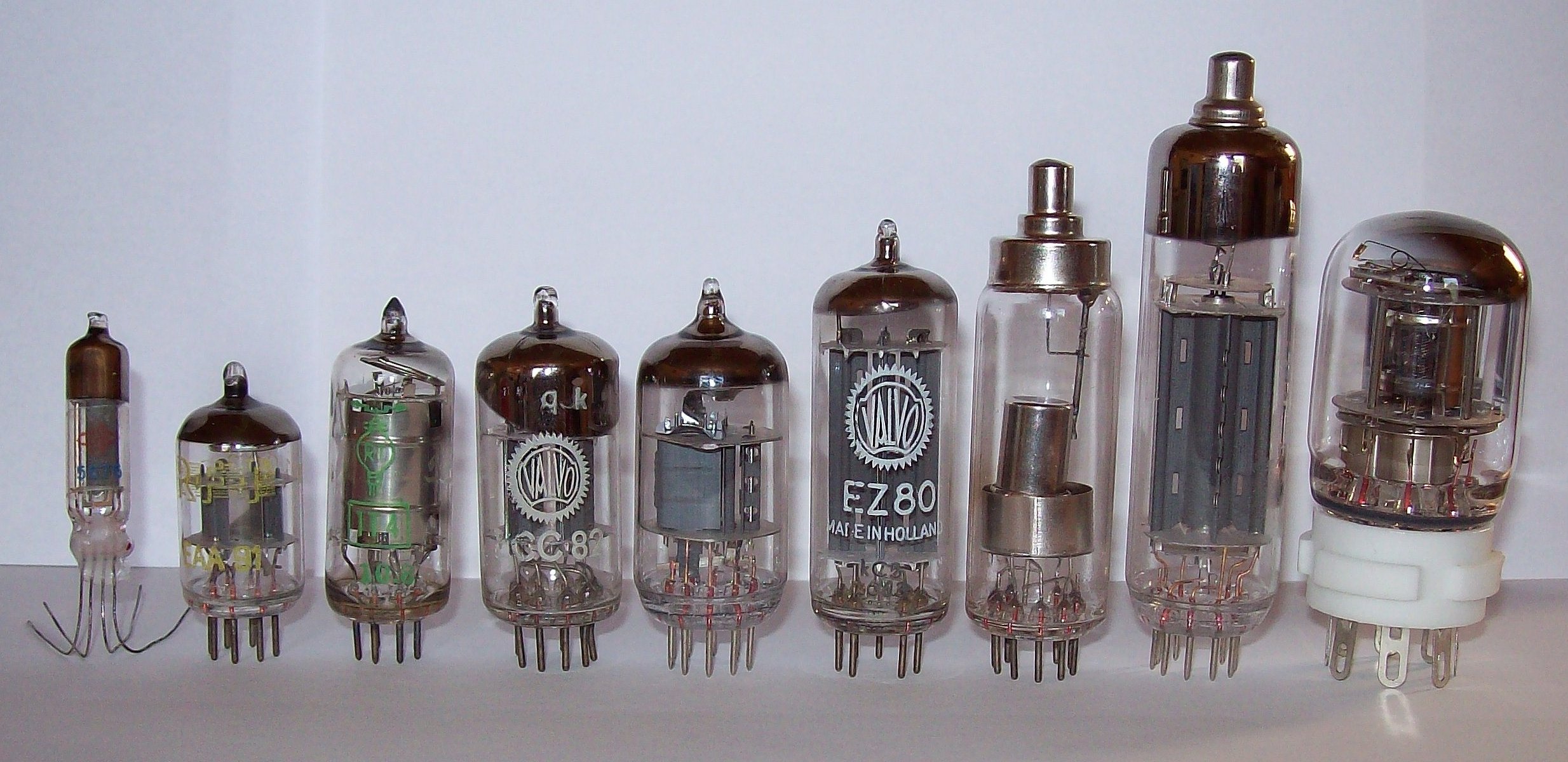
A vacuum tube, also known as an electron tube or thermionic valve, is a sealed glass or metal enclosure from which air has been removed to create a high vacuum. Within this vacuum, electrodes are precisely arranged to control the flow of electric current. The most common type, the thermionic tube, relies on heating a cathode to release electrons (thermionic emission), which are then directed towards an anode by an applied electric field. This fundamental mechanism allows for signal amplification and current rectification, forming the backbone of early electronics. The vacuum tube paved the way for technologies like radio, television, and early computers before largely being supplanted by solid-state electronics like transistors. Despite their obsolescence in many mainstream applications, vacuum tubes persist in niche areas due to their unique sonic characteristics and high-power capabilities.
🎵 Origins & History
The genesis of the vacuum tube can be traced back to the late 19th century, with early experiments by scientists like William Henry Preece and Thomas Edison. Edison observed a phenomenon in his incandescent light bulbs where current flowed from the hot filament to a nearby metal plate – a discovery he termed the "Edison effect." However, John Ambrose Fleming first harnessed this effect for practical use. Fleming patented a two-element vacuum tube (a diode) that could rectify alternating current, a critical step for early radio receivers. This invention laid the groundwork for the subsequent development of more complex tubes, such as the triode, which added a third electrode (a grid) to control and amplify signals, ushering in the era of electronic amplification.
⚙️ How It Works
At its core, a vacuum tube operates by controlling the movement of electrons in a high vacuum. The most prevalent type, the thermionic tube, features a heated cathode that emits electrons via thermionic emission. These electrons are then attracted to a positively charged anode (or plate). By introducing a control grid – a mesh of wires placed between the cathode and anode – a small voltage applied to this grid can significantly alter the flow of electrons to the anode. A negative voltage on the grid repels electrons, reducing current, while a positive voltage allows more to pass. This modulation capability is what enables vacuum tubes to amplify weak signals, a function that was indispensable for early radio transmitters, audio amplifiers, and computing devices like the Enigma machine and the ENIAC computer. Other types, like phototubes, utilize the photoelectric effect for light detection rather than thermionic emission.
📊 Key Facts & Numbers
The vacuum tube era saw the production of billions of these devices. The global market for vacuum tubes, once a multi-billion dollar industry, has shrunk dramatically, with annual sales now estimated to be in the hundreds of millions of dollars, a stark contrast to its peak. For instance, the RF power amplifier market, a significant remaining segment, is valued at roughly $1.5 billion annually as of 2023.
👥 Key People & Organizations
Several key figures and organizations shaped the vacuum tube industry. John Ambrose Fleming's invention of the diode in 1904 at University College London was foundational. Lee de Forest's subsequent invention of the audion (triode), and his persistent patent battles, were crucial for amplification. Major manufacturing powerhouses like Philips (Netherlands), General Electric (USA), Sylvania Electric Products (USA), and Mullard (UK) dominated production for decades, developing countless tube types for diverse applications. Companies like Western Electric were instrumental in integrating tubes into telecommunication systems and early computers. The ongoing niche manufacturing is now often handled by smaller, specialized firms such as Sovtek and Electro-Harmonix in Russia and the USA, respectively.
🌍 Cultural Impact & Influence
Vacuum tubes were the bedrock of the first electronic revolution, fundamentally altering communication and entertainment. They enabled the widespread adoption of radio broadcasting, bringing news and music into homes globally. The development of television and its subsequent boom after World War II were entirely dependent on vacuum tube technology for both transmission and reception. Early computers, such as ENIAC and IBM's 701, relied on thousands of tubes to perform complex calculations, albeit with significant reliability issues. In audio, vacuum tubes are still revered by audiophiles and musicians for their warm, "organic" sound characteristics, leading to a persistent demand in high-fidelity audio equipment and electric guitar amplifiers, a cultural resonance that keeps them alive.
⚡ Current State & Latest Developments
While largely superseded by solid-state electronics in consumer devices, vacuum tubes remain vital in specific high-performance applications. High-power radio and television broadcast transmitters still frequently employ large vacuum tubes like klystrons and magnetrons due to their ability to handle immense power levels and withstand electrical surges better than transistors. In the realm of audio, manufacturers like Mesa Boogie and Fender continue to produce tube-based guitar amplifiers, and high-end audio companies still offer tube preamplifiers and power amplifiers. The development of specialized tubes for microwave ovens (magnetrons) and particle accelerators also continues. Recent interest has also emerged in using vacuum tube principles for novel applications like advanced display technologies and high-frequency communication systems.
🤔 Controversies & Debates
The primary controversy surrounding vacuum tubes today centers on their perceived superiority in sound quality versus their inherent limitations. Audiophiles and musicians often champion the "warmth," "harmonic richness," and "dynamic response" of tube amplification, attributing it to their non-linear amplification characteristics and the way they distort when overdriven. Critics, however, argue that these perceived benefits are largely subjective or a result of nostalgia, pointing out that solid-state devices can achieve far greater accuracy, efficiency, and reliability with lower distortion. Furthermore, the energy inefficiency and heat generation of vacuum tubes, coupled with their finite lifespan and susceptibility to physical shock, are significant drawbacks compared to modern solid-state alternatives, making their continued use in many applications a point of contention.
🔮 Future Outlook & Predictions
The future of vacuum tubes, while niche, shows signs of continued innovation. Researchers are exploring "vacuum nanoelectronics," miniaturizing tube principles to the nanoscale, potentially offering advantages in speed and power efficiency for certain high-frequency applications. The demand from the high-fidelity audio and musical instrument markets is expected to remain stable, driven by a dedicated enthusiast base. There's also ongoing research into using vacuum tube-like structures for advanced computing, particularly in areas requiring high-speed switching or radiation resistance, where traditional semiconductors might falter. While they will never reclaim their former dominance, vacuum tubes are unlikely to disappear entirely, continuing to occupy specialized roles where their unique properties are indispensable.
💡 Practical Applications
Vacuum tubes find application in a surprisingly diverse range of fields. In broadcasting, they are essential for high-power RF power amplifiers used in AM/FM radio and television transmitters. Musicians rely on them in electric guitar and bass amplifiers, as well as in some microphone preamplifiers, for their characteristic tonal qualities. High-end audio systems often incorporate tube preamplifiers and power amplifiers for their perceived sonic warmth. They are also critical components in microwave ovens (magnetrons), X-ray machines, and certain industrial heating equipment. Furthermore, specialized tubes like klystrons are used in particle accelerators and radar systems, while photomultiplier tubes are used for detecting very low levels of light in scientific instruments.
Key Facts
- Category
- technology
- Type
- topic