
Contents
Overview
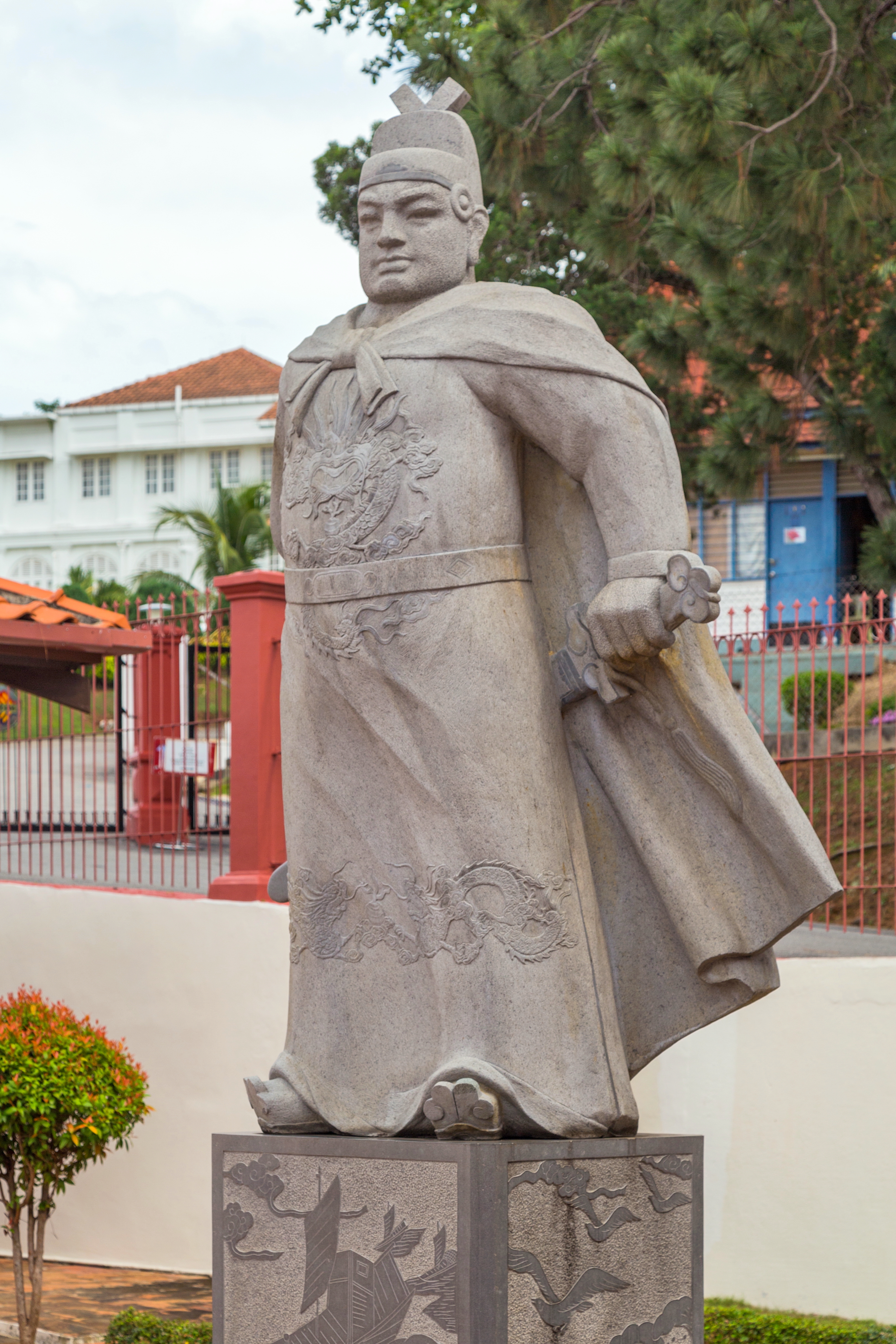
Born Ma He around 1371 in Kunming, Yunnan province, Zheng He's early life was shaped by the tumultuous transition from the Yuan Dynasty to the Ming Dynasty. His family, of Hui Muslim heritage, had ties to the Mongol administration, a fact that proved perilous when the Ming founder, the Hongwu Emperor, conquered the region. As a young boy, Ma He was captured, castrated, and brought into the imperial palace as a eunuch, a common practice for boys from conquered territories destined for service. He received a rigorous education within the palace, excelling in military strategy and diplomacy. His pivotal moment came when he aided Zhu Di (later the Yongle Emperor) in his successful rebellion against the Jianwen Emperor during the Jingnan Campaign in 1402. This act of loyalty earned him the emperor's trust and the prestigious surname Zheng, marking his transformation from a captive boy to a trusted imperial servant and, soon, a formidable admiral.
⚙️ The Treasure Fleets
Zheng He's command of the Ming treasure fleets represented an unprecedented feat of naval engineering and logistical organization. The scale of these vessels, often referred to as 'treasure ships' or 'horse-ships,' was legendary, with some accounts suggesting lengths of up to 400 feet, dwarfing contemporary European carracks and caravels. These colossal ships, built in the shipyards of Nanjing, were designed with multiple decks, watertight compartments, and advanced navigational tools, allowing them to carry vast quantities of trade goods, soldiers, and supplies. The fleet typically comprised hundreds of vessels, including smaller escort ships, troop transports, and supply ships, manned by crews numbering in the tens of thousands. This formidable naval presence was not merely for exploration; it was a projection of Ming imperial power and a tool for enforcing tributary relationships and state-controlled trade across the Indian Ocean.
📊 Key Facts & Numbers
The seven voyages of Zheng He, spanning from 1405 to 1433, covered an astonishing geographical range and involved immense logistical undertakings. The first voyage in 1405-1407 saw a fleet of over 300 ships sail to Champa (modern Vietnam), Siam (Thailand), and Java, returning with exotic goods and tributary envoys. By the third voyage (1413-1415), the fleet had reached Calicut on the Malabar Coast of India and Hormuz in the Persian Gulf. The climactic sixth voyage (1421-1422) extended the reach to the coast of East Africa, with documented stops in Mogadishu, Malindi, and Zanzibar, bringing back giraffes and other rare animals. The total number of sailors involved across all voyages is estimated to have been in the tens of thousands, with some estimates placing the crew of the largest ships at over 27,000 men. The Ming treasury invested heavily, with the cost of these expeditions representing a significant portion of the imperial budget during the Yongle Emperor's reign.
👥 Key Figures & Imperial Context
Zheng He operated within a complex imperial court structure, serving three emperors: the Yongle Emperor, the Hongxi Emperor, and the Xuande Emperor. His patron, the Yongle Emperor, was an ambitious ruler who sought to expand Ming influence and secure his own legitimacy after usurping the throne. Zheng He's role extended beyond naval command; he was a trusted diplomat and envoy, tasked with negotiating treaties, collecting tribute, and asserting Ming suzerainty. Other key figures in his expeditions included eunuch officials like Wang Jinghong, who often served as second-in-command, and scholars who meticulously documented the voyages. The emperors themselves, particularly Yongle, provided the political will and financial backing, viewing these expeditions as crucial for projecting Chinese prestige and controlling maritime trade routes.
🌍 Global Reach & Impact
The impact of Zheng He's voyages on the maritime world of the 15th century was profound, though its long-term effects are debated. His fleets navigated and mapped vast stretches of the Indian Ocean, establishing diplomatic and trade relations with over 30 states and polities, from Malacca to East Africa. The Ming navy's presence deterred piracy and fostered a period of relative stability in maritime trade, facilitating the exchange of goods, technologies, and ideas. Chinese porcelain, silk, and ironware flowed westward, while spices, precious woods, and exotic animals like giraffes and zebras were brought back to China, astonishing the imperial court. The voyages also contributed to the spread of Chinese culture and influence, and some historians argue they laid the groundwork for later European exploration by demonstrating the feasibility of long-distance oceanic travel.
⚡ The Voyages' End & Legacy
Despite the immense success and scale of Zheng He's expeditions, the voyages abruptly ceased after 1433. The reasons for this cessation are multifaceted and remain a subject of historical debate. Following the death of the Xuande Emperor in 1435 and a shift in imperial priorities, the Ming court increasingly turned inward. Confucian officials, who often viewed maritime trade and foreign entanglements with suspicion, gained more influence, advocating for a focus on defending the northern borders against Mongol threats. The vast expense of the treasure fleets also became a point of contention. Consequently, the Ming navy was largely dismantled, shipbuilding records were destroyed, and China entered a period of maritime isolationism, a stark contrast to the outward-looking policies of the early Yongle and Xuande reigns. Zheng He himself died in Nanjing around 1433 or 1435, his final years spent overseeing the logistics of the last voyage.
🤔 Controversies & Debates
The legacy of Zheng He is entangled with several historical controversies. One major debate centers on the exact purpose of the voyages: were they primarily for trade and diplomacy, or did they carry a hidden agenda of military conquest or colonization? While the fleets were armed, their primary documented activities involved diplomacy, tribute collection, and suppressing piracy, rather than large-scale territorial acquisition. Another controversy surrounds the accuracy of the ship dimensions reported in historical texts, with some scholars questioning whether ships of the purported size could have been constructed or sailed effectively. Furthermore, the abrupt end to the voyages has led to speculation about internal political struggles within the Ming court and the suppression of maritime exploration, a stark contrast to the burgeoning age of discovery in Europe occurring concurrently.
🔮 Future Interpretations
In contemporary times, Zheng He has experienced a significant resurgence in historical and cultural appreciation, particularly in China. He is often invoked as a symbol of China's historical maritime prowess and a precursor to modern global trade initiatives, such as the Belt and Road Initiative. His story is re-examined through lenses of cultural exchange, diplomatic outreach, and national pride. There is ongoing scholarly work to reconcile the legendary accounts of his voyages with archaeological evidence and to understand the full scope of his impact on the Indian Ocean world. The narrative of Zheng He continues to evolve, serving as a powerful reminder of China's historical engagement with the wider world and sparking discussions about its future role on the global stage.
💡 Practical Applications
While Zheng He's voyages were state-sponsored expeditions rather than commercial ventures in the modern sense, their impact has practical implications for understanding historical trade networks and maritime logistics. The meticulous planning and execution of the treasure fleets offer case studies in large-scale project management and naval logistics, relevant to modern military and shipping operations. The documented trade goods and diplomatic exchanges provide valuable insights for historians studying economic and cultural globalization in the pre-modern era. Furthermore, the rediscovery and popularization of Zheng He's story have inspired educational initiatives and cultural tourism, particularly in regions he visited, such as Malacca and Quanzhou, fostering a greater appreciation for intercontinental historical connections.
Key Facts
- Category
- history
- Type
- topic