
Contents
- 🎵 Origins & History
- ⚙️ How It Works
- 📊 Key Facts & Numbers
- 👥 Key People & Organizations
- 🌍 Cultural Impact & Influence
- ⚡ Current State & Latest Developments
- 🤔 Controversies & Debates
- 🔮 Future Outlook & Predictions
- 💡 Practical Applications
- 📚 Related Topics & Deeper Reading
- Frequently Asked Questions
- References
- Related Topics
Overview
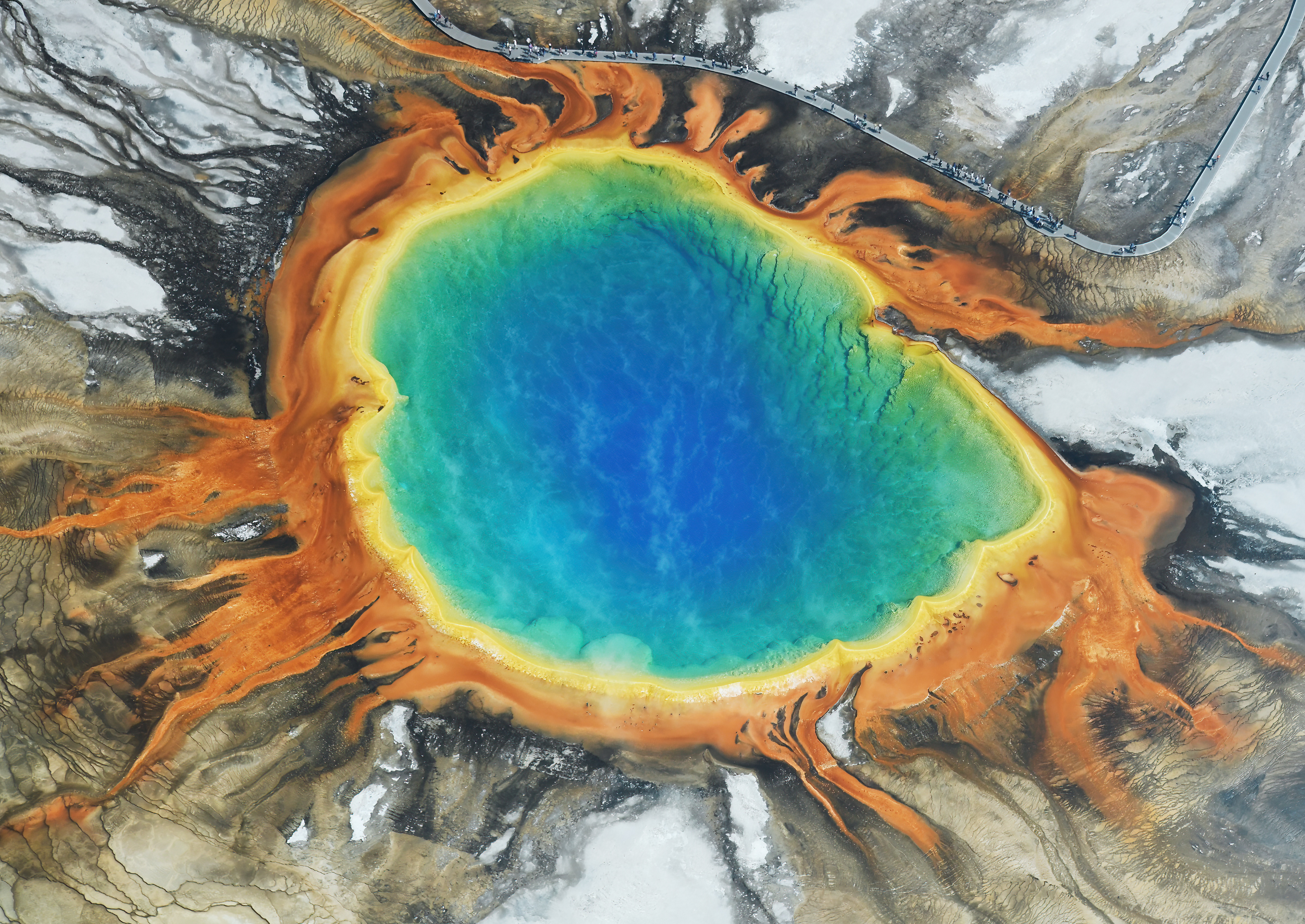
The recognition of life's tenacity in extreme conditions didn't begin with a single eureka moment but rather a slow accumulation of observations. Early scientific expeditions, like those of Charles Darwin in the 19th century, noted life in seemingly harsh marine environments, though the true extent of extremophily remained hidden. The formal understanding began to crystallize in the mid-20th century with the exploration of geothermal features. Thomas Brock's groundbreaking work in the 1960s at Yellowstone National Park identified thermophilic bacteria, such as Thermus aquaticus, thriving in boiling hot springs. This discovery, initially met with skepticism, laid the foundation for a new field of microbiology. Subsequent research into deep-sea hydrothermal vents, like those discovered by the Woods Hole Oceanographic Institution in 1977, revealed entire ecosystems based on chemosynthesis, populated by hyperthermophiles and other extremophilic life forms, fundamentally altering our perception of where life could exist.
⚙️ How It Works
Extremophiles achieve their remarkable resilience through specialized biochemical and genetic adaptations. For instance, thermophiles possess heat-stable enzymes, like Taq polymerase, whose three-dimensional structures are resistant to denaturation at high temperatures, a stark contrast to the enzymes of mesophilic organisms. Psychrophiles, adapted to extreme cold, often have cell membranes with a high proportion of unsaturated fatty acids, maintaining fluidity at sub-zero temperatures. Halophiles, thriving in high-salt environments, employ mechanisms to prevent osmotic shock, such as accumulating compatible solutes within their cells or actively pumping ions out. Acidophiles and alkaliphiles maintain internal pH homeostasis through specialized proton pumps and buffering systems, allowing their metabolic machinery to function within their respective extreme pH ranges. These adaptations are not isolated traits but complex, integrated systems honed by millions of years of evolution in challenging niches.
📊 Key Facts & Numbers
The sheer abundance of extremophiles is staggering; estimates suggest they constitute the majority of Earth's biomass, with microbial life potentially dominating even the most inhospitable deep subsurface environments. For example, hyperthermophiles, organisms thriving above 60°C (140°F), have been found in geothermal areas like Iceland and the Mid-Atlantic Ridge, with some species, such as Methanopyrus kandleri, capable of growth at temperatures exceeding 120°C (248°F). In the deep sea, hydrothermal vents support densities of life that can rival terrestrial ecosystems, with microbial biomass estimated to be orders of magnitude greater than all surface life combined. Even in environments previously thought sterile, like the deep continental subsurface, microbial communities are being discovered, with estimates suggesting this biome could hold up to 10^30 cells, dwarfing the surface biosphere.
👥 Key People & Organizations
Key figures in extremophile research include Thomas Brock, whose work on thermophiles at Yellowstone was foundational. Carl Woese's pioneering use of ribosomal RNA sequencing led to the discovery of Archaea, a domain of life that includes many extremophiles, in 1977. Robert J. Bolton and his team at Montana State University have extensively studied Yellowstone's extremophiles, contributing to our understanding of their biochemistry and potential applications. Organizations like the Woods Hole Oceanographic Institution have been instrumental in exploring deep-sea hydrothermal vents, while the NASA actively funds research into extremophiles for astrobiological purposes, seeking analogs for potential extraterrestrial life on bodies like Mars and Europa.
🌍 Cultural Impact & Influence
The discovery and study of extremophiles have profoundly influenced scientific thought and popular culture. They have expanded the known parameters for life, fueling speculation about extraterrestrial life on planets and moons previously deemed uninhabitable, such as Titan or Enceladus. This has inspired science fiction narratives, like Andy Weir's novel Project Hail Mary, which explores the potential for alien life forms adapted to extreme conditions. Furthermore, extremophiles have become potent symbols of resilience and adaptation, appearing in documentaries and educational programs that highlight the diversity and tenacity of life on Earth, often featured in contexts like National Geographic specials or Discovery Channel series.
⚡ Current State & Latest Developments
Current research is pushing the boundaries of where extremophiles can be found and how they function. Recent expeditions have identified novel extremophilic communities in previously unexplored deep subsurface environments, including deep mines and the Antarctic subglacial lakes like Lake Vostok. Advances in genomic sequencing and bioinformatics are rapidly revealing the genetic underpinnings of extremophily, identifying new enzymes and metabolic pathways. The exploration of Martian subsurface environments and the icy moons of Jupiter and Saturn continues to be a major focus for space agencies like NASA and the European Space Agency, with extremophile research directly informing mission design and target selection for future probes and landers.
🤔 Controversies & Debates
One of the primary debates surrounding extremophiles centers on the definition of 'extreme' itself, which is inherently relative. What constitutes an extreme environment for humans might be commonplace for these organisms. Another ongoing discussion involves the origin of life on Earth; some theories propose that life may have first arisen in hydrothermal vents or other extreme environments, rather than shallow, warm ponds as historically hypothesized by Charles Darwin. The potential for panspermia – the transfer of life between celestial bodies – is also closely linked to extremophile research, with debates on whether organisms could survive the harsh conditions of space travel. Furthermore, the ethical considerations of studying and potentially exploiting extremophiles, particularly in pristine or sensitive environments, are subjects of ongoing discussion.
🔮 Future Outlook & Predictions
The future outlook for extremophile research is exceptionally bright, driven by advancements in technology and the persistent quest to understand life's origins and potential beyond Earth. Astrobiologists anticipate that future missions to Mars and the ocean moons of Jupiter and Saturn will likely uncover evidence of extant or extinct extremophilic life. Biotechnological applications are expected to expand dramatically, with new enzymes and biomaterials being discovered and commercialized for industries ranging from pharmaceuticals to biofuels. The deep biosphere, a vast and largely unexplored realm, promises to yield an even greater diversity of extremophiles, potentially revealing entirely new branches on the tree of life and novel biochemical processes. The ongoing exploration of Earth's most challenging environments will continue to redefine our understanding of habitability.
💡 Practical Applications
Extremophiles are not just scientific curiosities; they are invaluable tools with a wide array of practical applications. The most famous example is Taq polymerase, isolated from the thermophile Thermus aquaticus found in Yellowstone, which revolutionized molecular biology by enabling the Polymerase Chain Reaction (PCR) technique, crucial for DNA amplification in diagnostics, forensics, and research. Enzymes from extremophiles are also used in industrial processes, such as in detergents (proteases and lipases that function in hot water), food production (amylases and cellulases), and bioremediation, where they can break down pollutants like oil spills or toxic waste. Their unique metabolic capabilities are being explored for bioenergy production, such as the generation of biofuels from waste materials, and in the development of novel pharmaceuticals and biosensors.
Key Facts
- Year
- Ongoing
- Origin
- Global
- Category
- nature
- Type
- concept
Frequently Asked Questions
What is the most extreme environment where extremophiles have been found?
Extremophiles have been found in an astonishing array of harsh conditions. This includes the boiling waters of geothermal springs, such as those in Yellowstone National Park, where temperatures can exceed 100°C (212°F). They also thrive in the crushing pressures and complete darkness of deep-sea hydrothermal vents, in highly acidic or alkaline waters (pH 0-14), in hypersaline lakes, and even in environments with high levels of radiation, like nuclear waste sites. Some of the most extreme examples are hyperthermophiles, like Methanopyrus kandleri, which can survive at temperatures above 120°C (248°F).
How do extremophiles help us search for life on other planets?
Extremophiles serve as crucial analogs for potential extraterrestrial life because they demonstrate that life can exist in conditions previously thought impossible. By studying how organisms like cyanobacteria survive in arid deserts like the Atacama Desert or how microbes endure radiation on Mars, scientists can better predict where to look for life beyond Earth and what biosignatures to search for. For instance, the existence of life around Jupiter's moon Europa's subsurface ocean is hypothesized based on the survival of extremophiles in Earth's deep-sea hydrothermal vents, environments that mimic Europa's predicted conditions.
What are some practical applications of extremophiles?
The unique enzymes and metabolic processes of extremophiles have led to numerous practical applications. The most famous is Taq polymerase, derived from the thermophile Thermus aquaticus, which is essential for PCR technology used in diagnostics and genetic research. Other extremophilic enzymes are used in industrial processes like laundry detergents (functioning in hot water), food production, and bioremediation to clean up pollutants. Their ability to break down complex molecules or survive harsh chemical environments makes them ideal for developing new pharmaceuticals, biofuels, and industrial catalysts.
Are extremophiles ancient organisms, or have they evolved recently?
Extremophiles represent a diverse group of organisms, some of which are ancient and have likely existed since the early days of life on Earth, while others have evolved more recently. The discovery of the Archaea domain by Carl Woese in 1977 revealed a lineage of single-celled organisms that includes many of the most extreme extremophiles, suggesting they may represent a very early form of life. Their ability to thrive in harsh conditions, which may have been more prevalent on early Earth, indicates they could be descendants of some of the planet's first life forms. However, new extremophilic species are continually being discovered, and some may have evolved adaptations to specific extreme niches more recently.
What is the controversy surrounding the definition of 'extreme' for extremophiles?
The main controversy lies in the anthropocentric nature of the term 'extreme.' What is considered an extreme environment for humans or typical laboratory organisms is often the norm for extremophiles. This relativity means that a 'normal' environment for one extremophile might be lethal to another. For example, a thermophile thriving at 80°C (176°F) would be killed by the cold temperatures that a psychrophile requires. This challenges scientists to define 'extreme' not by human standards, but by the organism's specific physiological tolerance limits and its ecological niche, leading to ongoing debate about classification and terminology within the field.
How can I learn more about extremophiles and where to find them?
To learn more, you can explore resources from institutions like the NASA Astrobiology Program, which often features research on extremophiles and their relevance to space exploration. Websites of universities with strong microbiology departments, such as Montana State University or UC Berkeley, often have public outreach materials. Documentaries on the Discovery Channel or National Geographic frequently cover extremophile discoveries. For academic depth, journals like Extremophile (Springer) publish cutting-edge research, and books by prominent researchers in the field offer comprehensive overviews of their biology and significance.
What are scientists predicting about future extremophile discoveries?
Scientists predict that future discoveries will continue to expand our understanding of life's limits and potential. They anticipate finding novel extremophiles in unexplored deep subsurface environments, such as deep-sea trenches and the continental crust, potentially revealing new domains or branches of life. The search for life on Mars and icy moons like Europa and Enceladus is expected to yield evidence of extremophilic life, either extant or extinct. Furthermore, ongoing research into their unique enzymes and metabolic pathways is predicted to lead to significant breakthroughs in biotechnology, medicine, and energy production, offering solutions to global challenges.