
Contents
Overview
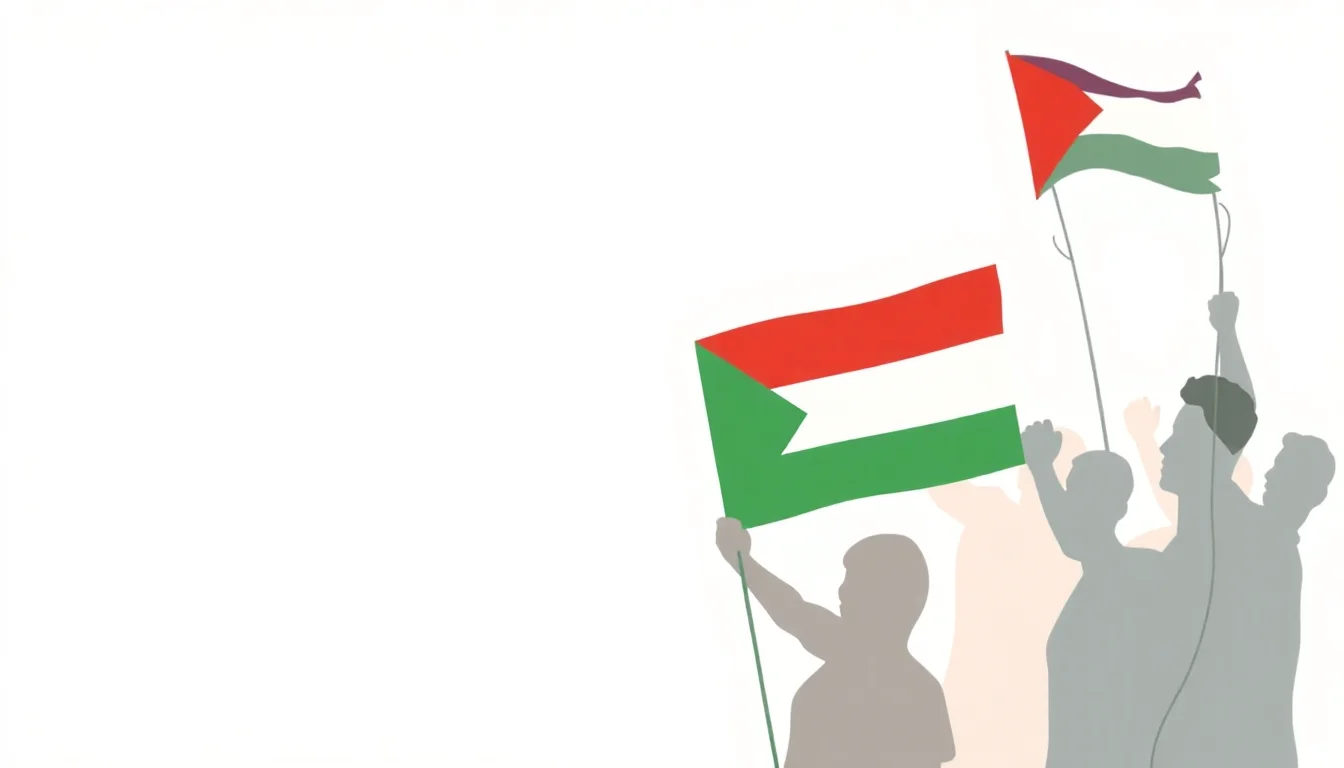
The Palestine Solidarity Campaign is a decentralized, multifaceted global movement advocating for Palestinian rights and an end to the Israeli occupation of Palestine. It's not a single organization but a constellation of groups, individuals, and initiatives united by a common goal: justice and self-determination for Palestinians. This movement encompasses a wide spectrum of activism, from grassroots organizing and public awareness campaigns to academic boycotts and direct political lobbying. Its energy is palpable, often manifesting in high-visibility protests and sustained advocacy efforts across continents. The campaign's core tenet is the belief that international pressure is crucial to achieving a just resolution to the Israeli-Palestinian conflict.
✊ Who is Involved?
The movement draws participants from diverse backgrounds, including human rights advocates, anti-war activists, social justice organizations, religious communities (both Christian and Jewish), and individuals deeply concerned with international law and human dignity. Prominent figures and organizations often lend their voice, amplifying the campaign's message. However, the true strength lies in the countless local chapters and grassroots organizers who translate global solidarity into tangible action. The demographic is broad, reflecting a widespread concern for human rights that transcends national and ethnic lines. The Boycott, Divestment, and Sanctions (BDS) movement is a significant component, drawing in many activists focused on economic pressure.
🗺️ Global Reach & Local Actions
While the Palestine Solidarity Campaign is global, its impact is felt most acutely through localized actions. Major cities worldwide, from London and New York City to Ramallah and Gaza City, host regular demonstrations, rallies, and educational events. These local efforts are often coordinated through international networks, allowing for synchronized global days of action. The campaign leverages social media activism extensively to connect these disparate groups and disseminate information rapidly. Understanding the local context is key to appreciating the diverse manifestations of solidarity, from academic boycotts at Berkeley to parliamentary lobbying in Ottawa.
📣 Key Issues & Demands
The campaign's demands are rooted in international law and human rights principles. Central to these are the end of the Israeli occupation of the West Bank, East Jerusalem, and Gaza; the right of return for Palestinian refugees as stipulated by UN Resolution 194; and the establishment of a Palestinian state with full sovereignty. More broadly, the movement advocates for an end to apartheid in Israel and Palestine, the dismantling of the West Bank barrier, and the cessation of settler violence. These issues are not abstract; they represent the daily realities faced by millions of Palestinians, fueling the urgency of the campaign.
⚖️ Legal & Political Landscape
The Palestine Solidarity Campaign operates within a complex and often contentious legal and political landscape. Activists frequently face accusations of antisemitism, a charge vehemently denied by most organizers who distinguish between criticism of Israeli government policy and hatred of Jewish people. Several countries have enacted legislation to counter the BDS movement, leading to legal challenges and debates about freedom of speech and association. International bodies like the United Nations have passed numerous resolutions concerning Palestinian rights, though their implementation remains a significant hurdle. The International Criminal Court (ICC) has also been a focal point for seeking accountability for alleged war crimes.
💡 Tactics & Strategies
Tactics employed by the campaign are varied and adaptable. They include large-scale public demonstrations, divestment campaigns targeting institutions with ties to Israeli occupation, academic and cultural boycotts (e.g., the Academic Boycott of Israel), educational initiatives to raise public awareness, lobbying efforts directed at governments, and legal challenges. The Palestine Solidarity Campaign also utilizes art, music, and literature to convey its message and foster empathy. The effectiveness of these strategies is a subject of ongoing debate, with proponents highlighting successes in shifting public discourse and critics questioning their impact on policy.
📚 Resources & Further Learning
For those seeking to deepen their understanding, a wealth of resources exists. Key texts include works by Edward Said on Orientalism and Palestinian identity, and analyses of international law and the Israeli-Palestinian conflict. Organizations like Al-Haq and B'Tselem provide crucial on-the-ground documentation of human rights violations. Academic institutions often host lectures and symposia on the topic, and numerous documentaries offer visual narratives of the Palestinian experience. Engaging with Palestinian voices directly, through interviews and personal testimonies, is also paramount for a comprehensive perspective.
🤝 Getting Involved
Engaging with the Palestine Solidarity Campaign can take many forms. Readers can find local chapters of organizations like American Muslims for Palestine or Students for Justice in Palestine in their communities. Participating in organized protests, signing petitions, and contacting elected officials are direct ways to show support. For those interested in economic pressure, researching companies targeted by BDS campaigns and making informed consumer choices can be impactful. Educational outreach, sharing accurate information with friends and family, and supporting Palestinian-owned businesses are also vital contributions to the movement's momentum.
Key Facts
- Year
- 1982
- Origin
- United Kingdom
- Category
- Social Movements & Activism
- Type
- Movement
Frequently Asked Questions
What is the difference between Palestine solidarity and anti-Zionism?
Palestine solidarity is a broad movement advocating for the rights and self-determination of Palestinians. Anti-Zionism is a specific political stance that opposes Zionism, the ideology advocating for a Jewish state in the historical Land of Israel. While many anti-Zionists are part of the Palestine solidarity movement, not all solidarity activists are necessarily anti-Zionist. The distinction is crucial, as critics of Zionism often emphasize that their opposition is to a political ideology and state policy, not to Jewish people or Judaism itself.
Is the Palestine Solidarity Campaign antisemitic?
This is a highly contentious point. Supporters of the campaign overwhelmingly state that their activism is focused on opposing Israeli government policies and the occupation, not on hatred of Jewish people. They draw a firm line between criticism of Israel and antisemitism. However, critics, including some Jewish organizations, argue that certain rhetoric and actions within the movement can cross into antisemitism, particularly when employing tropes historically used against Jews or when advocating for the dismantling of Israel. The debate is complex and often politicized.
What is the Boycott, Divestment, and Sanctions (BDS) movement?
The BDS movement is a global campaign advocating for economic and academic pressure on Israel until it complies with international law. Launched in 2005 by Palestinian civil society, it calls for boycotts of Israeli products and companies complicit in the occupation, divestment from institutions supporting the occupation, and sanctions against Israel. It is one of the most prominent and debated tactics within the broader Palestine solidarity movement, facing both widespread support and significant opposition.
How does the campaign address the issue of Palestinian refugees?
A central demand of the Palestine solidarity movement is the implementation of the UN Resolution 194, which affirms the right of Palestinian refugees to return to their homes and properties. Activists advocate for this right of return, often highlighting the historical displacement of Palestinians during the 1948 war and subsequent events. They work to raise awareness about the ongoing plight of millions of refugees living in camps and advocate for their right to compensation and repatriation.
What are the main goals of the Palestine Solidarity Campaign?
The overarching goal is to achieve justice, equality, and self-determination for Palestinians. Specific objectives include ending the Israeli occupation of territories captured in 1967, dismantling the separation barrier, ending the blockade of Gaza, recognizing the right of return for Palestinian refugees, and ensuring equal rights for all Palestinians, including those within Israel. The campaign seeks to apply international pressure to achieve these aims through various means.